Dive Brief:
- The $7 billion appropriated to the Solar for All program is expected to begin flowing to grantees again after two federal judges vacated the U.S. Environmental Protection Agency’s 2025 decision to terminate the program — but the sudden loss of approved funding, followed by a year of uncertainty, created downstream damages, said Kerry O'Neill, CEO of Inclusive Prosperity Capital, in an interview with Utility Dive.
- The termination “was devastating on so many levels,” said O'Neill. IPC, a nonprofit financing intermediary that partners with institutions like green banks to fund clean energy projects, was awarded a Solar for All grant of $249.3 million in 2024.
- IPC is among the grantees suing the EPA for damages in addition to the awarded funds. Others include a coalition of groups led by the Maryland Clean Energy Center, as well as the Center for Rural Affairs, Growth Opportunity Partners, and the Clean Energy Fund of Texas. “The impact has been ... really widespread,” said Nick Torrey, a senior attorney with the Southern Environmental Law Center, which is representing several of the plaintiffs seeking damages.
Dive Insight:
Plaintiffs in cases already filed have sought damages to be determined at trial — potentially increasing the cost of the government’s actions.
An EPA spokesperson told Utility Dive in an email that the agency is “reviewing the decision and considering options for appeal” following a Sept. 18 ruling by the U.S. District Court for the District of Rhode Island that found the EPA illegally terminated the program. About a week later, another federal judge for the A U.S. District Court judge for the District of Columbia came to a similar conclusion.
Yesenia Rivera, vice president of solar access and affordability with Solar United Neighbors, a plaintiff in the Rhode Island lawsuit, told Utility Dive in the wake of the first ruling that the issue is “probably not over, but we're celebrating.”
“There were over 60 grantees across the states, territories, municipalities, governments, nonprofits, and it's a shame that they chose to rescind Congress-authorized funds, and that these funds are sitting there,” Rivera said. “But the reality is that we need these programs, and they can truly benefit American families, especially right now.”
Torrey said the “big picture” ruling vacating the EPA’s decision is “very significant” for the lawsuits seeking damages.
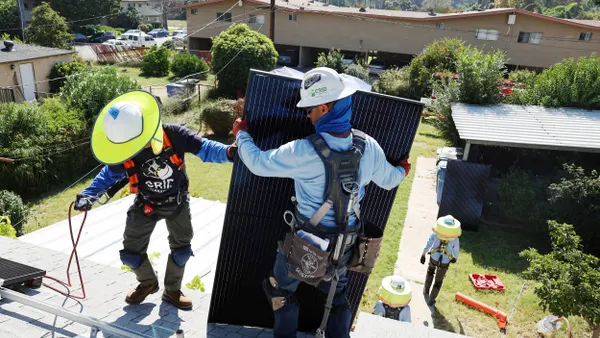
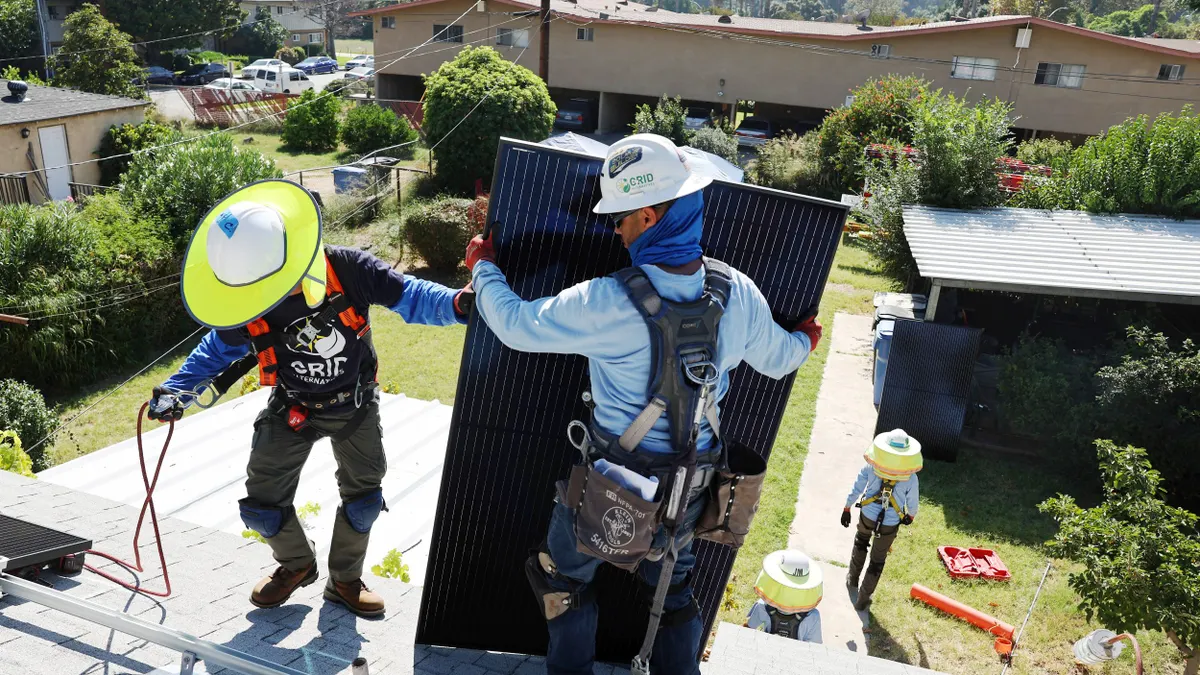
Solar for All is a grant program that the Biden administration’s EPA announced in April 2024, designed to disburse $7 billion in grant awards to 60 grantees “to deliver residential solar projects to over 900,000 households nationwide,” with a focus on low-income and disadvantaged communities.
The program was funded through the Inflation Reduction Act, which was curtailed in July 2025 by the One Big Beautiful Bill Act. The EPA froze the program in February 2025, then sent termination notices to grant recipients in August 2025.
Although Congress preserved Solar for All’s obligated funding in the OBBBA, EPA said in a release that it would “no longer be implementing the $7 billion Solar for All program to remain aligned with Congressional intent.”
But Judge Mary McElroy of the U.S. District Court for the District of Rhode Island said in her ruling that “Congress's clear intent was that EPA continue to administer the already obligated SFA grants. Defendants acted contrary to this intent.”
O’Neill said that as a result of the funding termination, her organization and its coalition partners had to cut staff. She also pointed to harm caused to developers who were counting on work from the projects, and the communities that expected to benefit from energy bill savings through the program.
IPC will be “going back and building these teams back up,” she said. “We had fully approved work plans, very detailed plans. Our products are designed, sitting, ready to go. It would obviously take time to pull our coalition back together and get on everybody's work queue. But this is a group that's super passionate.”
‘The ball is in EPA’s court’
IPC reaches out to EPA “every week ... but has not gotten engagement,” O’Neill said. She said she isn’t sure when funding might begin to flow again.
“We were hearing a lot at Climate Week that the rulings on the technical merits were substantive and important, and that has given folks a lot of encouragement about the ultimate merits and the ability to prevail,” she said.
Torrey said that in terms of next steps, “the ball is in EPA’s court.”
“They've obviously said they're considering their options, as every litigant does, but we're hopeful that they'll see the light on this,” he said.
In the lawsuit led by the Maryland Clean Energy Center, the plaintiffs — which include the state of Arizona and the California Public Utilities Commission — argued in a May 7 filing that each plaintiff “suffered damages at least amounting to the difference between the sum promised and the sum received, as well as the costs that Plaintiffs incurred as a result of the unlawful terminations.”
“This delay potentially increases overhead and labor costs, and causes lost opportunities for funding, in a manner that would not have occurred absent the EPA’s termination,” the filing said.