Advanced nuclear developers are pitching small modular reactors and microreactors as firm, low-carbon power for an increasingly strained grid. But early commercial deployments are being driven less by traditional utility procurement than by hyperscalers and other large energy users willing to help underwrite new projects.
Recent deals are taking shape around a three-party model involving developers, utilities and large energy customers. The arrangements give utilities a role integrating the power without requiring them to finance and own first-of-a-kind reactors, while large customers provide demand and help absorb development risk.
“If [SMRs] come along and they’re $120 a megawatt-hour equivalent, that’s still comparable to what we’re seeing now for natural gas units, if you can get them in the next few years."

Ben Olbrich
Deputy Utility Manager, Los Alamos County Department of Public Utilities
Candice Yu, director of business development at Kairos Power, described the approach at the inaugural Los Alamos Nuclear Forum on Aug. 25, hosted by the New Mexico Nuclear Alliance, a trade group promoting nuclear power that was founded last July by registered lobbyist Scott Lopez. The forum brought together developers, utility executives and national laboratory experts at a time when the industry is seeking to move advanced nuclear from zero-power criticality testing toward commercial deployment.
Yu said a wave of nuclear deals involving Google, Amazon and Microsoft over the past several years marked an inflection point for the market. Kairos’ 2024 agreement with Google, for example, targets up to 500 MW by 2035.
Yu characterized the deal as an “order book” rather than a one-off plant — an approach meant to enable standardized design, repeated construction and cost reductions across a fleet.
“The utilities who will benefit the most are the ones who are willing to find innovative contracting solutions and have the ability to find the right site for nuclear generation, and also just [the] ability to work quickly,” Yu told Utility Dive.
Grid constraints hinder development
But utilities face a more fundamental constraint, experts say: The grid may not be ready to accommodate new generation that quickly.
“We need a bigger grid,” said Lynn Mostoller, executive director of the New Mexico Renewable Energy Transmission Authority, adding that the West’s fragmented power system and long interconnection timelines could slow advanced nuclear deployment.
“You’re already too late for five years out because those resources are already in the RFP process,” Mostoller said during a panel discussion. “If you’re not in that mix, you’re going to miss the boat … [in the western U.S.] we're probably looking at the 2040 range to be putting more nuclear onto the large utility system.”
Kit Carson Electric Cooperative CEO Luis Reyes told attendees his rural co-op is evaluating localized generation, microgrids, batteries and behind-the-meter resources as transmission constraints make new lines difficult and slow to build.
Although many of his members are “anti-nuclear, pro-solar,” Reyes said nuclear power needs to be “on the table” as a low‑carbon option and potential long-duration resiliency resource during wildfire-related shutoffs.
Los Alamos County Department of Public Utilities, a small utility serving the national laboratory and other federal facilities, is considering 5-MW to 20-MW microreactors paired with long-duration energy storage to meet future power needs, according to Ben Olbrich, the county’s deputy utility manager for power supply.
He said locally sited nuclear could provide dependable power when solar generation is unavailable and reduce the need for new transmission. That reliability value could make nuclear competitive even at prices above established resources.
“If [SMRs] come along and they’re $120 a megawatt-hour equivalent, that’s still comparable to what we’re seeing now for natural gas units, if you can get them in the next few years,” Olbrich said in an interview.
‘The real bottleneck isn’t the reactor’
Matt Griffin, head of nuclear affairs at Antares Nuclear, said the company is targeting Joint Base San Antonio for its first commercial deployment following a recent criticality milestone and its selection that week for the U.S. Department of Energy’s Nuclear Energy Launch Pad. The company was also selected by the U.S. Army and Air Force to build microreactors at military installations as part of a Defense Innovation Unit pilot program.
Advanced nuclear siting, according to Griffin, will require blended public‑private capital, national‑lab partnerships and shared risk with the government.
“The real bottleneck isn’t the reactor — it’s the supply chain: fuels, precision components and transport — and until we fix that, you can’t turn prototypes into power on the grid,” Griffin said.
Griffin was joined by Chris Stanek, director of nuclear energy programs at Los Alamos National Laboratory, and Stephanie Booth, R&D manager for Sandia National Laboratories’ Advanced Nuclear Fuel Cycle Technologies program, on a panel discussing the challenges of early reactor designs, which Griffin called “most inefficient.”
The panelists said the industry is working to develop fuel designs that could reduce the volume and complexity of future waste streams. Concerns over radioactive waste have prompted debate over whether nuclear power can be considered clean energy and pushback from communities that could potentially host nuclear generation facilities.
Recently, the DOE under Trump has embarked on a new push to convince states that storing and recycling nuclear waste could be part of a much larger investment in “nuclear lifecycle innovation campuses.”
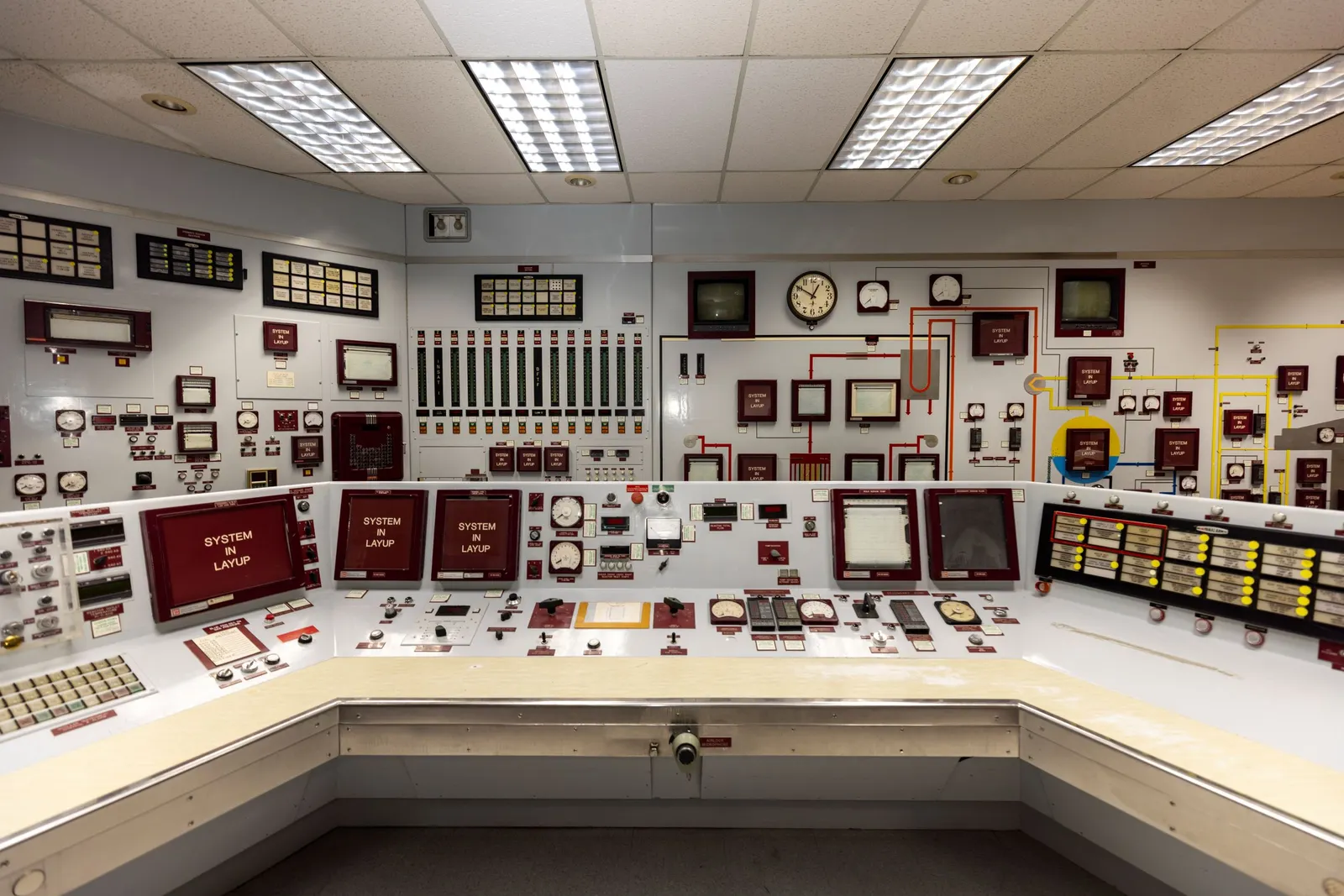
For utilities, the path forward may ultimately hinge on state policymakers. While nuclear facilities are regulated at the federal level by the Nuclear Regulatory Commission, utility resource plans and site selection are generally approved by state and local authorities.
During the 2026 legislative session, the New Mexico Nuclear Alliance unsuccessfully backed a measure that would have classified nuclear energy as a renewable resource under the state’s Renewable Portfolio Standard. Utah added nuclear to its clean-energy credit framework in 2024.
Before utilities can seriously consider nuclear projects, Reyes said, the state needs to establish a legal framework that allows them to do so.
“The first [step is] the legislature, the governor who’s sitting, needs to acknowledge that if we’re really going to get to this low, no-carbon world, [nuclear] has to be in statute so utilities can look at this,” he said.