Dive Brief:
- A federal judge on Monday granted Revolution Wind’s request for an injunction against a construction freeze issued by the U.S. Interior Department, allowing the project to continue while the underlying lawsuit proceeds.
- The ruling represents another setback for the Trump administration’s campaign to halt offshore wind development. This is the second time the same judge has issued an injunction on behalf of Revolution Wind, and some analysts predicted similar outcomes in cases brought on behalf of other offshore wind projects.
- Although the injunction is a “solid near-term victory” for Revolution Wind developers, Jefferies analysts said in a note published after the ruling that the order “does not alleviate longer-term concerns over whether the offshore wind farm will be allowed to be completed and eventually enter into service.” Still, they expected a favorable ruling for Dominion Energy Virginia on Jan. 16 in a separate case that would allow it to continue construction on its 2.6-GW Coastal Virginia Offshore Wind project.
Dive Insight:
Judge Royce C. Lamberth of the U.S. District Court for the District of Columbia, a Ronald Reagan appointee, offered few details in his order, saying merely that Revolution Wind had “demonstrated likelihood of success on the merits of its underlying claims, it is likely to suffer irreparable harm in the absence of an injunction, the balance of the equities is in its favor, and maintaining the status quo by granting the injunction is in the public interest.”
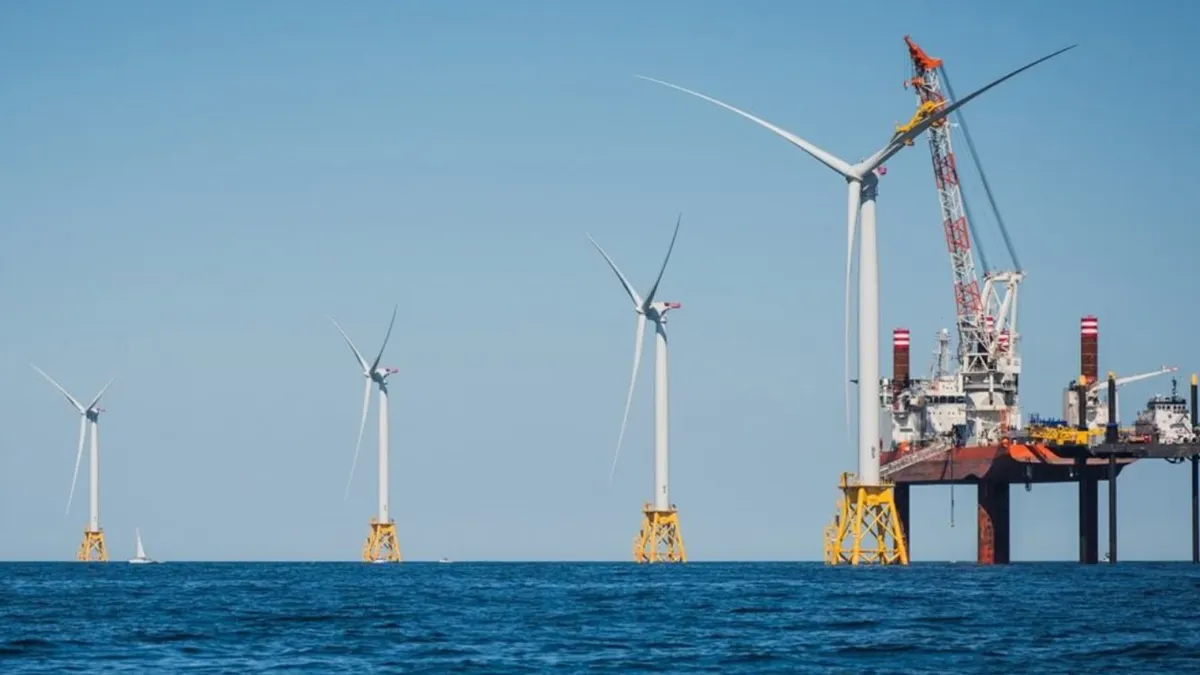
Ørsted, which owns the 700-MW Revolution Wind offshore Rhode Island with Global Infrastructure Partners’ Skyborn Renewables, issued a short statement saying the company “will determine how best it may be possible to work with the US Administration to achieve an expeditious and durable resolution.”
The Interior Department did not immediately respond to a request for comment on the injunction or the taxpayer costs of its ongoing legal campaign to halt offshore wind projects.
This is the second time Revolution Wind has won an injunction against the federal government’s efforts to stop its construction. In September, the same judge issued a nearly-identical worded order following a previous stop-work order from the Trump administration that reportedly cited national security and interference with “reasonable uses” of federal waters.
The most recent suspensions issued on Dec. 22 applied to all offshore wind facilities under construction due to “national security risks” identified in “recently completed classified reports.”
Developers of at least four of the five affected projects have filed legal challenges, including Dominion, which told a court that the government is refusing to share any more information about the national security concerns it cited as the basis for its actions, departing from past precedent and foreclosing “any possibility that the government will follow normal protocols.”
Jefferies noted that “with the initial suspension order relating to undisclosed national security concerns, it is still unclear whether the [Bureau of Ocean Energy Management’s] rationale meets a legally-compelling standard.”
But the government’s track record in court on this issue appears to weigh on the developers’ side, it suggested.
“The legal review for CVOW is separate from Revolution; however, the underlying national security analysis should be the same,” it said. “CVOW most likely can resume.”
Other analysts also appeared skeptical of the government's chances of success.
Clearview Energy Partners said that while other judges are not bound by Judge Lamberth’s ruling, Monday's outcome "could suggest favorable outlooks for those suspended projects, too."
"The administration alleges that new national security concerns were identified in a November 2025 report, but it is likely the courts will view the claims as politically motivated," said Capstone earlier this month. "The affected projects are spread across the East Coast, and each has distinct national security considerations. Based on the administration’s track record, the concerns will not have significant sway in court."
Federal defendants appeared to try and put distance between Revolution Wind and another case brought by Ørsted’s other project, Sunrise Wind.
On Sunday, government lawyers filed a document in the U.S. District Court for the District of Columbia objecting to the designation of the Sunrise case as “related to” the Revolution Wind case.
“We believe the cases are more properly treated as unrelated,” it said. “Though the Department of the Interior’s reasoning across the two December 22 orders appears to have been similar, each order was a separate action and applied only to the leaseholder in question.”
Despite a favorable ruling for Revolution Wind, Moody’s downgraded Ørsted’s outlook Monday from stable to negative, citing “an elevated risk that persistent political opposition in the US” may impede its ability to complete construction of its two American projects.