Dive Brief:
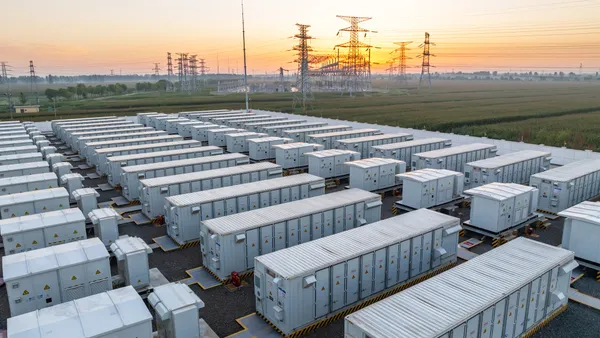
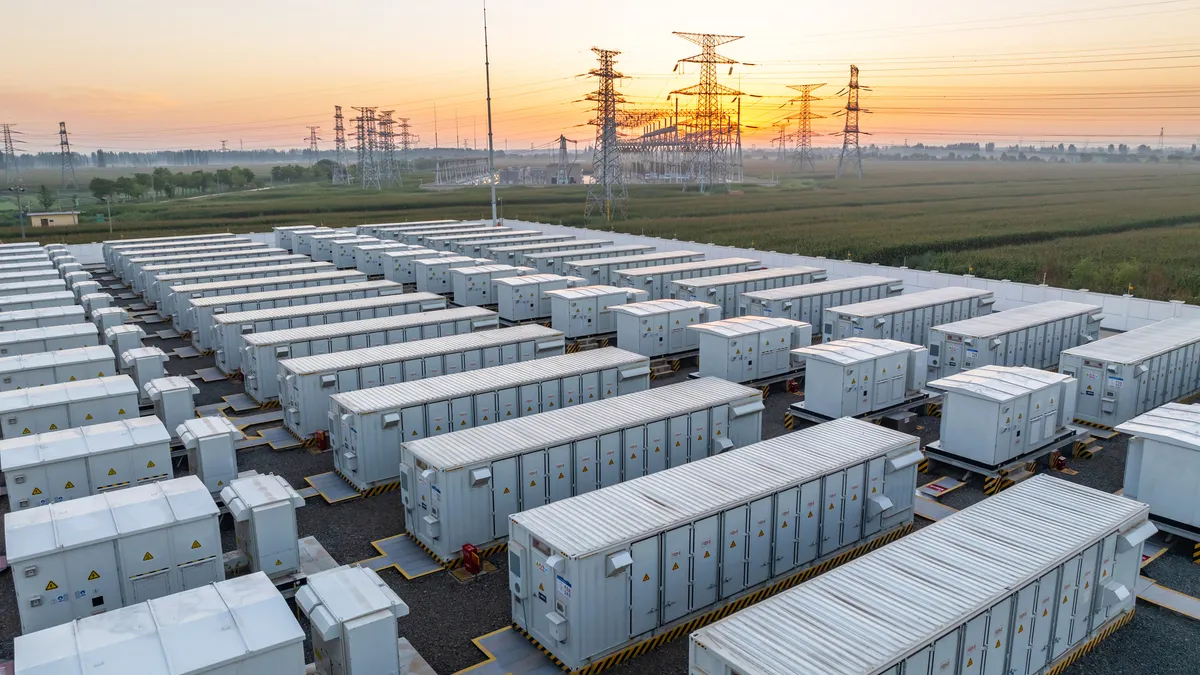
- The New Jersey Board of Public Utilities approved Garden State Energy Storage Program incentives on March 4 for three transmission-connected battery energy storage projects with a combined capacity of 355 MW. The same day, it opened a solicitation for another 645 MW of standalone storage or solar-plus-storage eligible for GSESP incentives.
- The two tranches fulfill the BPU’s goal to procure 1 GW of bulk energy storage by this summer and represent half of the state’s broader goal for 2 GW of grid-tied storage by 2030. The timing of the solicitations positions the projects to participate in the PJM Interconnection’s base residual capacity auction next year, the BPU said.
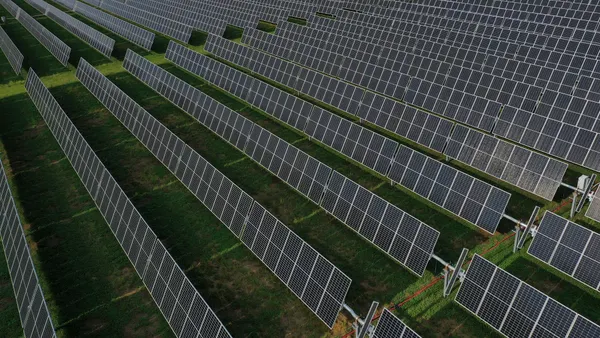
- The BPU also said it would expand its community solar program by 3,000 MW, marking the largest capacity auction in state history. The BPU said the procurement, which runs through 2029 or until all capacity is subscribed, would make New Jersey one of the top states for community solar deployment.
Dive Insight:
Two large projects in northern New Jersey accounted for most of the capacity in the Garden State Energy Storage Program Phase 1, Tranche 1, awards: Jupiter Power’s 200-MW Woods Landing Storage and Elevate Renewables’ 150-MW Two Rivers Energy Storage, also known as the Garden State Reliability Project.
The tranche also included a 5-MW North America Energy Storage Corp. project in central New Jersey.
The three Phase 1, Tranche 1, projects will save ratepayers more than $169 million over the life of the program by moderating wholesale electricity prices during periods of peak demand, the BPU said. The Phase 1, Tranche 2, solicitation is open both to standalone storage projects and to solar-plus-storage projects that do not qualify for storage incentives under the BPU’s Successor Solar Initiative, which it said would “[fill] an important market gap.”
The first tranche’s North Jersey projects will take shape at operating or retired fossil power plants.
Woods Landing will sit on part of a defunct coal-fired power plant in Sayreville and connect to an existing substation via a short tie-line. The Garden State Reliability Project will use excess land at Alpha Generation’s 1,229-MW Bergen Generating Station, a combined-cycle natural gas plant built in the early 2000s.
It’s one of several energy storage projects Elevate is developing at natural gas plants run by Alpha Generation, Elevate Chief Commercial Officer Will Mitchell said in an interview. Both companies are owned by funds managed by ArcLight Capital Partners, a Boston-based energy infrastructure group.
Elevate’s project pipeline tilts toward states with robust incentives for energy storage deployment, particularly in capacity-constrained organized wholesale markets like the PJM Interconnection, the New York ISO and ISO New England. Mitchell ticked off state initiatives that could combine to bring several gigawatts of storage capacity online before the decade ends: Massachusetts’s 83E program, which awarded 1,268 MW of storage capacity in December; New York’s Index Storage Credit incentive, which aims to facilitate 6 GW of energy storage deployment by 2030; and Maryland’s Next Generation Energy Act, which will procure 1.6 GW of energy storage beginning this year.
New Jersey’s ambitious energy storage target is likewise appealing for Elevate, Mitchell said. The state has strong market fundamentals, too, with high capacity prices and relatively little generation added in recent years, he said.
“High capacity prices are not great for ratepayers, but that is the signal needed to get projects built,” Mitchell said. It helps that energy storage has a broad constituency in New Jersey and support from its current political leadership, he added.
New Jersey Gov. Mikie Sherrill, a Democrat, made energy affordability a top issue during last year's campaign. At the start of her term earlier this year, she signed an executive order directing the BPU to tap funds from the regional greenhouse gas cap-and-trade program and utilities’ solar alternative compliance payments for ratepayer bill credits.
“The Sherrill administration is incredibly focused on energy…we talk to senior [administration] staff and BPU staff, and everyone is incredibly collaborative and focused on bringing new capacity online,” Mitchell said.