NextEra Energy has secured definitive agreements to build three federally backed energy “hubs” and has a pipeline of 30 to 40 such projects, Chairman, President and CEO John Ketchum said during the company's third-quarter earnings call on Wednesday.
Two of the hubs, to be built in Texas and Pennsylvania, are backed by the Government of Japan and the U.S. Department of Commerce. An initial $3.3 billion in funding, which was released in August, will go toward procuring turbines and other long-lead equipment. NextEra expects to build up to 10 GW of gas-fired generation for the two hubs, slated for completion in 2032.
A third hub backed by the Republic of Korea and the U.S. Department of Commerce will feature 6.5 GW of natural gas generation serving a 5 GW data center campus in Encinal, Texas. The first phase of the project could come online as early as 2029.
The three hubs have brought NextEra $5.7 billion in funding so far this year, Ketchum said. Although NextEra will not need to invest its own capital in these hubs, Ketchum said the projects would generate at least half of the earnings the company would expect if it owned and operated the hubs. Building co-located battery storage at the hubs could increase the company's earnings potential, he said.
NextEra has also joined a coalition of energy and infrastructure companies to build a privately owned energy hub with 2 GW of natural gas generation and 2.6 GW of battery storage in western Kentucky, Ketchum said.
Ketchum said he was “looking forward” to defending the company’s planned merger with Dominion Energy in Virginia, where the deal has run into political opposition, including from Lt. Gov. Ghazala Hashmi, and Gov. Abigail Spanberger, D, who proposed a six-year rate freeze among conditions for approval. NextEra plans to extend bill credits for Virginians from two to four years and to offer more support for bill assistance programs and workforce development. The merger would also create 1,000 jobs in Virginia, Ketchum said, and accelerate the state's clean energy goals.
“If we cannot get it done, I do not know who else can in terms of meeting the requirements of the Virginia Clean Economy Act,” he said.
But a recent report by the Institute for Energy Economics and Financial Analysis questioned the companies' combined commitment to clean energy, noting that the merger plans do not mention offshore wind and that NextEra has been dismissive of it.
“By overlooking offshore wind and paying lip service to coal facilities, it is clear that NextEra is looking out for its shareholders first and foremost, and not Virginia ratepayers,” Dennis Wamsted, an energy finance analyst at IEEFA, said in a statement earlier this month.
A Goldman Sachs analyst on Wednesday's call also noted that NextEra Energy Resources has been quietly dropping solar projects, with backlogged solar projects slated for 2028 to 2029 down half a gigawatt from the company's second-quarter report. Brian Bolster, president and CEO of NextEra Energy Resources, said the revision reflected shifts in customer interest from solar to energy storage and was not related to rising solar costs.
“As we're out with customers right now, we've seen a focus on capacity. That's why we've seen a big pickup in storage. We are starting to see our customers look for more energy products,” he said.
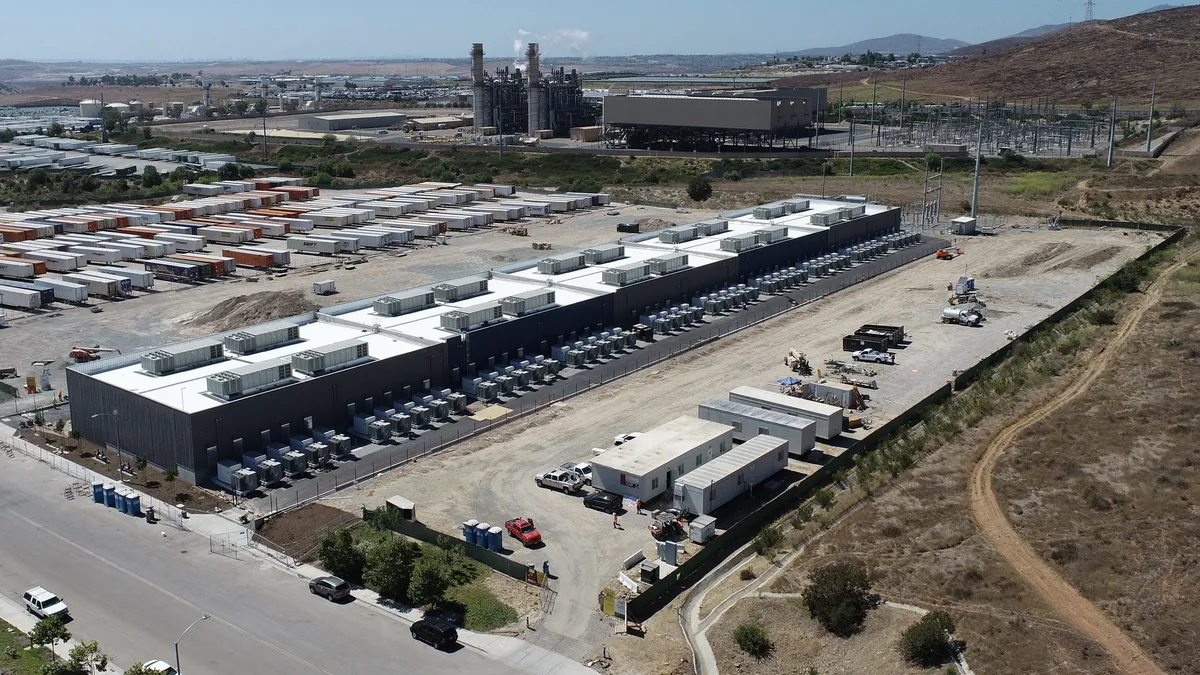
The company added 2.4 GW of contracts for battery storage to its backlog during the third quarter, in addition to the 2 GW of contracts signed in the second quarter.
Company executives declined to answer analysts' questions about large load development projects in Florida, beyond saying they expect to announce a project before the end of the year.
“These are complicated deals, multibillion-dollar deals that take some time, and given the outside environment we're working with the local communities to build the consensus and support so we can move forward before we announce these deals,” Scott Bores, FP&L president and CEO, said.
Ketchum touted FP&L’s performance during Hurricane Isaias, which hit Florida’s panhandle earlier this month. The utility restored service to 97% of customers within three days of the storm, he said, which, according to the company's quarterly filing with the U.S.Securities and Exchange Commission, required $450 million to $500 million in storm restoration.
Parent company NextEra Energy continues to face multiple class action securities lawsuits, including a suit alleging the company made false or misleading statements about its campaign finance and political activities in Florida. A motion by the company to settle that suit for $150 million was denied in August without prejudice, according to the SEC filing. After giving the court more information about the agreement, the settling parties earlier this month again asked the court to approve the settlement.