Dive Brief:
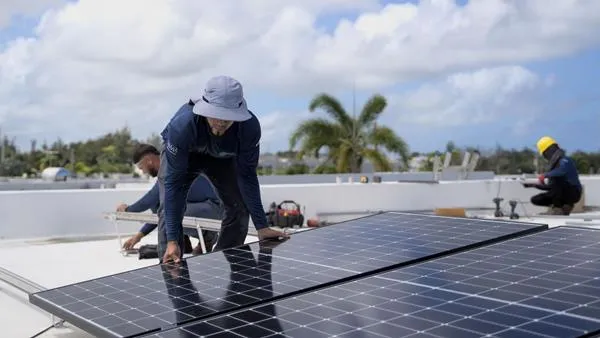
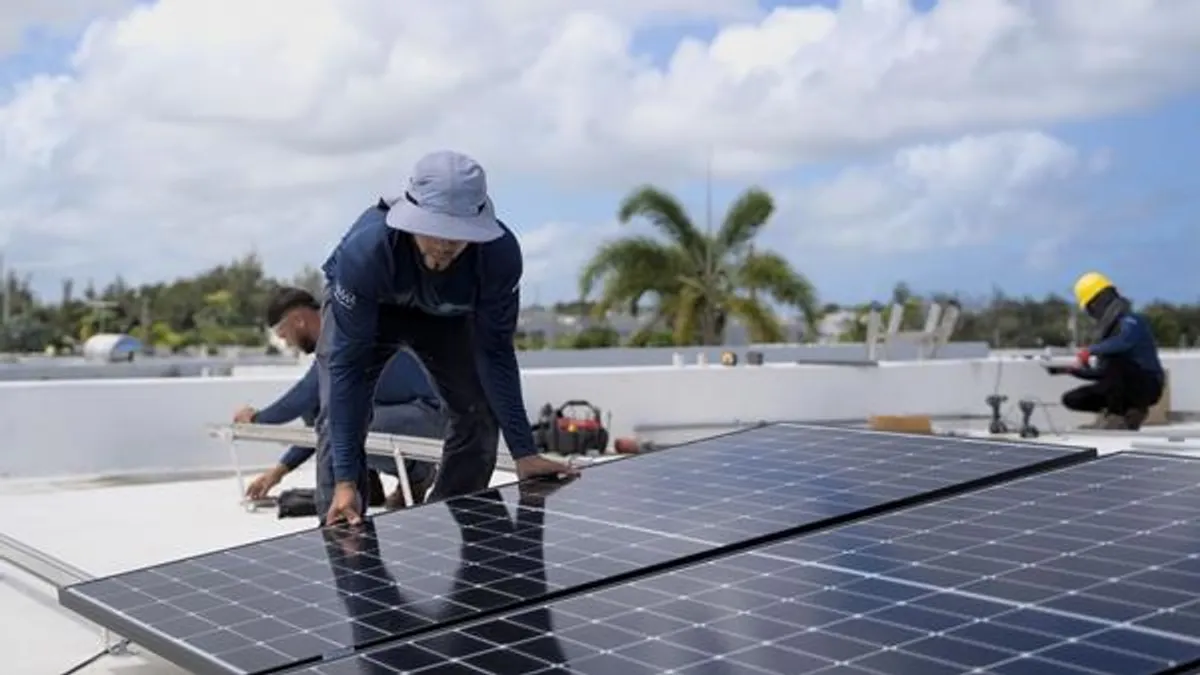
- Rooftop solar capacity in Puerto Rico reached around 1.5 GW in 2025, passing natural gas and becoming the second-largest generation source in the territory behind petroleum liquids, according to a Thursday report from the Energy Information Administration.
- “Distributed generation resources, particularly rooftop solar coupled with battery systems, have grown as Puerto Rico has grappled with electricity reliability and frequent power outages,” EIA said. “On average, 3,850 rooftop solar panel systems were installed in homes and businesses per month in 2025, with a cumulative 191,929 systems in place at the end of the year.”
- The island’s grid operator LUMA Energy had its new CEO, Janisse Quiñones, begin her tenure on Monday. Quiñones said in a release that two of her priorities are to “transform” and “stabilize” the island’s fragile grid.
Dive Insight:
EIA noted that distributed battery storage has increased alongside rooftop solar in Puerto Rico, with data from the Puerto Rico Energy Bureau showing that “171,372 households and businesses had a distributed battery storage system at the end of 2025, with a total energy capacity of 2,864 megawatt hours.”
Rooftop solar generation in Puerto Rico has increased each year since 2017, when Hurricane Maria battered the island and rendered 80% of its grid inoperable, according to a 2019 EIA report.
After Hurricane Maria, Puerto Rico’s “net generation dropped from 1.57 million megawatt hours (MWh) in August 2017 to 0.27 million MWh in October 2017,” said EIA. A year later, generation had recovered, but renewables still made up a small share of total generation.
While the capacity of other generation sources on the island remained steady, increases in rooftop solar generation since 2017 have brought Puerto Rico’s total generation capacity from below 6 GW to well over 7 GW.
In January, the Trump administration canceled $300 million of funding for solar energy installations in Puerto Rico, citing its increased share of the island’s generation mix.
“The Puerto Rico grid cannot afford to run on more distributed solar power,” the Department of Energy said in an email, according to reporting from the Associated Press. “The rapid, widespread deployment of rooftop solar has created fluctuations in Puerto Rico’s grid, leading to unacceptable instability and fragility.”
However, LUMA has been leveraging Puerto Rico’s network of distributed resources to bolster the grid, EIA said.
In summer 2025, LUMA “expanded the Customer Battery Energy Sharing program, allowing power stored in distributed battery storage units to supply power to the grid when the operator forecasts electricity supply shortages,” creating virtual power plants which LUMA works with companies like Sunrun and Tesla to manage, said EIA.