Tom Rutigliano is senior advocate and Claire Lang-Ree is advocate for the Sustainable FERC Project at the Natural Resources Defense Council.
This summer, the 67 million people served by the PJM Interconnection were hit with an extra $9.4 billion in electricity bills as proposed data centers drove up prices. Another $1.4 billion increase is already locked in for next summer, and there’s no end in sight.
Unless something changes, PJM consumers will pay an extra $100 billion through 2033 as new data centers continue to exceed available power supply. By 2028, families in the region will be paying around $70 a month extra on their electricity bills.
Future reliability is also at risk. The power grid in the region is full: Starting in summer 2026, PJM will have just enough power to keep the grid reliable.
Data centers are connecting to the grid faster than we can build new power supply. Right now, PJM has no authority to stop those connections, and data centers are allowed to connect even if there isn’t enough electricity to go around. If nothing changes, by June 2027, the region may fall below reliability standards. That means a greater risk of rolling blackouts, especially during winter storms and summer heat waves. PJM appears to agree: It recently published scenarios that show deep shortages in 2030.
The consequences of overestimating data center demand fall on the public. There are currently no guardrails to ensure that developers and utilities don’t speculate wildly about the demand that will exist in the future.
This overestimation directly impacts prices — it’s how PJM determines how much capacity to buy, three years in advance. NRDC estimates that the public will pay over 80% of increased capacity costs caused by data center demand forecasts. If these data centers don’t show up, the public is still left footing the bill. To add to the problem, most of the money goes to existing power plants, not new supply that we desperately need.
That is why, in collaboration with a bipartisan coalition of over 50 state legislators, led by Maryland Sen. Katie Fry Hester, we’ve proposed a simple solution. PJM must stop buying capacity for new data centers and instead only provide them with interruptible service until they bring their own capacity.
Data centers can still connect to the grid and get power 99.97% of the time. Not providing a guarantee of service for that remaining 0.03% of hours will save the public tens of billions of dollars.
Bring-your-own-capacity puts responsibility for new supply where it belongs: on the data centers that need the power. It’s only common sense. The biggest companies in the world can make their own capital investments. They certainly shouldn't be allowed to force the public to make investments on their behalf or risk blackouts so that electricity can go to data centers instead.
This doesn’t mean developers need to rush to build traditional power plants. Given reports of multiyear delays in obtaining critical parts and completing necessary transmission upgrades, that might not even be possible. The electric industry just moves slower than Silicon Valley is used to.
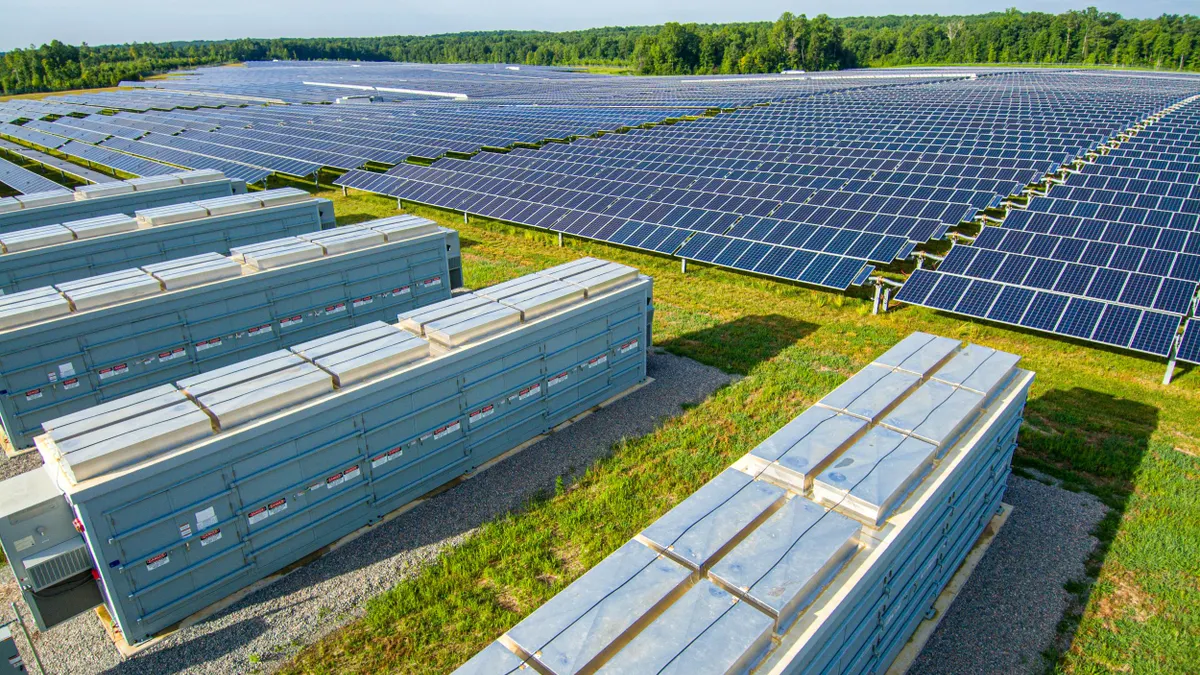
Instead, data centers should be looking to rapidly obtain firm service by investing in energy storage and being as flexible as possible. Right now, in PJM, a 6-hour battery contributes more to reliability than a gas-fired combustion turbine, thanks to the battery’s better reliability in the winter. This storage also provides a crucial missing link PJM needs to become a low-carbon grid. A modest investment on the scale of data center development can build enough storage to cover the demands of data centers and provide a clear path to zero-carbon operations. Any tech company that's serious about its climate commitments and speed to market should be looking very seriously at large-scale, grid-connected energy storage.
Similarly, a little data center flexibility can make a big difference in grid reliability and costs for other consumers. Our proposal embraces that, allowing any data center willing to be flexible in its operations to pull its own weight through PJM’s demand response programs. Similarly, our proposal lets power generation developers willing to connect to the grid quickly — without waiting years for transmission upgrades — to dedicate every watt of their output to support data center operations.
Many proposals include incentives for data centers to bring their own generation or capacity, but they don’t say what happens if they don’t. Without a solid backup plan, these proposals are not guaranteed to protect residents from higher electricity bills and risk of blackouts. States that wish to incentivize responsible data centers can continue to do so — all this approach adds is an insurance policy.
If nothing changes, people served by PJM will spend billions to prop up data centers, all while still risking blackouts on the hottest and coldest days of the year. This is unacceptable.
On Nov. 19, PJM members voted no-confidence on 12 different proposals for how to solve the issue of large loads, including on PJM’s own proposal. Now the board of directors must choose: Will it fully protect the general public from the risks of blackouts and soaring electricity bills, or will it fall short on providing reliable electricity?