
American utilities are navigating two distinct yet converging grid challenges — and the conventional playbook is struggling to keep up with either of them.
At the system level, load forecasts that were relatively stable for decades have lurched upward almost overnight. The explosion of AI infrastructure is a major driver: five-year peak load forecasts have increased nearly sevenfold since 2022, and data centers are projected to consume up to 12 percent of U.S. electricity by 2028. Unlike traditional commercial load, AI compute draws power in volatile, unpredictable patterns that stress transmission infrastructure in ways the system was never designed to handle. The instinctive response — build more generation and transmission — faces interconnection queues running four to twelve years in major markets, regulatory headwinds, and costs that are landing directly on customer bills. The same AI driving that load growth, applied to demand-side management, is also part of the solution — and at a fraction of the energy footprint.
At the distribution level, the pressure looks different but is no less urgent. EV adoption is accelerating fast, and while the system-level load impact is manageable over time, the local impact is not. As little as five to ten percent EV penetration on a specific feeder can push transformers toward their thermal limits — not because of overall demand, but because unmanaged charging creates highly localized, synchronized load spikes. With distribution transformer lead times now stretching beyond two years, the margin for error is thinning fast.
The conventional response to both challenges is the same: build. But utilities facing regulatory scrutiny on rate increases — and ratepayers already feeling the strain of rising electricity bills — need solutions that can move faster, cost less and prove results. Every dollar of avoidable infrastructure spend shows up in customers’ monthly bills.
The answer is already on your feeders.
What managed charging has proven
Hundreds of thousands of EVs are already enrolled in active managed charging programs across the U.S. These aren't pilots waiting to be proven. They're operational programs delivering measurable grid and affordability outcomes at scale.
In California, a CEC-backed managed charging program with MCE and Silicon Valley Clean Energy achieved 98 percent of EV charging load delivered off-peak — not through blunt time-of-use incentives, but through active, software-driven optimization that shifted load intelligently in real time while ensuring drivers' vehicles were ready when needed. More than half of enrolled participants came from disadvantaged communities, demonstrating that well-designed programs can deliver equitable outcomes alongside grid benefits — putting money back in the pockets of the customers who need it most.
ev.energy and The Brattle Group have quantified the system-level value of this approach: managed EV charging could unlock up to $30 billion in annual utility cost avoidance across the U.S. by 2035, including up to $575 in avoided costs per actively managed vehicle per year. These figures are grounded in operational program data and established utility planning methodologies — not modelled projections. At the distribution level, the California PUC’s Public Advocates Office estimates mass adoption of managed charging could deliver between $5 billion and $18 billion in distribution grid upgrade cost savings by 2040. That avoided cost is the headroom utilities need to keep rates from climbing further.
In the United Kingdom, where distribution-level flexibility markets have matured faster than in the U.S., the infrastructure impact is already visible. UK Power Networks avoided £199 million (~$265M) in infrastructure costs in 2023/24 through coordinated flexibility services, with more than 95 percent of participating assets being low-carbon technologies — EV chargers, heat pumps and batteries — operating across hundreds of daily auctions. Less infrastructure spend means less upward pressure on bills for every customer in that network area.
The step change: intelligent multi-asset orchestration
Managed EV charging is the foundation. But the next phase of grid flexibility goes further — and the assets to deliver it are already being installed in homes across utility service territories.
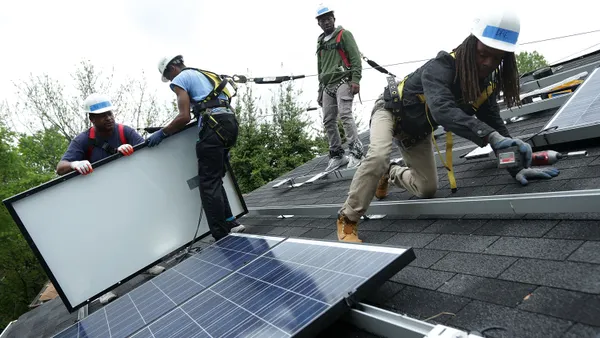
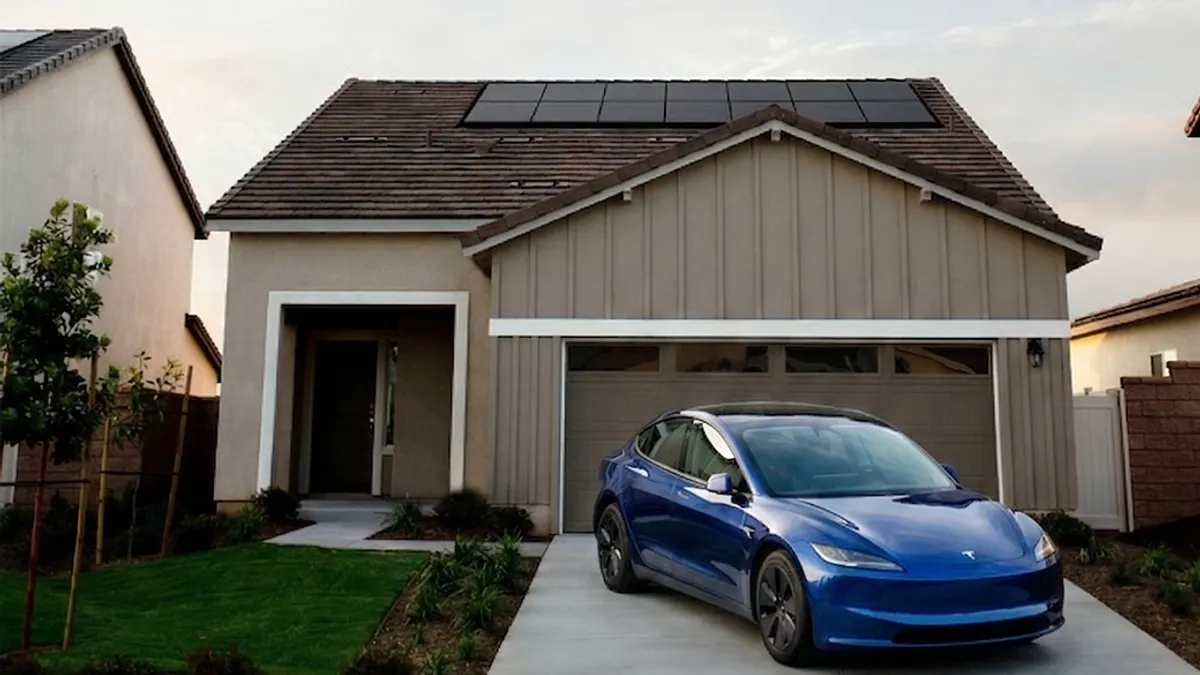
A home with an EV, rooftop solar and a residential battery is a fundamentally different grid resource than a home with an EV alone. When those assets are siloed, each operates on its own logic. When they're coordinated through an intelligent platform that continuously optimizes across all three, the picture changes entirely: the EV absorbs overnight load in the valley, the battery captures midday solar surplus and dispatches during the evening peak, and the combined effect on the feeder is meaningfully larger than any single asset could deliver.
This is where AI-driven orchestration changes the calculus for utilities. Rather than relying on blunt price signals or scheduled dispatch events, an intelligent platform learns the behavior of each enrolled asset and acts autonomously to deliver the right load shape at the right moment — producing more usable, predictable flexibility per customer than any single-asset program can match.
EVs deliver large, flexible blocks of energy that can be shifted within an overnight window with no impact on the driver. Residential batteries add dispatchable storage with daily cycling capability. Solar optimization reduces midday export stress on feeders already strained by high penetration. Together, intelligently coordinated, they compound into a non-wires alternative with the depth to defer real capital expenditure — and keep that cost off ratepayer bills.
Measuring what actually matters
As utilities evaluate demand-side programs, the metric that most often leads the conversation — enrolled nameplate capacity — is also the least useful for grid planning. Not all enrolled capacity performs equally. A managed EV charging program delivers flexible energy every day; our modelling shows most thermostat demand response programs are limited to a handful of dispatch events per month before participants opt out. The gap in monthly shiftable energy between the two asset classes runs to an order of magnitude or more.
What matters for grid planning — and for ratepayers — is reliable, verifiable load flexibility at the right time and place, with the measurement and verification to support regulatory filings and infrastructure deferral decisions. Programs built around assets that deliver genuine, daily flexibility produce fundamentally different outcomes than those built around occasional curtailment events. And the difference shows up not just in grid performance, but in the avoided costs that don't get passed through to customers.
The window to act is now
The temptation to treat flexibility programs as a future-state solution — to wait for frameworks to solidify and business cases to fully prove out — is understandable. But the evidence no longer justifies the wait.
Active managed charging programs are delivering results at scale today. AI-driven platforms are making multi-asset orchestration operationally viable at utility scale — not in five years, right now. The regulatory environment is moving toward recognizing coordinated DER flexibility as a credible alternative to traditional infrastructure spend. And every year of delay is a year of avoidable capital investment, rising customer bills and grid stress that intelligent demand management could have relieved.
The assets are on the feeders. The technology is proven. The business case is made for the grid, for DER owners, and for every ratepayer who benefits when infrastructure costs don't climb.
ev.energy works with utilities including Con Edison, National Grid, and PG&E to deliver and verify demand-side flexibility programs at scale. Speak with the ev.energy team.