
Burying utility lines is hardly a new idea. What has changed is the pressure behind it. Municipalities, developers, contractors and utilities now face conditions that overhead infrastructure was never built to handle. Extreme weather keeps testing the grid's limits. Electrification is pushing loads higher. Data center demand is climbing fast and aging transmission systems are running out of room to absorb it all.
Meanwhile, the tools available to engineers and contractors have caught up. Digital design platforms, refined installation methods and improved conduit systems now make underground construction more predictable and more affordable than it used to be. What was once a niche approach reserved for special circumstances is becoming standard practice, built on durability, labor savings and long-term reliability.
Why utilities are moving underground
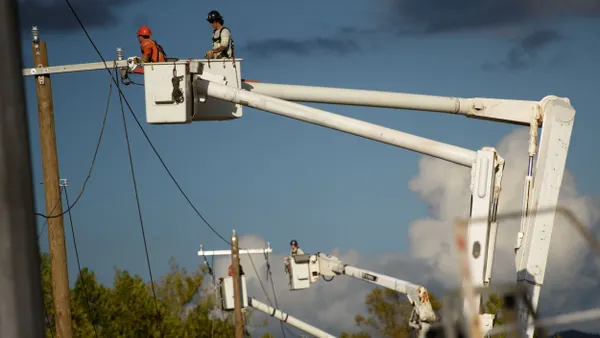
Hurricanes, ice storms, wildfires and ordinary vehicle collisions have turned into serious cost drivers. The damage isn't only physical. Regulatory scrutiny follows, insurance costs rise and customers grow less patient with outages. A single major storm can wipe out years of service that overhead lines were supposed to provide.
Underground systems sidestep much of that exposure. Shielded from the weather, cable and conduit degrade more slowly, fail less often and behave more predictably when something does go wrong. Lifespan increases substantially, especially when the conduit itself is chosen to resist heat, corrosion, fault damage and shifting soil.
There's a labor case here too and it's not a minor one. Crews working with lightweight, prefabricated duct banks need fewer hours to finish a job. Given how tight the skilled-labor market has become, that kind of efficiency carries real weight.
Projects worth watching
California: Bringing costs down at scale
PG&E's wildfire-mitigation program has crossed a significant threshold. The utility has energized more than 1,200 miles of underground power lines since 2021. Per-mile costs, once above $4 million, have fallen to about $3.1 million, as its designs and construction processes become more standardized.
It remains the largest undergrounding effort in the country and it offers a clear lesson: repetition and scale drive costs down in ways smaller programs simply can't replicate.
Florida: A city nearly finished
Winter Park has been at this longer than almost anywhere else and the city is now closing in on a 2030 completion date for its municipal undergrounding efforts. Roughly 81% of its distribution lines already sit underground. The city's own financial analysis points to about $70 million in net savings compared to staying overhead, with fewer outages and repairs along the way.
Winter Park makes the economic argument for undergrounding about as clearly as any project in the country.
Michigan: Pilot project finds success
Consumers Energy completed a $3.7 million pilot to bury nine miles of overhead lines across six counties. It was a modest effort next to California's buildout, but the intent behind it included: measuring outage reduction, tracking long-term reliability gains and understanding how underground systems perform in Michigan's particular soil and weather conditions. Results showed a 100% reduction in storm outages. Expansion of the project is expected with the company aiming to bury 50 more miles over the next five years.
The tools changing how contractors build
The most significant shift of the past few years hasn't come from policy. It has come from the tools contractors now bring to the jobsite itself.
Engineers now use BIM and Revit modeling to map an entire underground corridor, electrical, fiber, water and sewer alike, before a single trench opens. Cable-pulling software calculates tension, sidewall pressure and lubrication needs in advance, which cuts down on mid-pull surprises. Platforms like Trimble and ConstructConnect give estimators visibility into active bids, material trends and where the next opportunities are likely to surface.
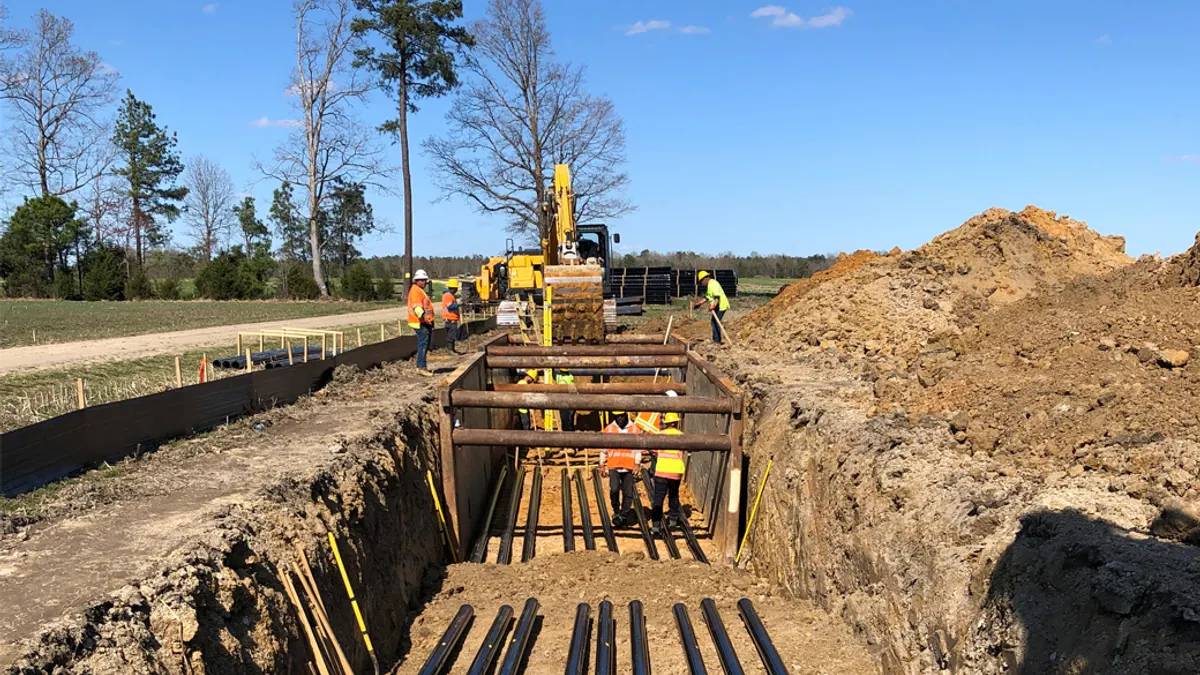
Prefabricated duct banks, delivered ready to install, are showing up on more jobsites nationwide. They shorten trench time, reduce how long workers spend exposed to hazardous conditions and tighten both schedules and labor costs.
Undergrounding, in short, has become far more predictable than it used to be.
Conduit selection: Why the material choice carries so much weight
No two underground installations look alike. Soil conditions, voltage, depth, backfill, water table and environmental exposure all vary from site to site, which makes conduit selection one of the more consequential decisions an engineer or contractor will make.
Rigid steel still holds up well where mechanical stress is severe, though its weight creates real handling and safety concerns, particularly in narrow or deep trenches. PVC remains common for shorter runs and standard distribution work, but it comes with known weaknesses: it deforms under heat, it can burn through during a difficult pull and it can melt the cable to the conduit interior during fault conditions. PVC-coated rigid steel solves the corrosion problem but keeps the weight and handling issues that come with any metallic system.
Fiberglass conduit (RTRC) has gained ground steadily for medium-voltage distribution, industrial infrastructure and long-distance pulls. Its low coefficient of friction supports longer, smoother cable pulls. It's light enough to ease worker strain, and improve trench safety and it resists corrosion and chemical exposure. It lacks the burn-through risk that plagues PVC elbows. Add fault resistance, a strong strength-to-weight ratio and thermal stability that keeps cable performance consistent and it's easy to see why so many engineers now specify it by default.
Where lifespan, no burn-through, corrosion protection and labor savings matter most, fiberglass has become the material more contractors reach for first.
Common pitfalls in underground installation
Good materials only go so far without careful planning.
Undersized pullers, using vehicles to pull cable, or skipping tensiometers on a long run can put both worker safety and cable warranties at risk. A missing rope swivel, sheave, or quad-block seems small until it stalls a project and introduces risk that wasn't there before.
Burn-through in PVC elbows remains one of the costliest and most frequent failures on site, especially over long distances, tight radii, or high pulling tension.
Meeting code and design standards
Underground work has to satisfy several overlapping requirements and which ones apply depends on ownership and project type. The NEC governs most commercial and industrial installations. The NESC covers utility-owned infrastructure. IEEE standards inform conduit sizing, bend radius calculations and thermal design.
Material specifications add another layer. ASTM sets the testing protocols conduit has to pass. UL listings confirm safety compliance. ISO 9001 certification ensures manufacturing consistency and traceability. Overlook any of these and a warranty can void or system performance can suffer down the line.
Safety and execution in the field
Trench safety isn't negotiable. Lighter materials let crews move faster and spend less time in confined, hazardous conditions.
Custom offsets around existing structures come up more often than contractors expect. Working with a manufacturer that can provide tailored solutions on short notice often determines whether an installation moves smoothly or grinds to a halt mid-pull.
Looking ahead
Federal infrastructure funding continues to support utility infrastructure work. Weather-related risk and grid-security concerns keep pushing utilities away from overhead lines. Data center growth is reshaping electric load in ways few networks were designed for and utilities increasingly see undergrounding as a long-term asset strategy rather than a response to storm damage after the fact.
Contractors preparing for that shift should bring digital planning into projects early, lean on prefabrication and smarter material choices to control labor costs and judge conduit by lifecycle performance rather than sticker price. Undergrounding is no longer a specialty service. It's becoming core infrastructure work.
Build your next buried utilities project with conduit engineered for long-term performance. Find a rep for electrical conduit solutions that cut labor costs, improve reliability and hold up in the toughest environments.