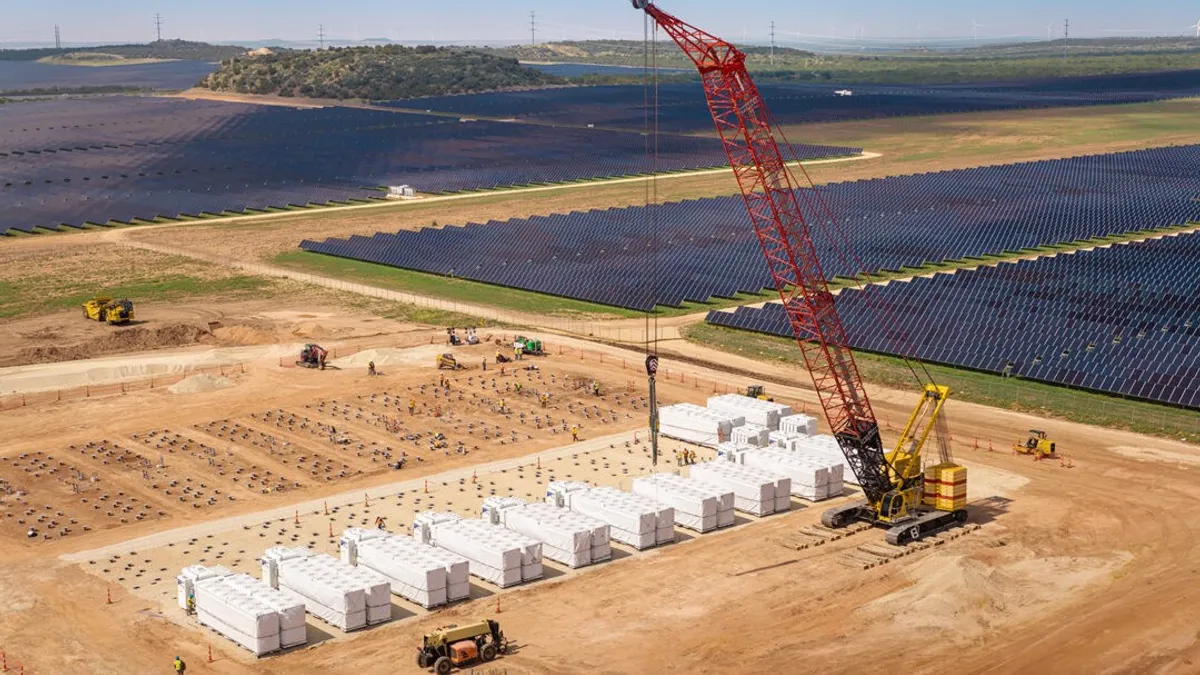
The levelized cost of electricity for four-hour battery storage is now cheaper than gas peakers in markets across the globe, according to a Wood Mackenzie analysis published Thursday.
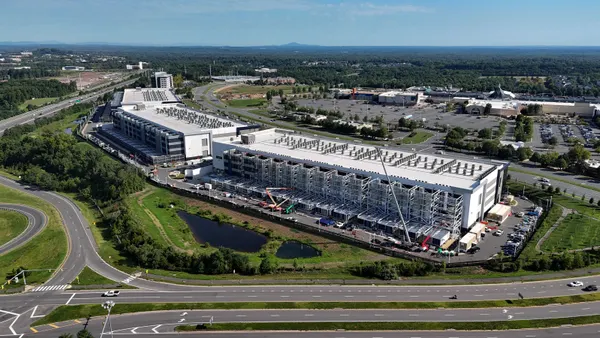
In North America, investment in gas generation capacity is entering “a supply deficit cycle through the late 2030s,” the firm said, “driven by data centre load growth, a dynamic that keeps thermal capital costs elevated and reinforces the long-term economic case for renewables and storage.”
Gas turbine prices are projected to rise to $600/kW by the end of 2027, a 195% increase since 2019, Wood Mackenzie said in April. The three major gas turbine manufacturers — GE Vernova, Siemens Energy and Mitsubishi — each have backlogs ranging from 35 GW to 116 GW as they plan capacity expansions.
While Wood Mackenzie did not publish exact prices, a spokesperson told Utility Dive in an email that in the United States for a 2026 commercial operation date, 4-hour battery storage is 65% to 75% cheaper than new open-cycle gas turbine peakers, depending on whether state-level carbon pricing applies.
“This economic shift is decisive and widening,” Ahmed Jameel Abdullah, principal analyst at Wood Mackenzie, said in a statement. “Gas turbine shortages and rising fuel volatility are driving up peaking costs, while expanding battery manufacturing continues to push storage costs down.”
He added that a similar trend is reshaping baseload economics, too. “Single-axis tracker solar is now the lowest-cost new-build technology in 43 of 48 modeled markets, with onshore wind leading in five. In the most competitive markets, Saudi Arabia and the UAE, solar LCOE is on track to fall below US$20/MWh by 2033,” the report said.
In the Middle East and Africa, four-hour storage is forecast to fall 33% to $80/MWh by 2035, according to the report, “displacing gas peaking on cost across every gas market in the region.”
China remains the global storage cost benchmark at more than 55% below the rest of the Asia Pacific average, “illustrating how manufacturing scale is redrawing the global cost map,” the firm said.
In North America, the research firm noted near-term solar costs are being pressured by tariffs, anti-dumping and countervailing duty actions, and new import restrictions. Distributed solar is seeing the most significant price increases, while utility-scale solar is partially protected by 168 GW of safe-harbored capacity, “though module prices are still expected to rise around 5% annually through 2030.”
“Residential and commercial projects face a more constrained environment, with module prices forecast to increase 6% in 2027 and a further 14% in 2028,” WoodMac analysts said. “For onshore wind, continuous capex and opex improvements are expected to drive LCOE down 16% by 2060, despite near-term uncertainty from policy changes and potential Section 232 impacts on turbine pricing.”
For energy storage, tax credits “continue to provide a competitive advantage” by “partially counteracting the impact of foreign entity of concern restrictions and supply chain constraints,” the firm said. “A cost spike is anticipated following the phase-out of the investment tax credits from 2038, but over the long-term new battery chemistries, hardware commoditisation and domestic supply chain expansion are expected to drive storage LCOE down 10% by 2060.”