Dive Brief:
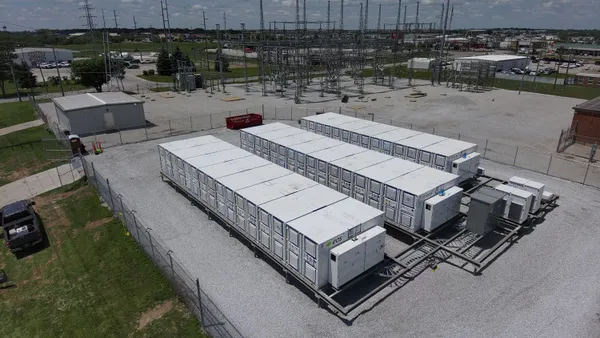
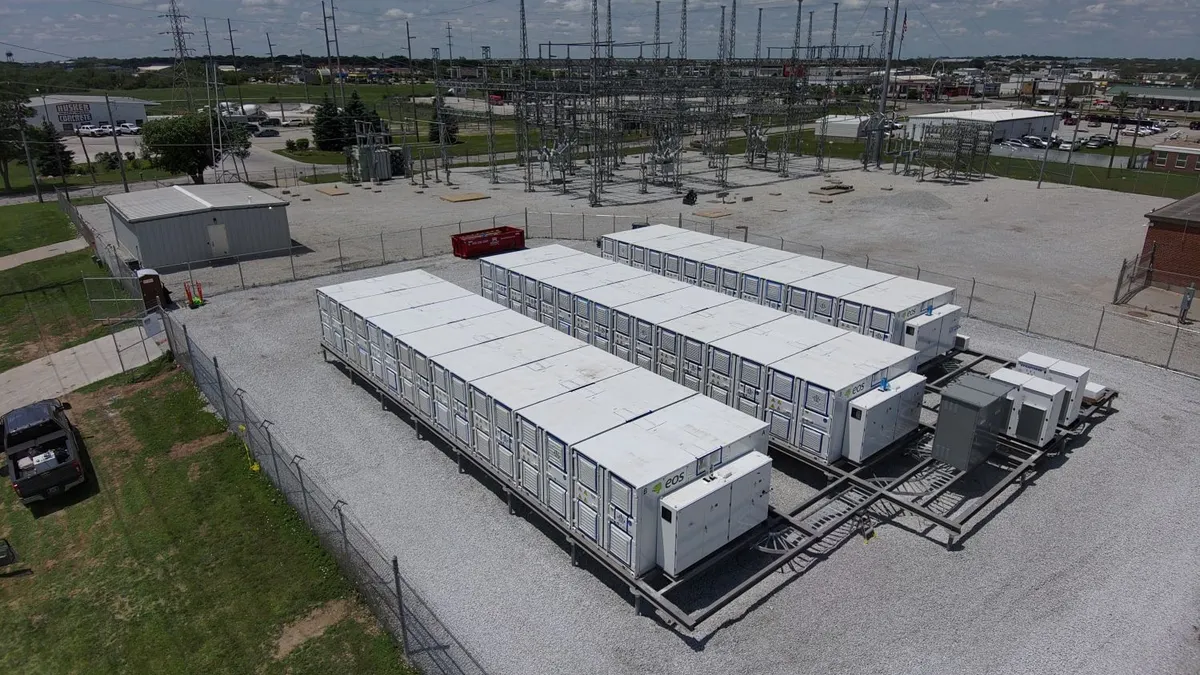
- A 30-MW microgrid serving state and local government offices, public safety facilities and other critical infrastructure in Nebraska’s state capital is about to get a boost from a 3-MW/12-MWh zinc-based battery, the city’s municipal utility said earlier this month.
- Lincoln Electric System says its first grid-scale battery energy storage project will increase the microgrid’s capacity by about 10%. It will join a dual-fuel combustion turbine that runs mainly on natural gas, 300 kW of customer-owned solar and 500 kW of customer-owned thermal energy storage, Scott Benson, LES director of strategy and innovation, told Utility Dive in an interview.
- Benson said the installation is now in final commissioning and is set to begin commercial operations in the coming weeks. The milestone comes amid rapidly rising demand for battery energy storage and growing interest among U.S. utilities and large power customers in zinc and other non-lithium battery chemistries.
Dive Insight:
Like many grid-tied and behind-the-meter batteries, LES says its installation will charge during periods of low energy demand and discharge when load and prices increase. LES says it will dispatch the battery to reduce peak demand, provide operational flexibility and increase the value of the renewable assets — mostly wind — that make up more than half its generation portfolio.
As part of Lincoln’s microgrid, the battery will also help back up the state Capitol complex, a federal building, city offices and two public safety facilities, Benson said. It’s located on part of an existing substation in central Lincoln, he said.
Like all Nebraska electric utilities, LES is a publicly owned nonprofit entity. In 2009, it joined the Southwest Power Pool, which now covers the vast majority of Nebraska’s landmass.
Benson said LES began looking into energy storage in the late 2010s but, at first, couldn’t identify a pressing need for it orn what he called “a really reliable system.” That changed in 2020, when the downtown Lincoln microgrid came online.
“All the sudden, we find a potential marriage there,” he said.
LES issued a request for proposals in late 2021 and eventually selected Eos Energy Enterprises, the battery’s manufacturer. At the time, it was the largest battery by far that Eos had under contract, Benson said, though the Pittsburgh-based company has since expanded production and inked gigawatt-scale supply contracts. According to EnergyTech, Eos is supplying at least two U.S. energy storage projects with at least 100 MWh of energy capacity: a two-phase, 36-MW/216-MWh installation for the municipal utility in Springfield, Missouri, which like LES is part of SPP; and Frontier Power’s 100-MW/400-MWh Redbird project in the Electric Reliability Council of Texas.
Benson said the Eos proposal had the “lowest per-unit cost” over the contract span, plus other upsides like chemical stability, which LES saw as an advantage in the proposed location.
“This thing is essentially non-flammable, which is important because it’s built to go in a dense urban environment,” he said. “It is neat to be able to play a part in helping a really new technology getting out there and gaining a foothold,” he added.
Benson said LES has no pressing resource needs and thus no immediate plans to deploy more batteries, zinc-based or otherwise, on a system that historically peaks around 800 MW of load. But “things can change in a hurry” as generating assets age, new loads appear and market regulations evolve, he added.
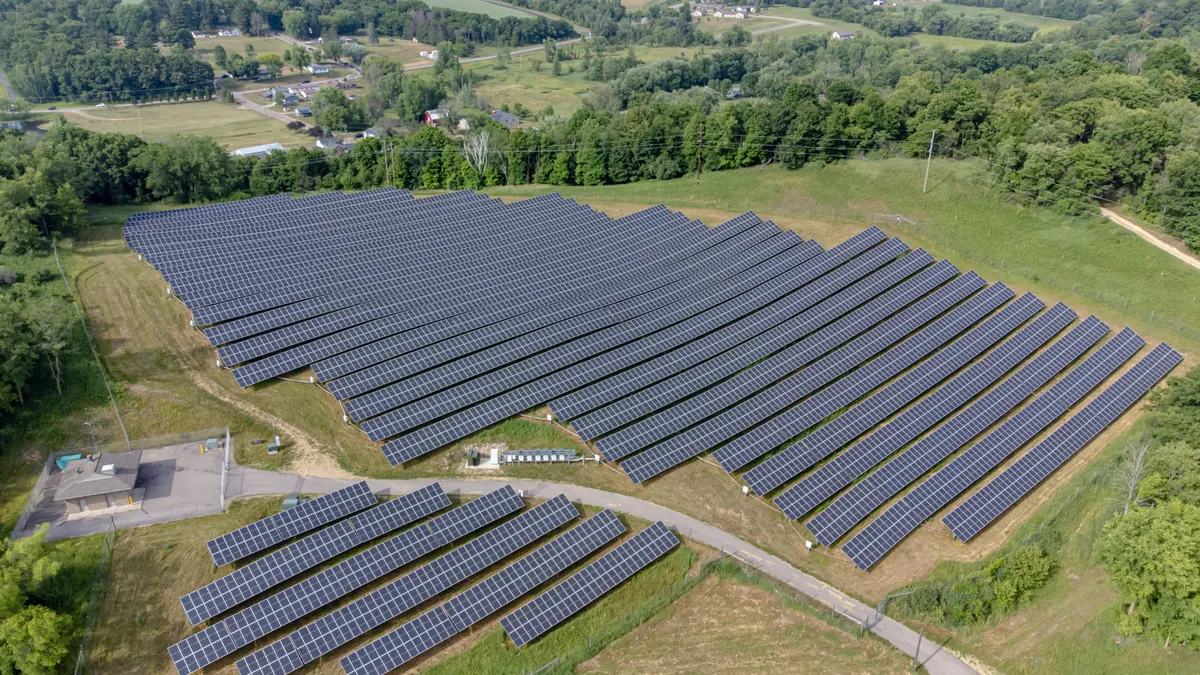
Like the community-scale solar array LES deployed in 2016 and which still operates today, the microgrid battery will get the utility comfortable with a technology that’s quickly becoming a cornerstone of the U.S. power landscape, Benson said.
“If we did a resource plan today, no doubt batteries would be evaluated,” he said.