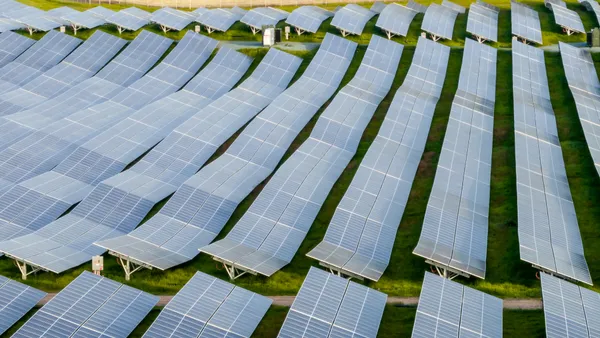
Ameren Missouri is seeking assurances it can exit generation interconnection and transmission funding agreements for a 300-MW solar project due to uncertainty over U.S. Department of Energy funding for a set of transmission projects between the Midcontinent Independent System Operator and the Southwest Power Pool, according to a filing with federal regulators.
In addition, the project in MISO’s fast-track interconnection review process requires an “affected system” study to determine whether the project will trigger transmission upgrades by Associated Electric Cooperative, Inc., a wholesale generation and transmission cooperative with members in Missouri, Oklahoma and Iowa, Ameren said in a protest filed Tuesday with the Federal Energy Regulatory Commission. Potential network upgrade costs related to the study are unclear, according to the utility.
A proposed interconnection agreement and a Joint Targeted Interconnection Queue, called JTIQ, funding agreement filed by MISO at FERC leaves Ameren without an offramp if the project’s interconnection costs are too high — which could lead the Missouri Public Service Commission to deny cost recovery for the facility, the St. Louis-based utility said.
The PSC has certified that Ameren’s project is needed to meet resource adequacy requirements, but said that doesn’t guarantee cost recovery approval, according to the filing.
MISO has determined that Ameren will need to pay a share of the JTIQ projects between MISO and SPP. The set of five 345-kV projects are expected to cost $1.7 billion, but the DOE under the Biden administration said it would provide $464.5 million from its Grid Resilience and Innovative Partnerships Program.
However, the DOE funding for the projects may be canceled, Ameren said, citing press reports.
Ameren said it faces a Hobson’s choice: either withdraw the Sullivan project from MISO’s fast-track interconnection process and delay development of a needed resource, or “put development of the resource at risk by effectively agreeing to a blank check with respect to Affected System and JTIQ costs.”
Ameren asked FERC for provisions that would let the utility exit the agreements, including if the affected system upgrade costs exceed $25 million, Ameren’s JTIQ costs exceed $50 million or if the PSC rejects a certificate of public necessity for the solar project.
“Requesting that MISO study the Sullivan Project through the [Expedited Resource Addition Study] process does not mean — and should not mean — that Ameren must give up its ability to make informed decisions about the reasonability of interconnection costs for the Sullivan Project,” the utility said.
Under the MISO’s ERAS process, the grid operator is studying up to 15 projects per quarter on a first-come, first-served basis. MISO will study up to 68 projects before the program ends on Aug. 31, 2027. It is in its second study cycle, with the next cycle beginning on March 2.
So far, projects totaling about 28.4 GW have entered or are seeking to enter into the fast-track review process, according to a summary of the projects. Those projects include about 4 GW of battery storage, 2.6 GW of solar and nearly 1 GW of wind.