Dive Brief:
- As it expands its project pipeline, Energy Vault is closely following the implementation of President Donald Trump’s recent executive order restricting the use of foreign-made bulk power components, a top executive at the energy storage company told Utility Dive last week.
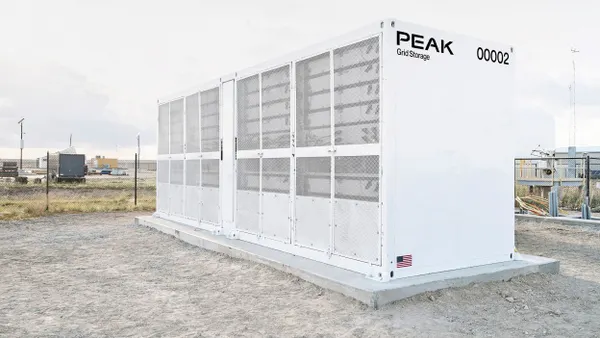
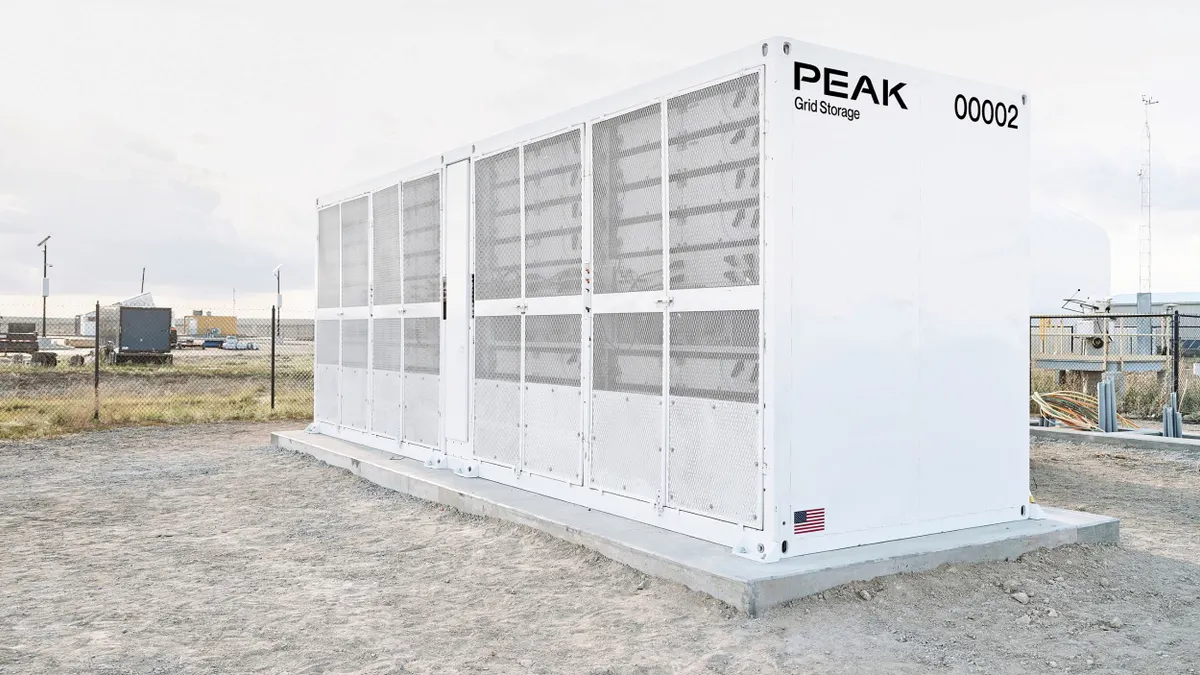
- The company is assessing the order’s impacts on a project-by-project basis as it works to diversify its supply chain, Chief Revenue Officer Marco Terruzzin told Utility Dive. In February, Energy Vault announced a supply agreement with Peak Energy for up to 1.5 GWh of Peak’s U.S.-manufactured sodium-ion battery systems.
- Energy Vault is also bulking up its near-term pipeline of lithium-ion energy storage projects. Last week, it said it would acquire a 2.3-GW development portfolio from Goshe Energy Storage, including 350 MW of “ready-to-build” capacity that could come online in early 2028.
Dive Insight:
The Goshe acquisition “reinforces our strategy of building a long-term, owned-asset platform that generates predictable, recurring value for our shareholders,” Energy Vault CEO Robert Piconi said in a statement.
Goshe’s leadership and development teams will join Energy Vault, allowing them to continue advancing their existing pipeline projects as Energy Vault works to build what it calls a “long-term, owned-asset portfolio” to support predictable streams of recurring revenue.
The company said last week it had secured up to $40 million in credit from S2G Investments, a private capital firm, to back the development, construction and operation of the Goshe portfolio.
In an email, Terruzzin said the new talent and financing would allow Energy Vault to move projects in its expanded pipeline toward deployment as hyperscalers seek reliable power and grid flexibility to support large-scale computing facilities across North America.
“Demand alone does not build projects,” Terruzzin said. “Grid access, equipment availability, financing and credible customer commitments will distinguish projects that proceed from those that do not.”
Against an uncertain regulatory backdrop, Terruzzin said Energy Vault is focusing on what it can control: “to secure critical equipment and develop integrated infrastructure,” including “powered land, on-site generation, battery storage, power conversion and controls.”
Energy Vault today operates an 8.5-MW/293-MWh battery-hydrogen fuel cell facility in northern California and a 57-MW/114-MWh lithium-ion battery installation in west Texas. Its near-term pipeline includes a 150-MW/300-MWh battery installation under construction north of Houston, a 175-MW/350-MWh battery facility in development in northeast Texas and a “powered land” project it’s building with data center developer Crusoe near its west Texas battery installation.
“Texas is an important market for us … [it] brings together substantial load growth, storage demand and opportunities to integrate on-site power with AI infrastructure,” Terruzzin said.
Energy Vault is also interested in the Southwest Power Pool market, where “large new loads and grid reliability needs create a clear role for storage,” and the PJM Interconnection, he added.
“We evaluate each opportunity against its actual interconnection path, commercial structure and ability to deliver power. A battery can provide flexibility and resource value, but it does not by itself create transmission capacity,” Terruzzin said.
Energy Vault went public in early 2022 via a special-purpose acquisition vehicle. Its stock began trading above $10 per share but has been largely rangebound below $5 per share since the fall of that year.
The company initially focused on a gravity-based energy storage design that uses weights and elevators to store and release mechanical energy. In 2023, it deployed a 25-MW/100-MWh installation near Shanghai, China, that it said was the world’s first commercial gravity-based energy storage system. Most of the projects Energy Vault has announced since then, however, rely on traditional electrochemical batteries.
Terruzzin attributes the apparent shift to “a commercial priority, not a withdrawal from gravity storage,” he said.
Batteries — whether lithium-ion or sodium-ion based — are a better fit for the applications and delivery timelines sought by many of Energy Vault’s customers, Terruzzin said. But the company continues to pursue gravity-based storage in South Africa, “where its long life and duration fit [Eskom, the state-owned utility’s] needs,” he added.