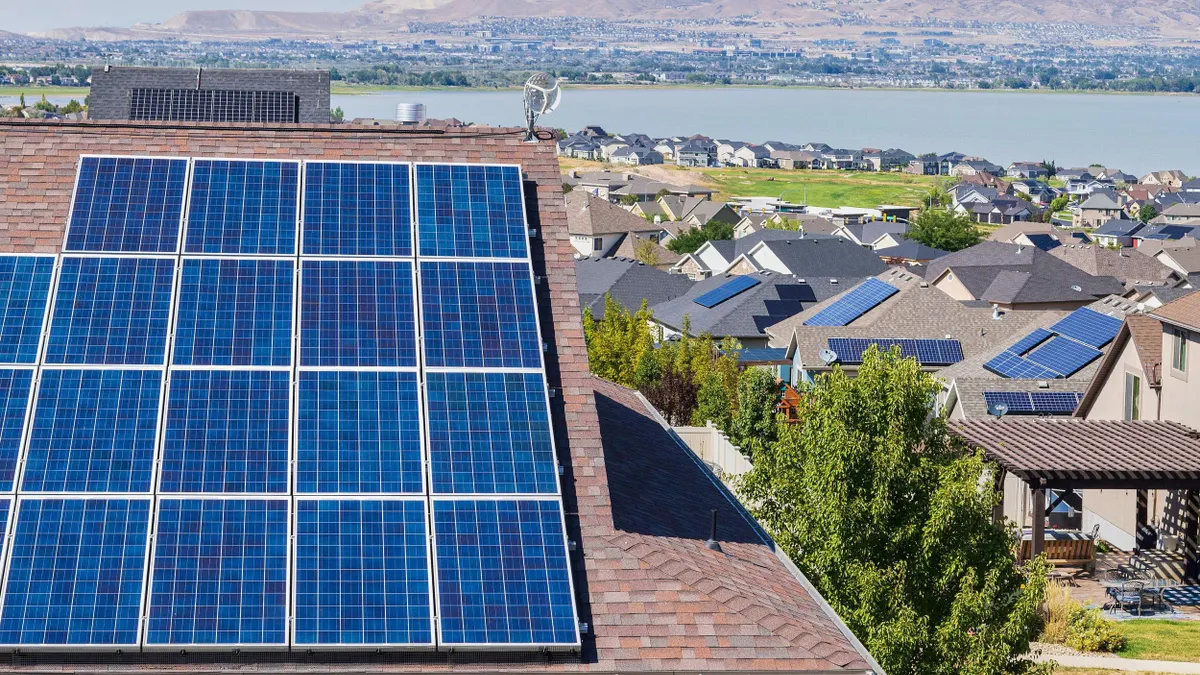
In 2026, the renewable energy industry is facing considerable headwinds from Trump administration policies.
The One Big Beautiful Bill Act set a new July 4 deadline for wind and solar projects to start construction to qualify for the Inflation Reduction Act’s production and investment tax credits, most notably. It also set new, strict foreign entity of concern rules for which the Treasury Department has yet to issue final guidance.
The OBBBA was “definitely a bad outcome for the industry, worse than most people expected,” said Dan Smith, vice president of markets at DSD Renewables, a provider of distributed renewable energy resources.
“I think we all expected something to happen, but this was a little more draconian than we and most people we know were hoping for,” he added.
"Now is the time to be disciplined and focused and be realistic about what projects we're going to be able to complete under the ITC and which ones are just likely not going to benefit."

Dan Smith
Vice president of markets at DSD Renewables
The administration is also dragging out the timeline for approving projects in federal lands and waters. The Department of the Interior has been issuing stop-work orders to offshore wind projects and revoking their permits, and it cancelled its environmental review for the 6.2-GW Esmeralda 7 solar project on federal land in Nevada, saying it would instead review each of the seven project components individually.
Renewables poised to meet rising demand
Despite these setbacks, some industry sectors still see considerable opportunity for renewables in the U.S., as renewable energy generation can often come online more quickly and cheaply than a fossil fuel plant.
Analysts continue to forecast staggering load growth over the next five years, and supply chain bottlenecks are resulting in five- to eight-year estimates for the deployment of new gas generation. The newest nuclear reactors took about 15 years to complete.
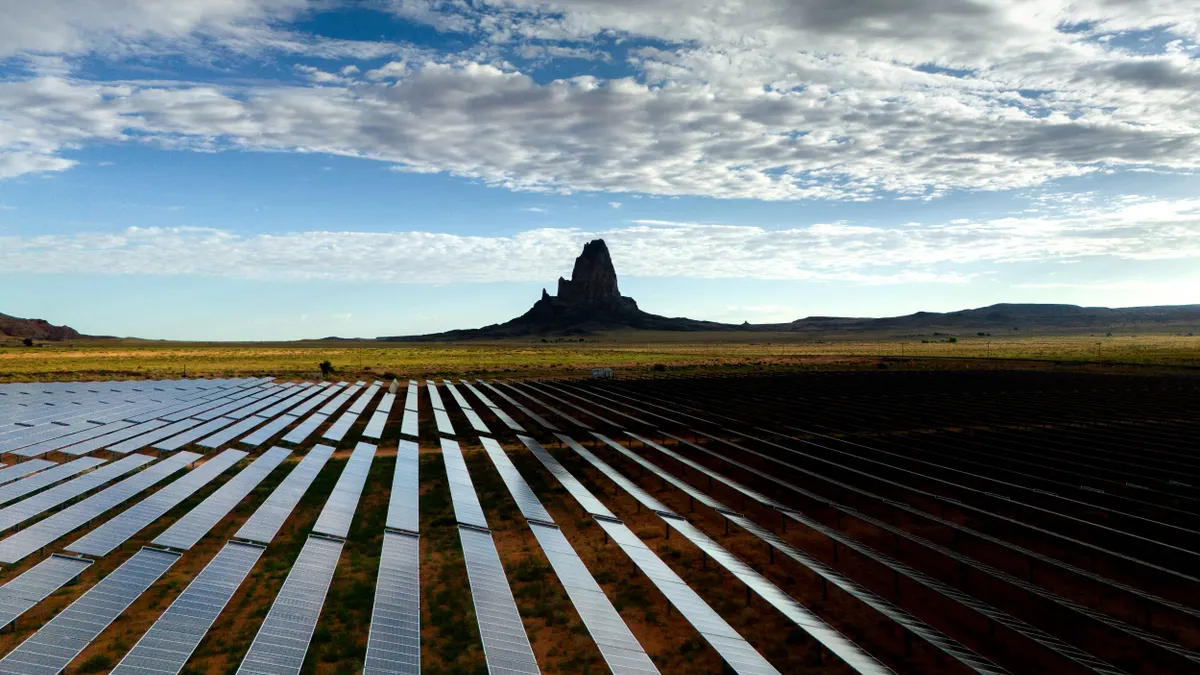
New utility-scale solar and wind generation, in contrast, can deploy in as little as a year and now account for most new generating capacity.
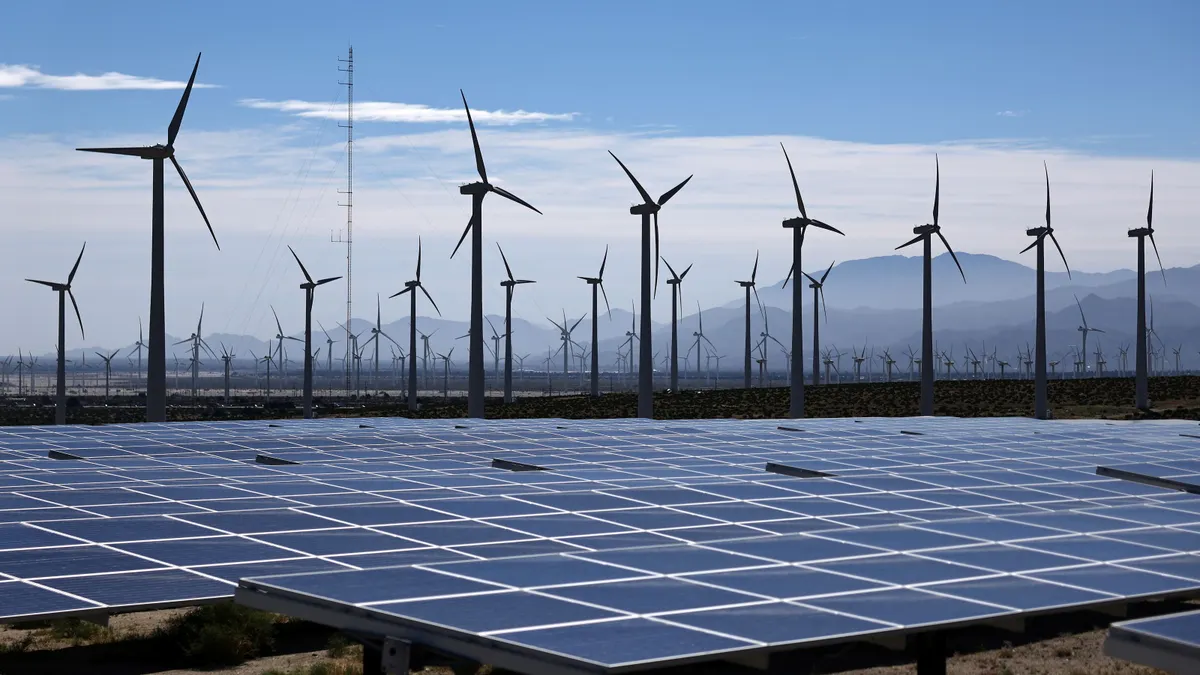
Solar alone provided 58% of new generating capacity in 2024 and 72% of new capacity through the first 10 months of 2025. Wind and solar together accounted for 87% of new capacity added from January to October last year and make up 83% of “high probability” additions over the next three years, according to the latest federal data.
Of total installed generating capacity in the U.S., natural gas leads with 42%, but solar and wind account for nearly 12% each.
“While certain parts of the industry, like the residential side, have been hit pretty hard, the interesting thing is that, for a lot of the rest of us, it's business as usual,” said Robb Jetty, CEO of REC Solar, which develops on-site and community solar and storage. “And the forecast that's playing out with regards to increasing electricity costs and availability of power solutions — the future actually looks just as bright as it has previously. So it's not quite the doom-and-gloom scenario that I think many thought it would be.”
The OBBBA sunsetted the Inflation Reduction Act’s residential solar credit at the end of 2025; commercial projects that commence construction by July 4 this year can still qualify for production and investment tax credits as long as they’re placed in service by Dec. 31, 2030. Projects that don’t commence construction by July 4 can still qualify if they’re placed in service by Dec. 31, 2027. Tax credits benefitting energy storage were largely left intact.
“We see the opportunity for renewables, and renewables-plus-storage in particular, to be really quite in focus to meet those demands over the near term,” said Keith Adams, Deloitte's U.S. renewable energy leader. “Because the reality is that a solar-plus-storage or even a wind-plus-storage project can likely be implemented before you can see other technologies, like gas and nuclear, actually serve those loads in the long term.”
Adams noted that as data center deployment soars, storage offers the ability to “serve a 24-by-7 load — what a lot of these data centers really need.” However, the pressure from shifting federal policy is affecting how developers approach the load growth opportunity, he said.
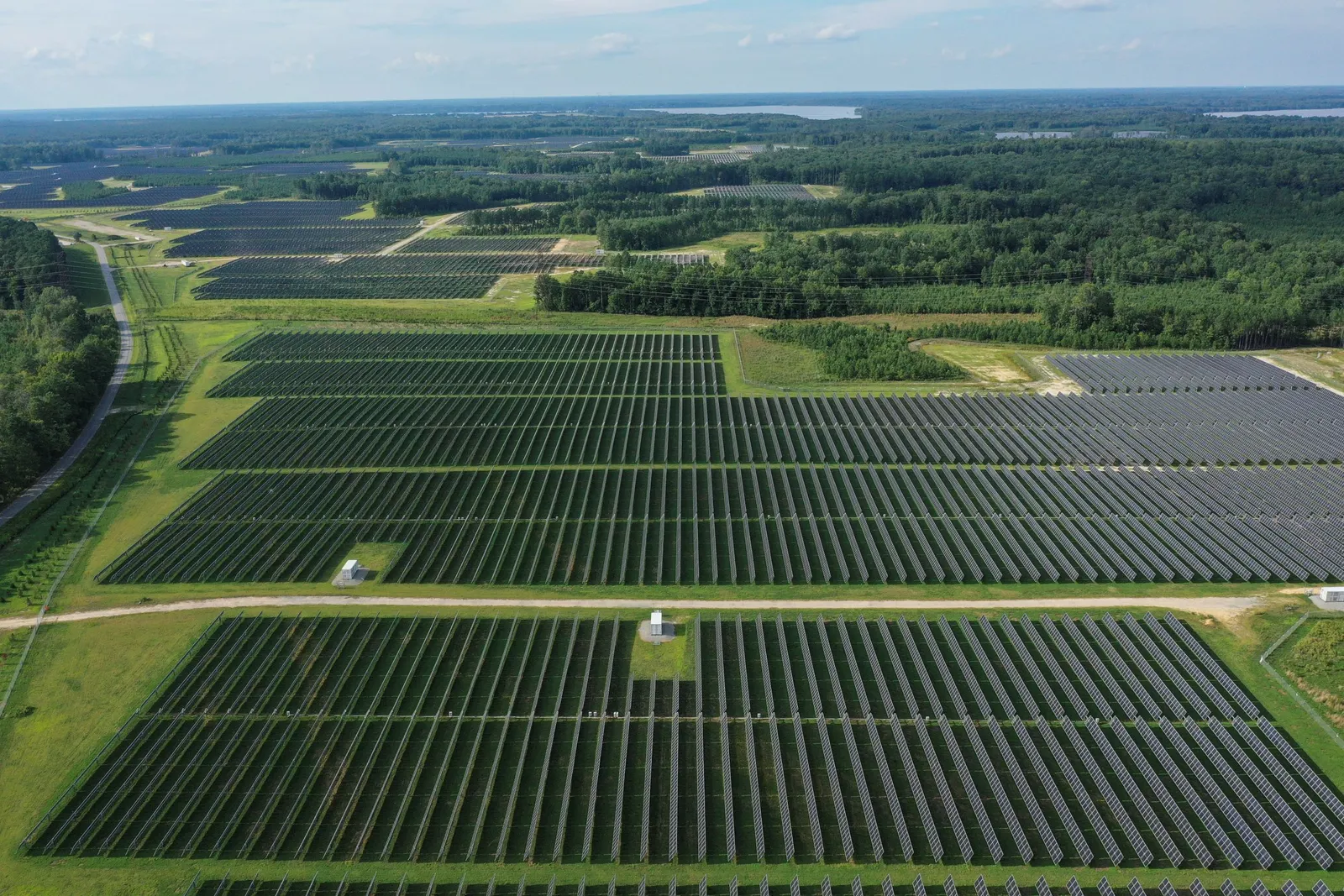
“It's impacting how folks prioritize their portfolio,” he said. “It's impacting how folks are impacted by project costs, component costs for the projects, as well as the tariffs that are, in some cases, new for the components of those projects. It's reshaping technology choices and really forcing people to make decisions to prioritize their efforts on putting assets in the ground quickly.”
One year into Trump’s second term and six months since the OBBBA’s shearing of the IRA, Smith said the industry is “clearly” going to be contracting — in response to the curtailment of the investment tax credit in particular.
“We're taking a look and focusing on the most actionable projects, the most profitable projects,” Smith said. “Now is the time to be disciplined and focused and be realistic about what projects we're going to be able to complete under the ITC, and which ones are just likely not going to benefit [from it]. And then we're looking forward to the post-ITC world, and starting to plan for what that looks like.”
Harry Godfrey, a managing director at Advanced Energy United who leads their federal priorities team, said the U.S. saw a “significant pull forward” of renewable energy projects in the third quarter of 2025. He expects fourth-quarter data to show the same, but was less certain about the picture for 2026.
“I'll be really interested to see whether or not that is sustained in the face of growing headwinds,” he said. “Because we enter this period where you have that FEOC compliance obligation, and at least as of this moment, we don't know what that looks like in detail.”
“The forecast that's playing out with regards to increasing electricity costs and availability of power solutions — the future actually looks just as bright as it has previously. So it's not quite the doom-and-gloom scenario that I think many thought it would be.”
Robb Jetty
CEO of REC Solar
Jetty noted that the industry is accustomed to a certain level of instability.
“While this year was, arguably, as tumultuous as we’ve ever seen it,” he said, “if there's anything consistent, it's that federal policies and implications for our industry are constantly changing.”
New strategies and new horizons
Smith said two major concerns are the current lack of clarity on FEOC compliance and the Treasury Department’s elimination of the 5% safe harbor test to qualify projects over 1.5 MW as having begun construction.
Now he’s looking at projects as existing within three categories: mature projects, for which he has high confidence they can be placed in service by the end of 2027; less mature projects, for which he has high confidence they can commence construction by July 4; and projects at risk of not meeting either of those marks.
“We don't feel very good about projects that don't fit one of those categories, and that means those projects — we have canceled some of them, or reduced some of them to below 1.5 MW,” Smith said. “But that's the decision everyone is facing … It's all part of facing reality and being disciplined to make the right calls here.”
DSD Renewables is monitoring whether or not states are tracking the ITC deadlines, Smith said, and “whether they will implement changes to make sure utilities are meeting the interconnection timelines, getting projects interconnected efficiently, and allow us to meet the deadline of the end of 2027.”
“There are going to be deadlines every Dec. 31 for the next few years, even beyond 2027, so we're going to need to be able to hold utilities accountable,” he said.
Godfrey said he’s focused on how state leadership will continue to navigate the current complexities around energy deployment.
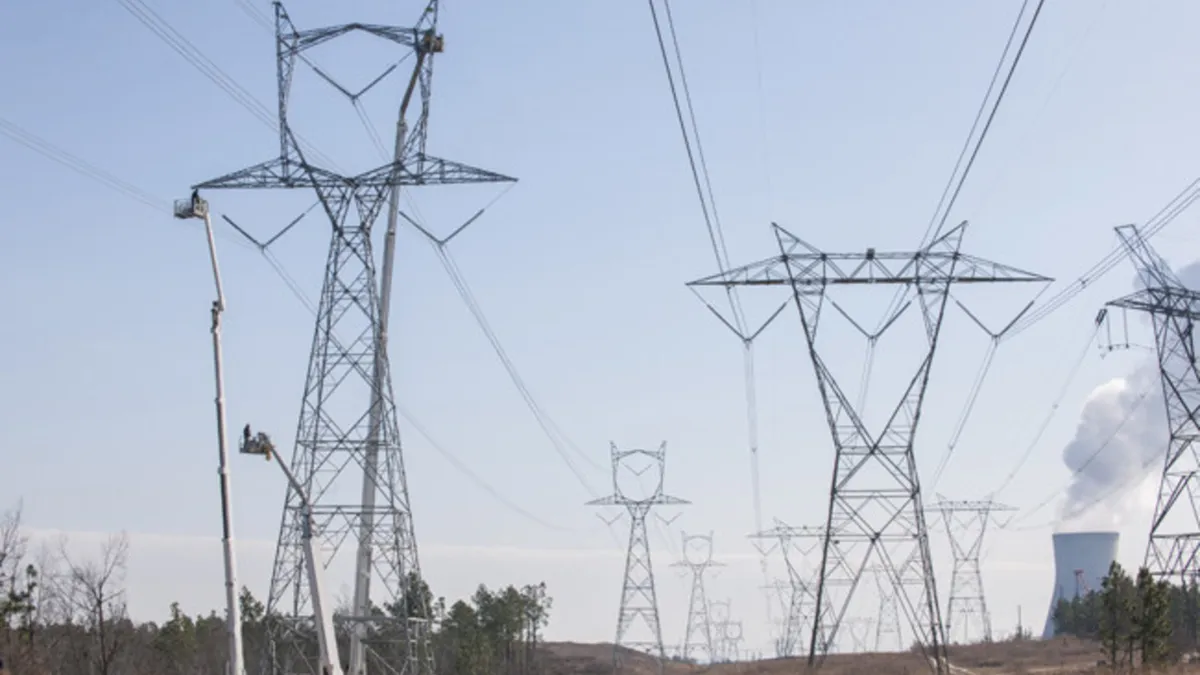
States should “find every way possible to expedite and ease the development and construction and interconnection of a host of advanced energy projects, which obviously includes renewables, but we can look to transmission and a host of transmission-related pieces in there too,” Godfrey said.
As an example of this, he cited the October passage of the Clean and Reliable Grid Affordability Act in Illinois, which expanded on the state’s 2021 Climate and Equitable Jobs Act. CRGA directs Illinois utilities to install 3 GW of grid-scale energy storage by 2030, lifts a moratorium on new nuclear plants in the state and introduces an integrated resource planning process.
It also strengthens the state’s Renewable Energy Access Plan, one of the goals of which is to reform transmission interconnection and unlock clean energy currently waiting in interconnection queues. Throughout the U.S., solar wind and battery projects make up as much as 95% of the capacity in these queues.
Kasparas Spokas, director of the electricity program at the Clean Air Task Force, said he anticipates both opportunities and challenges to accelerating renewable deployment at the state and regional levels.
He noted “positive signs from unexpected regions,” such as the Electric Reliability Council of Texas’s recent approvals of significant transmission upgrades, “which should result at least in some new wind developments being built.”
Nicole Pavia, CATF’s director for clean energy infrastructure, noted that California recently passed SB-254, which created a transmission investment accelerator that will facilitate public-private financing for transmission in California.
“So we are seeing increasing interest at the state level to be more creative about financing,” Pavia said. She pointed to increased attention to solutions like grid-enhancing technologies, advanced transmission technologies and reconductoring — “things that we can do and technologies we can implement to make the best use of the lines that we have available, and increase their capacity where possible.”
“How do you get a project funded, and how do you build it? How do you interconnect it onto the transmission network? And then, how might you participate in markets – how do you get compensated, and how do you make sure the rules don't change once you're in it?”
Sam Uyeno
Partner at West Monroe
Godfrey also noted that solutions that maximize existing resources will better match the speed with which demand is coming online in the near term.
“You can definitely get a solar farm online in 18 to 24 months if you have the permits in place, if you move up the interconnection queue,” he said. “But you can stand up a [distributed energy resource] program in weeks, if not months. You can stand up an aggregated DER program in a few months to maybe a year. You can reconductor a line in a year or less.”
Financial and other headwinds
Because of the new FEOC rules and the Trump administration’s new tariffs, developers are “spending a lot more time on their supply chain,” Adams said, and they are “really focused on making sure they both know where capacity can come from and know that they can be compliant with requirements.”
Developers also are focused on efficient operations in response to the tightening of credit windows, Adams said. They are seeking “consistency of design and execution of construction, and consistency in the operations of those assets when they are in service, so they can make sure they optimize run time and optimize the way they can serve the [power purchase agreements] that they're a part of, or serve the markets that they're in.”
Smith described uneasiness around the lack of final guidance on the FEOC rule, which went into effect Dec. 31, 2025.
“A requirement is in place, but there's not full transparency or full clarity on how to comply with it,” he said. “So what we're going to have to do is be conservative.”
A lack of certainty or predictability has always been a problem for the renewable energy industry, said Sam Uyeno, a partner at West Monroe. Prior to the IRA, clean energy tax credits were offered with much shorter timelines. But the current environment is particularly difficult, he said, with shifting sands at both the federal and state level.
“I think we all would have liked to have more options readily available for us today, and that we would have commercialized some of these options in the past. So let's not make the same mistake twice.”
Kasparas Spokas
Director of the electricity program at Clean Air Task Force
“How do you get a project funded, and how do you build it? How do you interconnect it onto the transmission network? And then, how might you participate in markets — how do you get compensated, and how do you make sure the rules don't change once you're in it?” Uyeno said.
Bottlenecks exist at various junctures of the value chain, he said, “and we come up with permitting strategies and different policies, and then suddenly the bottleneck switches to another place in the value chain.”
The transmission and interconnection timelines for renewable projects are “really challenging,” Uyeno said. The Federal Energy Regulatory Commission’s Order 2023, which requires a first-ready, first-served cluster study approach for grid interconnection, is starting to be put into practice, but “how it actually gets implemented and everybody's ability to execute on it still has yet to be seen,” he said. “We're starting to see some of it in the Pacific Gas & Electric territory here in California because they're doing cluster studies more specifically for larger data center interconnections.”
While courts continue to strike down the Trump administration’s various stop-work orders against the five offshore wind projects currently under construction, those decisions often take days or weeks to come down, costing developers millions as they wait. In general, this leads to a great deal of uncertainty for the entire industry, Pavia said.
Dominion Energy, the utility developing the 2.6 GW Coastal Virginia Offshore Wind project, said in a complaint against a December stop work order that CVOW will “provide electricity to serve the world’s largest concentration of data centers,” that wind development is necessary to meet growing demand, and that the administration’s actions are driven by “systematic and unfounded animus against wind energy.”
The U.S. offshore wind industry is currently facing strong headwinds and “a bleak outlook,” said Kevin Beicke, a vice president at Morningstar DBRS. “Not only for 2026, but the next three years, through 2028.”
“I think the Trump administration is trying to signal to the offshore wind industry that the U.S. is not open for business for future development,” Beicke said. “Any other potential developer of offshore wind projects would be seeing this and would view it unfavorably for their development of potential future projects over the next three years of the Trump administration.”
The cumulative impact of these delays is worth noting, Godfrey said, “not just on renewables in general, but on the energy industry as a whole. I suspect that this will be something that we see being part of the conversation in 2026, is how uncertainty in a specific segment of the industry can spread and contaminate the larger industry as a whole.”
The investment community financing offshore wind projects and hydrogen pipelines is the same one that’s considering investments in next-generation nuclear or new natural gas pipelines, Godfrey said. Thus, the stop-work orders could potentially result in a larger chilling effect if energy investments are seen as unstable, he added.
Spokas noted that there is a “lot of uncertainty” in current load growth forecasts, and it is a “core challenge to manage that uncertainty over time, given you need long lead times for infrastructure planning and procurement.”
Regardless, he said, “we should expect higher load growth to persist, to fuel various types of new electrified loads as the economy decarbonizes,” which provides “an opportunity to advance new solutions, or solutions that haven't been deployed in the past.”
“I think we all would have liked to have more options readily available for us today, and that we would have commercialized some of these options in the past,” Spokas said. “So let's not make the same mistake twice.”