Jim Rossi is a professor at Vanderbilt Law School.
America’s electric grid is straining under aging transmission infrastructure, surging new generation and an explosion of demand from electricity-hungry data centers and heavy manufacturing.
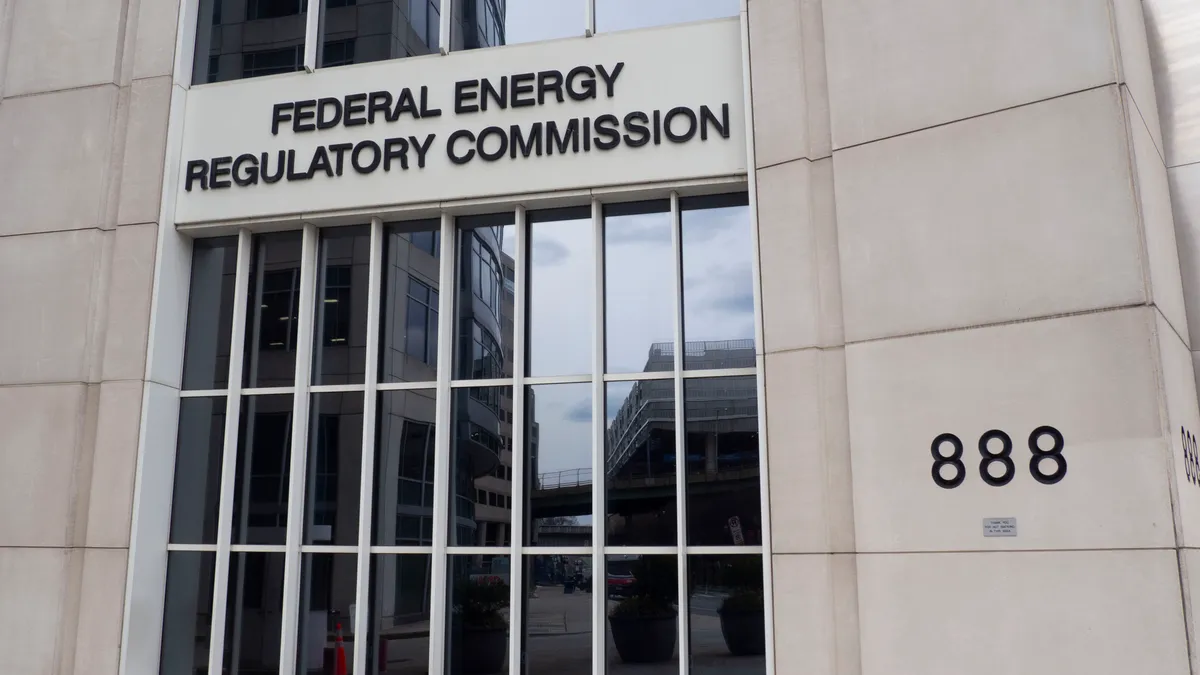
In April, incumbent utilities in MISO and SPP seized on that strain to make a remarkable ask. A coalition calling itself the Grid Acceleration Coalition — ITC, Ameren, American Transmission Company (ATC), Entergy, Evergy, Xcel and others — asked the Federal Energy Regulatory Commission to suspend competitive bidding for transmission projects across grid operators MISO and SPP for five years, or to let utilities bypass it project by project. It claims competitive solicitations add 16 to 20 months of delay that America cannot afford.

For years, many of these same utilities have waged — and overwhelmingly lost — a policy campaign in statehouses, pushing “right of first refusal” laws that hand incumbents every new regional transmission line without a contest.
Having failed to eliminate competition from the states, they now want FERC to do it.
The responsive filings are in, and the record does more than rebut the complaint. It dismantles it.
MISO’s own answer is the most telling. As a neutral grid operator with no stake in the fight, MISO nonetheless contradicts the complainants at nearly every turn. Its actual experience, it says, differs from the alleged 16-to-20-month figure: in-service dates are typically fixed in planning before any project is deemed competitive, so the solicitation clock runs inside the development timeline. MISO’s only competitive project to reach service, the Duff-Coleman 345 kV line, came in six months early and under its cost commitments.
Meanwhile, the complainants held up Wisconsin’s WISE project as proof that bidding delayed a data center. But MISO shows the accelerated December 2027 need date did not exist when MISO issued the RFP in February 2025. When it did, MISO’s existing tariff tools — a variance analysis MISO began on its own — reassigned the affected substations within weeks.
When the neutral grid operator says your flagship example is wrong, your case is in trouble.
The WISE story took a further turn on June 22, when ATC — a coalition member and the narrowly losing bidder — filed its own FERC complaint over the solicitation. The filing concedes the pro-competition case: ATC disclaims any challenge to MISO’s tariff or to competitive transmission itself, and its requested remedy is a re-bid.
A scoring dispute is possible only because competition produces bids, criteria and a selection report to scrutinize. A no-bid monopoly assignment offers nothing to contest. An aggrieved incumbent asking FERC for another round of competition rather than exclusivity is a vote of confidence in the framework.
Events at FERC have since confirmed where the real bottleneck lies. On June 18, 2026, the Commission issued show cause orders under Section 206 directing MISO, SPP, and four other grid operators to justify or reform the tariff rules that govern how data centers and other large loads connect to the grid — not the rules for competitive solicitation of regional lines.
The coalition’s answer now tries to enlist those orders, quoting their “speed to power” concurrences. But faced with the very demand surge the coalition invokes, FERC focused its attention on fixing the rules that actually govern how fast a large load can plug in and left competitive transmission planning untouched.
The complainants lean on a review by an industry-funded consultant that compares competitive projects’ costs only to their own bids — no baseline, no counterfactual. Independent analysis tells a different story. Economist John Morris re-ran the consultant’s own six case studies against incumbent estimates and found $283 million in net savings.
As the Electric Transmission Competition Coalition indicated, new R Street Institute research — the first multi-region study of completed projects — provides the counterfactual the complainants lack on speed to market.
In MISO and SPP, median development time from need identification to energization was shorter for competitive projects than for comparable incumbent ones. MISO’s incumbent sample ran a median of 108 days late; the competitive project came in 204 days early. Cost savings run roughly 30%, with winning bids averaging 38% below MISO’s estimates and 21% below SPP’s – nearly all backed by hard cost caps and return-on-equity penalties for late delivery.
Experience reinforces the data. NextEra’s winning bid on SPP’s Wolf Creek-Blackberry line delivered roughly $58 million in savings and entered service ahead of schedule. Compare the incumbent record in SPP that the complaint omits: Nebraska’s incumbent “R-Plan” 345 kV project, approved in 2013 and still not energized; a Kansas 115 kV line whose cost jumped 139%.
Nor is there a legal foundation for the relief sought. Under Section 206, complainants must prove that tariffs FERC approved have become unjust and unreasonable. They have not carried that burden and, as the Harvard Electricity Law Initiative reminds the Commission, they aim at the wrong target. Order No. 1000 eliminated a federal ROFR not on a promise of bid-price savings, but to remove barriers that kept nonincumbent developers out of regional planning altogether — participation FERC has long tied to innovation and more efficient solutions.
The coalition’s cost-and-delay figures never engage that rationale and its proposed remedies would erase the very incentive the Commission set out to protect. Nothing about open solicitations is “unduly discriminatory”: incumbents are free to bid, and often win – in MISO and SPP, no less.
The weight of legal authority cuts against the incumbents’ broader project. Iowa’s Supreme Court enjoined that state’s ROFR law and called it “quintessentially crony capitalism”. Federal courts found Texas’s version unconstitutional under the Commerce Clause, and the Justice Department and FTC have warned that ROFRs yield a less efficient grid at higher cost.
Tellingly, only one technology company — QTS, quoted at length in the coalition’s answer — joined a complaint that invokes AI on nearly every page. The entities that actually pay these bills — industrial consumers, state manufacturing groups, consumer advocates — filed on the other side. When utilities lose in legislatures and lose at the bidding table, they go back to FERC.
With comments and answers in, the coalition complaint reads as little more than a defense of the incumbents’ status quo dressed up as concern for growth and reliability. FERC should reject it, reaffirm competition as the default for regional projects, channel the genuine speed-to-power problem into the large-load reforms it has now ordered, require annual reporting on solicitation outcomes, and direct grid operators to publish fuller selection reports so that as-applied disputes like ATC’s are resolved on a transparent record.
Handing the MISO and SPP incumbent utilities a five-year exclusive on the largest grid buildout in American history would not win the AI or domestic manufacturing race. It would guarantee that consumers — including the data centers — pay higher prices to run it.