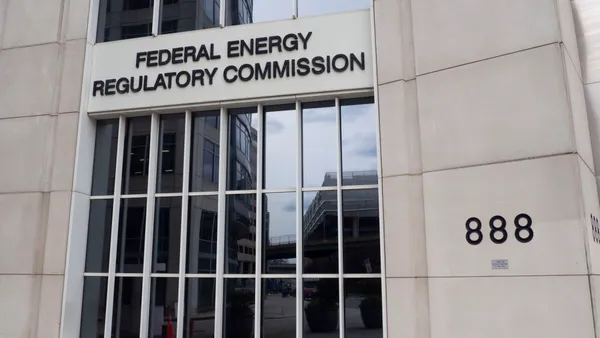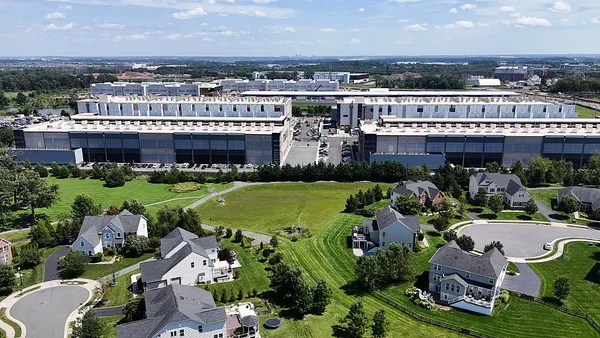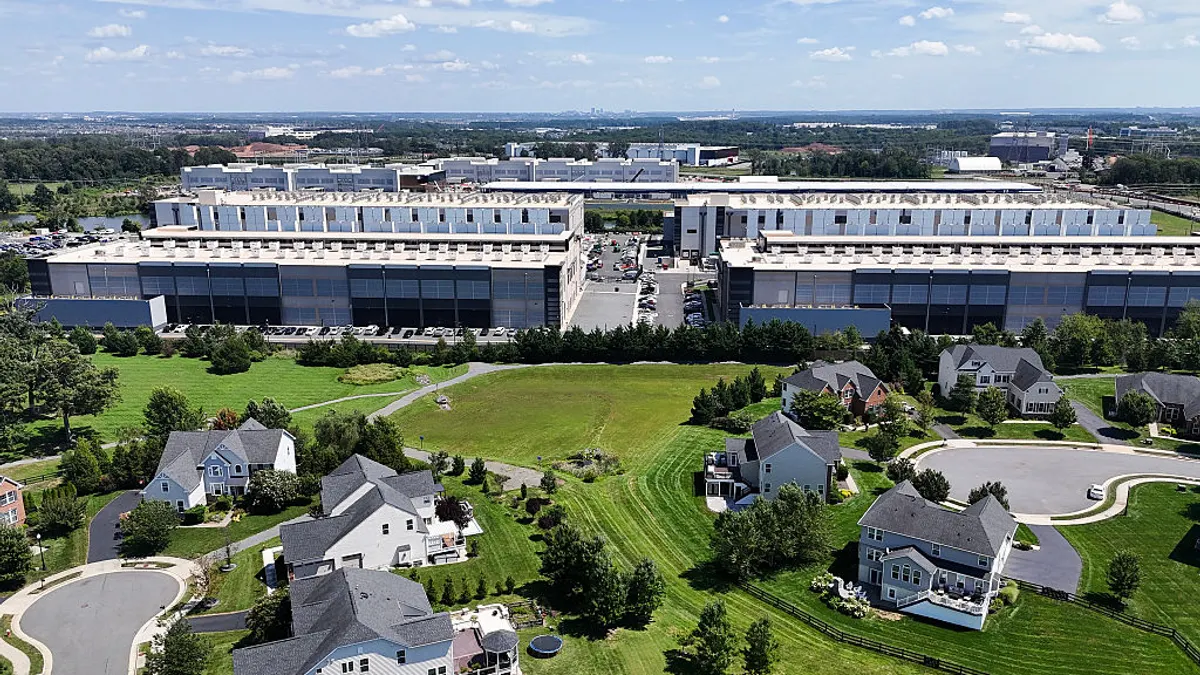
The Federal Energy Regulatory Commission on Tuesday rejected Commonwealth Edison’s “notice of cancellation” of a transmission security agreement, or TSA, for a 1.8-GW, $20-billion data center PowerHouse Hillwood Holding is developing in Joliet, Illinois.
In part, the contract dispute centers on the TSA’s credit support requirements. PowerHouse Hillwood contends it met the agreement’s initial credit requirements via a $1 posting, according to FERC’s decision.
The dispute is pending in the U.S. District Court for the Northern District of Illinois, according to the decision.
In declining to take jurisdiction over the dispute, FERC said the courts can work it out just as well as the federal agency.
“Though we decline to assert primary jurisdiction over the interpretation of ambiguous contract terms involving credit support, our commitment to fair cost allocation, ratepayer protection, and regulatory clarity remains unwavering,” FERC Chairman Laura Swett and Commissioner Lindsay See said in a joint concurrence.
FERC’s decision highlights the “criticality” of the potential reforms that the agency proposed in large load interconnection show cause orders it issued in June to regional transmission organizations and independent system operators, the commissioners said. RTOs and ISOs have until mid-November to respond to the show cause orders.
Developing “clear and consistent” terms for connecting large loads with the transmission system is crucial, Swett and See said.
“It is also more important than ever that RTO/ISOs and their transmission owners may propose pro forma Cost Recovery Agreements,” they said. “And finally, it is more important than ever that any such agreements contain strong, consistent language that both protects customers from improper cost shifting and provides certainty to contracting parties.”
FERC Commissioner David Rosner said the dispute shows why the agency in its show cause orders directed RTOs and ISOs to develop pro forma cost‑recovery agreements for large loads.
“Requiring security deposits helps ensure both project viability and transparency,” Rosner said. “Cost-recovery agreements matter because they enable efficient and accurate planning, and ensure that project risks stay where they belong: with the developer, not the public.”
FERC Commissioner David LaCerte lambasted the $1 letter of credit posted by PowerHouse Hillwood.
“The idea that $1 may provide appropriate security to any such agreement strikes me as an embarrassing legal fiction: insulting to the underlying ratepayers, stakeholders, and the grid itself that bear the real risk of this project,” LaCerte said. “Treating that risk as collateralizable for less than the price of a cup of coffee to me trivializes the very obligations that such a guarantee purports to secure.”