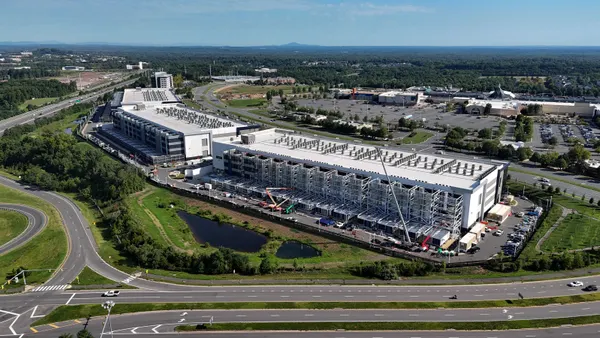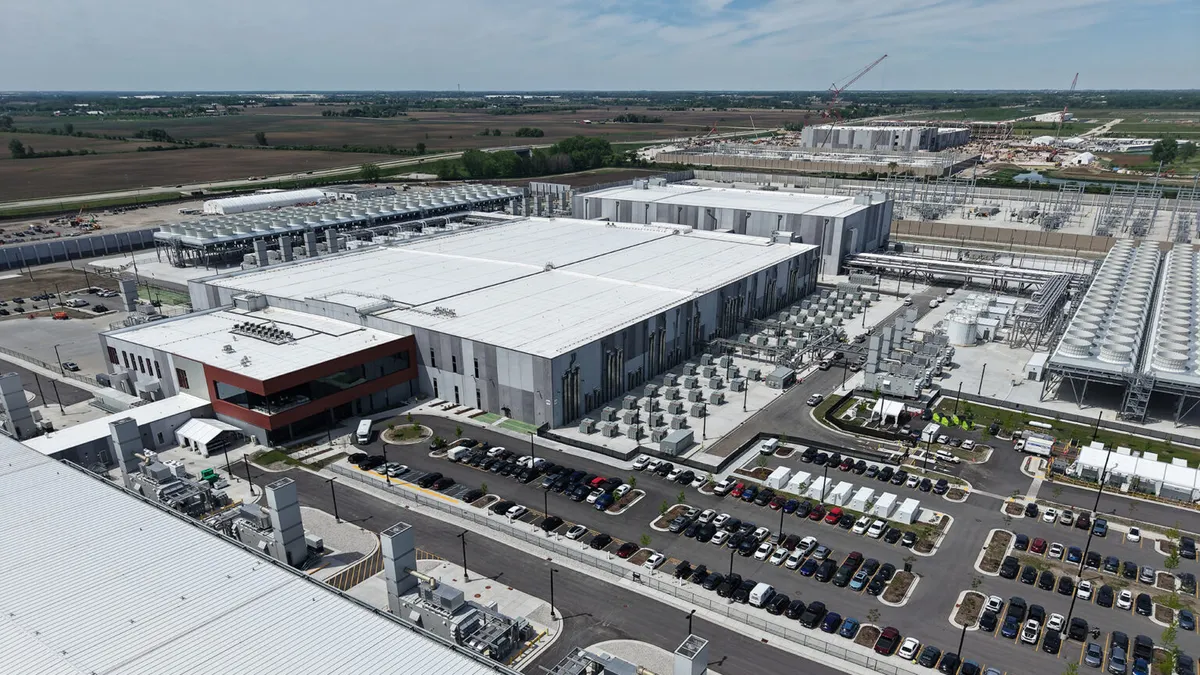
Microsoft and PowerHouse Hillwood Holding are in disputes over agreements laying out terms and requirements for serving their planned data centers in Wisconsin and Illinois, according to filings at the Federal Energy Regulatory Commission.
The disagreements come after FERC in mid-June found that grid operators’ rules for interconnecting large loads may be inadequate.
In its “show cause” orders issued to the grid operators, FERC detailed five issues it wants regional transmission organizations and independent system operators to address in their large load interconnection rules, including the prevention of cost shifts and transparency into transmission costs. Earlier this month, FERC extended the deadlines the RTOs and ISOs had for responding to the show cause orders until mid-November.
Wisconsin agreements flawed: Microsoft
Agreements filed for FERC approval by American Transmission Co., for example, fail to protect utility customers from the costs for infrastructure needed to serve Microsoft’s data center expansion in Mount Pleasant, Wisconsin, the technology company said in a Friday filing at FERC.
The four amended Large Load Project Commitment Agreements and the Minimum Transmission Charge Agreement were negotiated by ATC and Wisconsin Electric Power Co., which are affiliated companies, without input from Microsoft, according to the tech company.
“As a result, the agreements predictably contain significant deficiencies — errors, contradictions and inconsistencies — and raise several significant cost-of-service and open access issues,” Microsoft said.
As a signatory to the White House’s Ratepayer Protection Pledge, Microsoft said it is “fully committed” to paying for infrastructure costs related to its data centers.
ATC’s proposed minimum transmission charge agreement lacks a mechanism to prevent WEPCo’s retail customers from paying the costs of the facilities, and large load customers could pay twice, Microsoft said.
Also, a proposed early termination fee would give ATC an unjustified windfall payment, and the transmission company failed to show why it should be allowed to recover project costs through a “construction work in progress” mechanism, Microsoft said.
Microsoft urged FERC to hold “settlement judge” proceedings to resolve the issue.
“Microsoft’s input into the rates, terms, and conditions of these agreements is foundational to ensuring that the agreements can actually facilitate the timely interconnection and operation of this infrastructure necessary to serve Microsoft’s load,” Microsoft said.
The Wisconsin Public Service Commission told FERC that ATC’s proposed large load project commitment agreements were an improvement compared to past practice, but they are “far from fully responsive” to FERC’s show cause order to MISO and “additional work is needed to achieve just and reasonable transmission rates.”
ATC and WEPCo contend that their agreements will protect ratepayers from cost shifts related to building transmission and distribution infrastructure to serve the Microsoft data center campus, according to filings at FERC.
The agreements are “directly responsive” to FERC’s show cause orders, including concerns about shifting costs onto existing customers, according to ATC, which owns the transmission system in eastern and central Wisconsin and in Michigan’s Upper Peninsula.
FERC asked to reject ComEd cancellation notice
Meanwhile, PowerHouse Hillwood on Aug. 14 urged FERC to reject Commonwealth Edison’s “notice of cancellation” that ends a transmission security agreement related to a 1.8-GW, $20-billion data center the company is planning in Joliet, Illinois.
PowerHouse Hillwood contends that the transmission security agreements developed by Exelon’s utilities, including ComEd, vary, unlike pro forma agreements, and reflect the utilities’ monopoly power.
FERC has rules to avoid anti-competitive utility behavior for generator interconnections, but similar rules don’t exist yet for large load interconnections, according to PowerHouse Hillwood, a joint venture between PowerHouse Data Centers and Hillwood Corp.
“Until there are pro forma provisions governing transmission service agreements among PJM, eligible customers, and transmission owners, and other checks and balances to quell utility anticompetitive and unduly discriminatory behavior, the commission must remain vigilant as to the risk that utilities like ComEd will use their monopoly power as a bludgeon,” PowerHouse Hillwood said.
The dispute with ComEd, which sparked a lawsuit by PowerHouse Hillwood, centers on the timing of a security deposit, the company told FERC.
Besides asking FERC to cancel the transmission security agreement, ComEd canceled a retail service agreement that was pending at the Illinois Commerce Commission, according to PowerHouse Hillwood.