

At the request of Gov. Gretchen Whitmer, D, the Michigan Public Service Commission in July published a list of recommendations for the state’s legislature to tackle energy affordability issues.
The first item the commission proposed was “multi-year rate plans with performance based ratemaking” – a reform that would require changing state law.
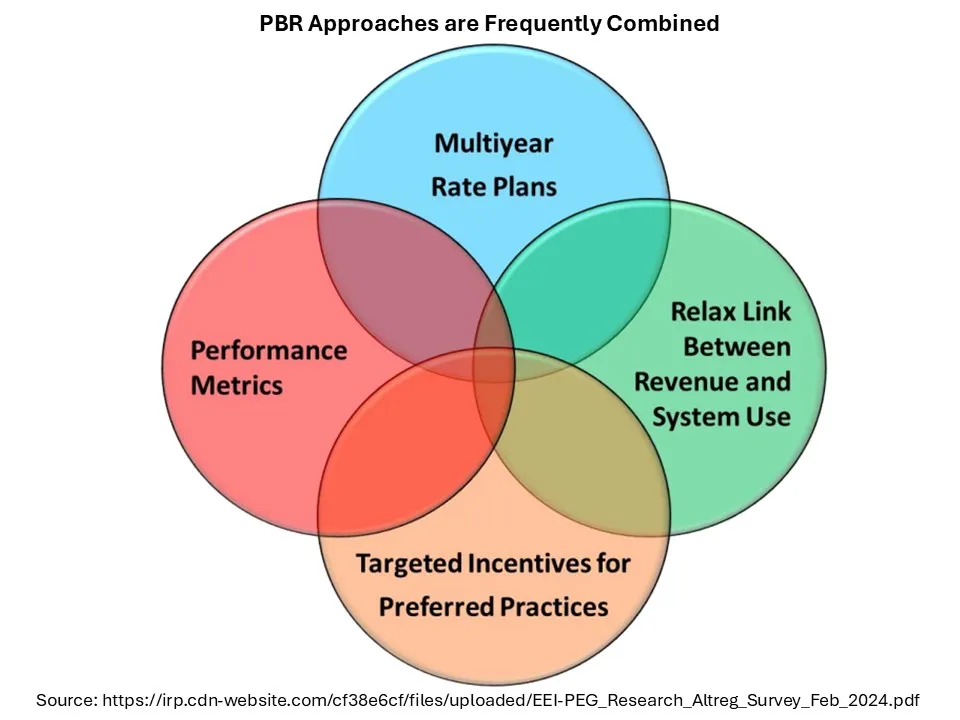
A multi-year rate plan, sometimes referred to by its acronym, MYRP, is one of a number of approaches that fall under the umbrella of performance-based ratemaking – known by its acronym, PBR.
While the traditional way of setting rates in many states, including Michigan, ties a utility’s allowed profit to its capital expenditures, PBR links it to specific outcomes.
PBR first emerged as an alternative model in the 1980s, but lately has seen a surge in interest as electricity prices outpace inflation and public anger over utility profits grows.
A “well-designed” multi-year rate plan, or MYRP, and performance-based ratemaking, or PBR, could “deliver meaningful affordability improvements,” Michigan PSC Chair Dan Scripps said in a letter to the governor. And it can allow utilities “the capital needed to make the reliability improvements customers need and expect,” he added.
But veterans of efforts to impose PBR on utilities and their shareholders argue the catch in Scripps’ proposal is the words “well-designed.” And the state’s investor-owned utilities say some proposals may have the opposite of their intended impact.
‘Energy affordability is a major issue’
As in many other states, the affordability of electricity in Michigan is playing a major role in this election season.
Michigan’s average electricity rates for residential customers rose 10.42% from June 2025’s 20.82 cents per kWh to June 2026’s 22.99 cents per kWh, according to the U.S. Energy Information Administration. In the same period, the national average for residential electricity rates rose 4.98% from 17.47 cents per kWh to 18.34 cents per kWh.
“There is an open governor's race and open races for all 38 seats in the Senate and all 110 seats in the House, and energy affordability is a major issue,” Scripps told Utility Dive in an interview. “One goal of the letter is to turn affordability from a political talking point into something actionable.”
Linking utility earnings and performance can improve reliability and affordability, Scripps said. But “that will not happen by using today’s regulatory processes and hoping for a different result,” he added.
The first key to progress is passing Senate Bill 768, which would extend the mandatory period between rate cases from one to three years, Scripps said. The bill was introduced earlier this year and remains in committee.
Allowing utilities to file for rate increases every 12 months has led to annual rate cases by utilities, Scripps’ letter said. Customers and stakeholders are frustrated and worn out from the “seemingly endless” litigation over rates, it said.
Extending the time between rate cases would give regulators more time to find opportunities for utilities to deploy capital on necessary system investments that are less costly for customers, Scripps said. It could also change how utilities justify and recover costs and make profits.
SB 768 was discussed by the state Senate Energy and Environment Committee in April, but has not progressed or been taken up by the lower chamber since.
Some utilities have voiced concerns about the potential reforms being floated among regulators and lawmakers.
Matt Johnson, a spokesperson for Consumers Energy, an investor-owned utility that serves about 1.8 million electric customers in the state, said the company shares regulators’ affordability goals.
Consumers is investing to lower energy costs “while balancing the need for continued infrastructure upgrades,” Johnson said.
Some of the commission’s recommendations “could unintentionally undermine those efforts,” he added, without specifying any further.
Consumers has said that SB 768 presents a potential “risk to customer affordability and reliability.”
Rising costs and data centers require ‘new thinking’
The objective of performance-based rates is to strengthen cost containment, streamline ratemaking and provide a platform for things like targeted performance incentive mechanisms, or PIMs, Pacific Economics Group President Mark Newton Lowry, an early pioneer of PBR, told Utility Dive.
A multi-year rate plan decouples ratemaking from the setting of a utility’s revenue needs, which allows utilities the opportunity to innovate strategies to increase revenues outside litigated rate case debates, he said.
Some states, particularly on the West Coast and in New England, already require MYRPs, Lowry said. They can ensure revenue is “reasonably tied to a utility's costs, but give them stronger incentives” to earn further revenues for their performance, he added.
Another type of alternative ratemaking is formula rates, which link the utility’s revenue and cost projections but usually include mechanisms that adjust revenues to the costs, Lowry said.
However, in his opinion, that model “tends to eliminate any incentive to contain costs,” he added.
Michigan’s traditional cost-of-service regulation and annual rate cases allow similar adjustments to protect utility earnings, and utilities have used their influence to avoid changes “too contrary to their interests,” he said..
In a MYRP, the revenue and cost projections are “indexed,” or calculated with respect to factors like average or historic customer growth or inflation, but otherwise not adjusted, Lowry said. Utilities must meet the projections by containing cost and can retain or share with customers excess earnings from PIMs, he added.
Moving from annual rate cases to a three-year rate case cycle in Michigan would be an “entry level” MYRP, Lowry said.
“This is not an easy topic, and we are still learning after over 30 years, but affordability and data center growth are challenges that require “new thinking,” he added.
Critics decry regulatory loopholes, utility ‘scare tactics’
Like Lowry, Wired Group President Paul Alvarez is a frequent PBR proceeding expert witness who sees “a lot of potential” in the approach.
“The problem is that regulators always allow loopholes in response to utility scare tactics,” Alvarez said. Utilities warn about PBR as a threat to rates, reliability or safety, and, if regulators don’t respond, “the utilities go to legislators for the relief they want,” he added.
If policymakers don’t deviate from a MYRP’s spending limits, PBR “could be an answer to affordability,” Alvarez said. But utilities in Hawai’i, Massachusetts and other states have convinced commissions they needed cost recovery for spending beyond the plan’s framework, “and that’s where it falls apart,” he added.
If regulators had adequate time and personnel, they could review all spending proposals and make significant adjustments, Alvarez said. But “in every PBR framework I have evaluated, regulators have allowed loopholes.”
Mark LeBel, a principal at the Regulatory Assistance Project, emphasized PBR’s upside for utilities.
The next 10 years will be different than the last 20 years, with load growth and new technologies driving utility revenues up, LeBel said. That can allow structuring MYRPs to improve affordability and the utility’s share price, he added.
“Regulators have always monitored utility performance and looked for the right incentives,” LeBel said. “But today we need 21st century ways of monitoring, managing, and rewarding performance with transparent metrics and fair compensation mechanisms,” he added.
Where utilities have embraced multiyear planning
Some investor-owned utilities have embraced MYRPs.
Exelon, for example, has borrowed some features from the MYRP of its Illinois subsidiary, Commonwealth Edison, and proposed them to regulators in New Jersey for another subsidiary, Atlantic City Electric.
Kristin Munsch, vice president of regulatory policy and strategy at Commonwealth Edison, said a 2021 Illinois state law linked “utility performance to customer outcomes, and we’ve learned a great deal through its implementation.”
The company is continuing to work on incentives for things like peak load reduction and grid reliability, she added.
New Jersey performance metrics could be modeled on those in Illinois, Atlantic City Electric’s filing said. Illinois shows “how regulators can translate policy goals into quantifiable utility performance expectations,” and how New Jersey can move “beyond prescriptive compliance toward a performance-driven regulatory model,” it added.
It is unclear when New Jersey regulators will reach a decision in the Executive Order 1 utility business model modernization proceeding.
Will Kenworthy, the regulatory director over the Midwest with advocacy group Vote Solar, also pointed to Illinois as a potential model for other states. Illinois’ legislation created an MYRP and required utilities to submit a distribution system plan and performance metrics to regulators as part of the 2021 law’s implementation.
The time between rate cases “allows regulators to develop a longer-term vision by shifting focus away from patching holes year to year,” Kenworthy said. That can lead to “more robust integrated planning to improve affordability,” he added.
‘No secret sauce’
Scripps, the commission chair in Michigan, said that multi-year ratemaking with meaningful performance-based elements is a way to “improve on reviewing the same capital stack over and over.”
That can lead to “the right signals to change the way utilities earn and drive better performance, particularly around affordability and reliability,” he added.
Both Consumers and DTE Energy, which has about 2.3 million electric customers in the state, said in separate statements to Utility Dive that they are committed to working with the commission and other stakeholders on regulatory solutions for affordability and reliability, but did not offer specifics.
Ryan Lowry, a spokesperson for DTE Energy, said the utility has kept customers' bills below regional and national averages and improved outage times 90% from 2023 to 2025.
Scripps said its important to have buy-in from the utilities, their investors, consumer advocates and other stakeholders.
“If the circles of … benefits for those stakeholders overlap on affordability, utilities can remain financially healthy and there can be significant savings to customers,” he said.
But he doesn’t expect change to happen overnight.
“It may not happen this year because it is an election year,” Scripps said. “The details are important because there is no secret sauce, and it will take a lot of work, both on the legislative side and when it comes to the commission for implementations.”