Dive Brief:
- The California Public Utilities Commission opened a proceeding Sept. 3 to consider an update to its process for energy utilities filing general rate cases, with the stated goal of increasing transparency and accountability around utility rates with an eye toward customer affordability.
- CPUC’s rate case plan “has not been comprehensively updated or considered since 2007,” the commission said in its order. Commission President John Reynolds said the proceeding will give the commission the opportunity to implement several new state laws, including AB2666, which passed in 2024 and requires “utilities to report and track their actual rates of return against their forecasted rates of return.”
- Energy and regulatory analyst Michael Cade told Utility Dive that the general rate case proceeding “could be a pretty significant rulemaking, but I think that, similar to relying on rate design as an affordability panacea, tweaking the framework of GRCs can only do so much.”
Dive Insight:
As of June, California had the second-highest average retail price of electricity in the U.S. behind Hawaii, according to the Energy Information Administration.
CPUC’s order said its aim was to streamline general rate cases and “provide parties and Commission decision-makers with more complete information” as they work to ensure that rates are sufficient to support the services utilities provide while also keeping those rates as affordable as possible for customers.
“In conjunction with these goals, the Commission may also consider broader revisions of the RCP to promote more efficient and effective management of the rate case process while promoting consistency and uniformity in the energy utilities’ GRC applications,” the order said.
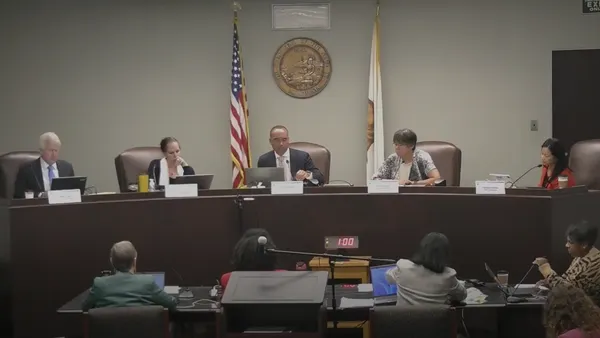
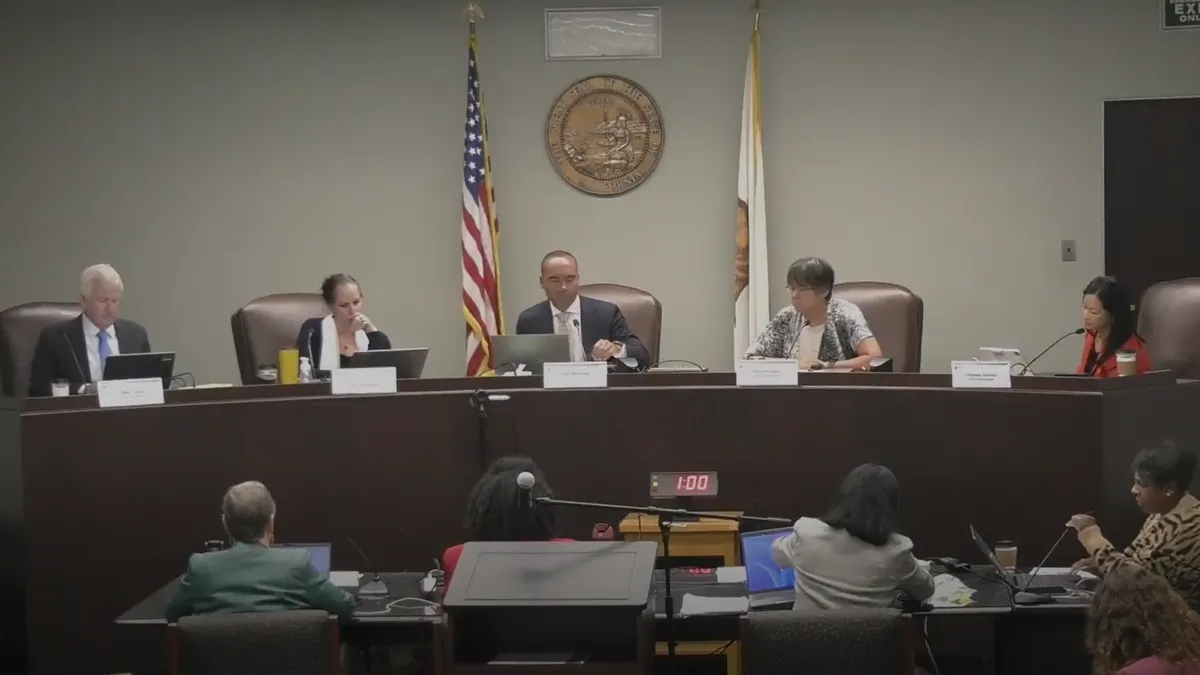
Reynolds said during the Sept. 3 meeting that he anticipates the rulemaking will focus on implementing legislative direction while also tackling aspects not covered in legislation “that can really improve our general rate case process to create more efficiencies for our review of costs, and ultimately enable both greater certainty in utility rates … and greater affordability for customers.”
However, he noted that the “implementation issues are very, very big.”
In addition to implementing the changes made by AB2666, the order will also address the contents of the 2024 law AB2847, which requires utilities to increase cost transparency and disclosure regarding long-term capital expenditures, and 2025’s SB254, which increased ratepayer protections and made adjustments to the California Wildfire Fund.
The commission’s order named Pacific Gas and Electric, Southern California Edison, San Diego Gas & Electric, and Southern California Gas Company as parties to the proceeding. In a comment to Utility Dive, PG&E spokesperson Mike Gazda wrote that the utility “supports the CPUC's efforts to strengthen affordability, accountability and transparency in the General Rate Case process.”
“We recognize the importance of keeping customer costs as low as possible while continuing to make the investments needed to deliver safe and reliable energy service,” Gazda said. “We look forward to working with the CPUC and other stakeholders on potential improvements that can streamline the regulatory process and increase transparency."
During the Sept. 3 CPUC meeting, Commissioner Darcie Houck suggested “a few items related to the [order] that I’d just like our staff and the assigned judge to think about as we’re moving through the rulemaking,” including the “opportunity to take a closer look at the correlation between utility performance and compensation.”
“There are some examples from what the Hawaii PUC is doing that are fairly innovative, including considering requiring IOUs to achieve certain performance-based targets, such as hitting decarbonization goals and interconnection timelines, in order to earn a certain return on equity,” Houck said. “In addition, they're looking at profit sharing, such as if a utility overearns its authorized return, it has to share a portion of those gains with ratepayers.”
Cade said he was “encouraged by some comments I heard from the dais” on Sept. 3, including from Houck, who he said “has engaged very seriously with ROE and regulatory economics for years now, particularly in cost-of-capital proceedings, where she has suggested the CPUC consider price-to-book ratios in setting authorized ROEs.”
In that meeting, “she raised the potential relationship between cost-of-capital proceedings and this rulemaking, and that was a positive signal,” he said.
In a fact sheet, CPUC said that comments can be submitted on the order within 45 days of it being issued. “It is anticipated that one or more public workshops and/or party and staff proposals may be needed to further develop and build consensus around the issues considered in this proceeding,” the fact sheet said.