Dive Brief:
- Google will purchase the energy, capacity and clean energy attributes of a solar-and-storage project planned on the site of a former coal mine in West Virginia, the tech giant and its partners announced last week.
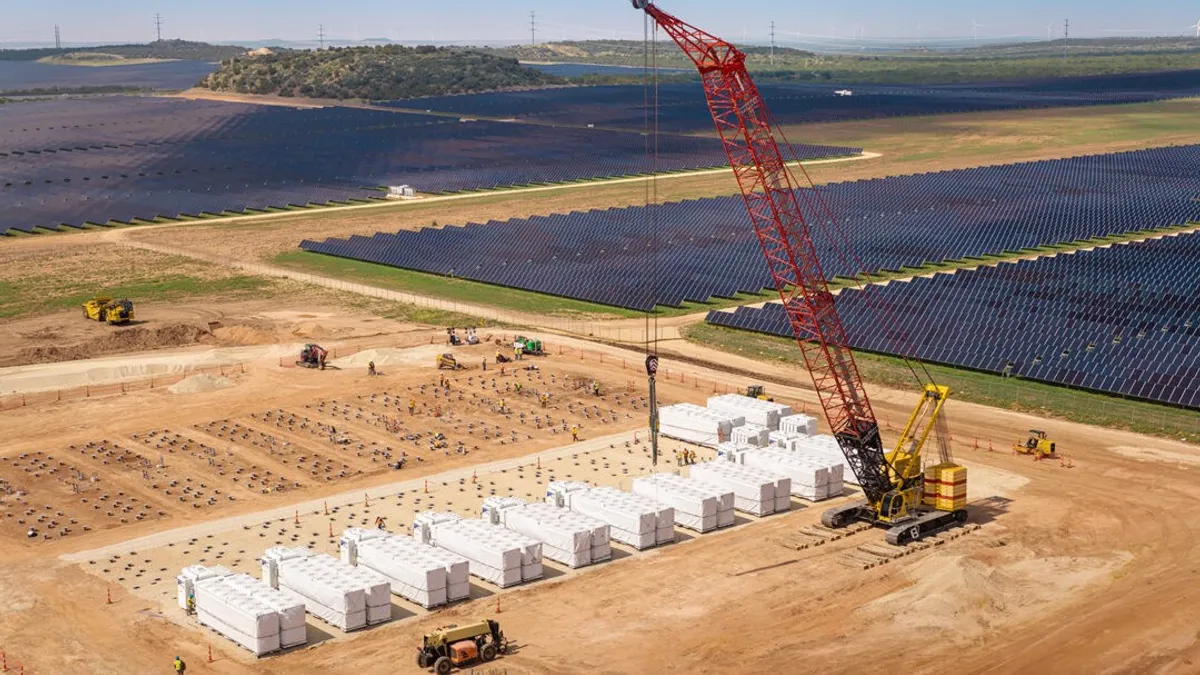
- The Mammoth Solar project, part of the PJM Interconnection system, will consist of 86 MW of utility-scale solar, 10 MW/100 MWh of zinc-based long-duration energy storage and 70 MW/280 MWh of lithium-ion energy storage. The solar component is expected to reach commercial operation in 2028, with storage following in 2029 and 2030, the companies said.
- Google, alongside the developer, MN8, and the zinc-battery manufacturer, Eos Energy Enterprises, said in a joint release that the project is designed to match clean energy capacity with Google’s regional data center load profiles throughout the day. They also said the project will deliver more capacity across the PJM region, where recent auctions have seen capacity costs hit the price ceiling and a one-time backstop auction this fall is set to fill a nearly 7 GW shortfall.
Dive Insight:
The project is notable for the size of the zinc-based battery deployment — one of the largest to date. Most operational zinc battery deployments have power ratings of 1 MW or less, according to the U.S. Department of Energy.
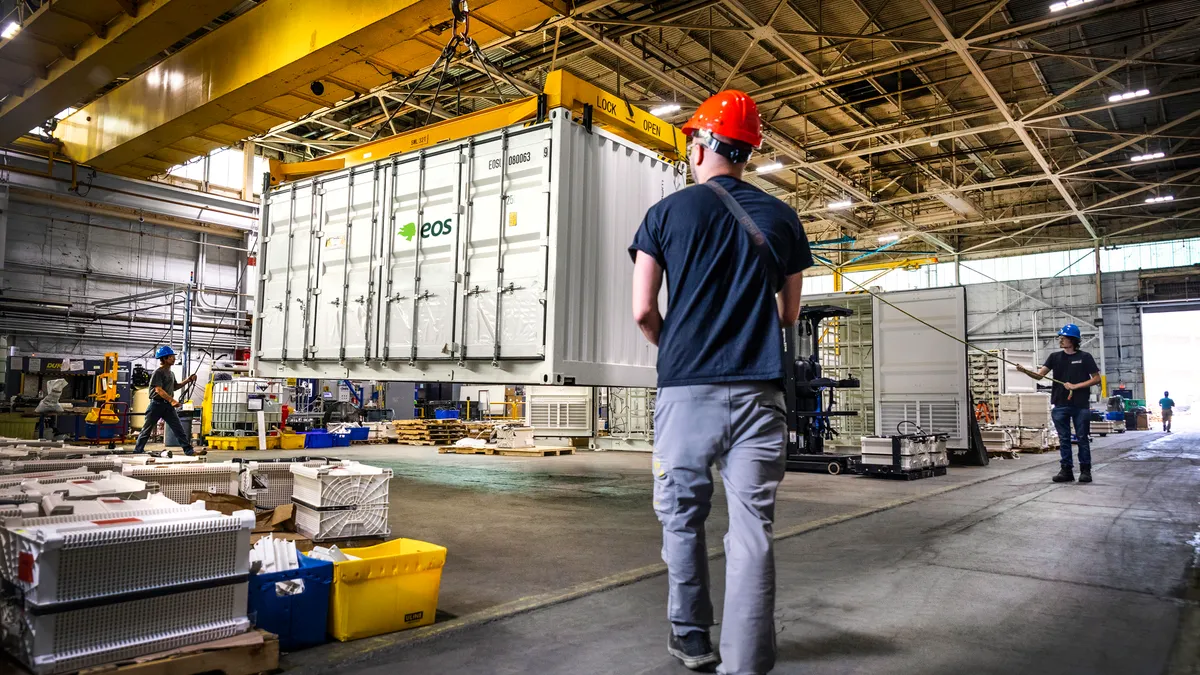
Eos batteries use a nonflammable, zinc-based electrolyte, rather than the lithium-based electrolyte found in lithium-ion batteries, and can economically discharge energy for longer than eight hours at a time. This summer, Nebraska public utility Lincoln Electric System said it had installed a 3 MW/12 MWh zinc battery to support the state government hub’s microgrid.
Last year, MN8 and Eos Energy inked a supply agreement under which Eos could supply as much as 750 MWh of its zinc-based Z3 battery modules to various MN8 projects “within PJM and other U.S. markets,” the companies said in October.
The companies said the first projects supported by the supply agreement would combine 200 MWh of 10-hour energy storage with solar generation.
“This collaboration with MN8 and Eos aims to deploy a smart portfolio of round-the-clock technology solutions to help power our digital infrastructure,” Lucia Tian, Google’s director of advanced energy technologies, said in a statement.
Jon Yoder, MN8 Energy’s president and CEO, credited Google for being “willing to pair next-generation storage with utility-scale solar” and allowing MN8 to design a customized solution for its facilities load profiles.
The agreement is part of a broader effort to accelerate commercialization of long-duration energy storage technologies, the companies said.
MN8’s Mammoth Solar project in Kanawha County, West Virginia has no connection with Doral Renewables’ similarly named 1.3-GW Mammoth Solar project in Indiana.
Separately, Google is bankrolling the construction of what Xcel Energy says will be one of the world’s largest battery installations of any kind, a 300 MW/30 GWh iron-air battery deployment in Minnesota that manufacturer Form Energy says can provide up to 100 hours of full-power discharge.
Like its West Virginia deployment, Google’s Minnesota project is one component of a broader procurement of clean energy resources to support data centers it plans to bring online in the region.