Despite the recent attention on new electric demand created by data centers, Mitsubishi Heavy Industries sees greater potential for long-term growth in the utilities sector, MHI President and CEO Eisaku Ito said earlier this month.
Utilities and independent power producers accounted for 94% of Mitsubishi Heavy Industries’ new gas turbine orders in 2024 and 2025, Ito said.
Although many U.S. data center operators say they intend to install their own off-grid generation, Ito argued that these plans rely on smaller gas-fired power plants that cost more to run than the larger plants utilities and IPPs are pursuing.
In the long-term, Ito said, the cost differential will push data centers to connect to the grid, ultimately supporting utilities' expansion plans.
His comments, made during a call with analysts on Nov. 6, according to a translated transcript, come as fallout from the U.S. midterm elections and stock market volatility raise questions about the future of the artificial intelligence buildout in North America. Ito expressed confidence in utilities' long-term expansion plans, arguing that growing demand for electricity does not rely solely on data centers.
“Electricity demand from data centers is expected to grow rapidly in the United States, but data centers still account for only around 10% of the country's total electricity demand,” Ito said. “If some of the anticipated growth in demand does not materialize, there will be some impact, but we believe the effect on our overall GTCC business would be limited.”
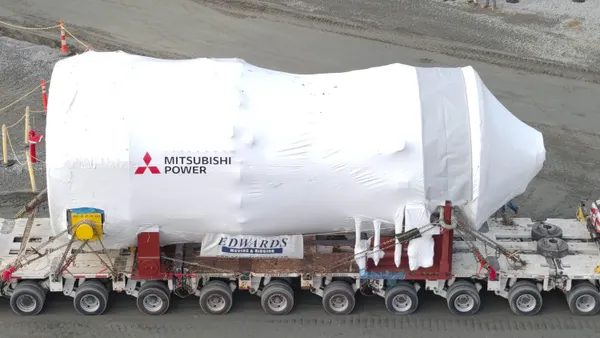
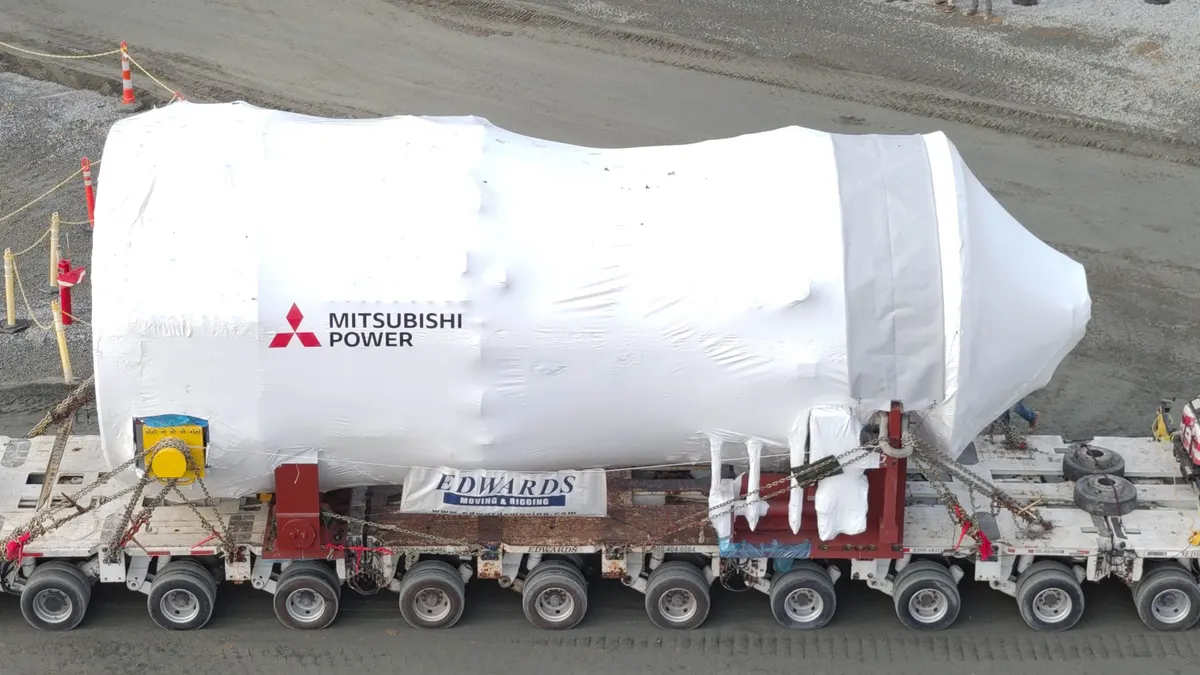
MHI booked 8 GW in orders for large frame gas turbines in the first half of its 2026 fiscal year, compared to 16 GW of orders in all of FY 2025. Profit for the company’s Energy Systems segment rose 80% on account of increased orders and shifts in the value of the yen, according to the company's financial statements.
“We are also beginning to see the benefits of improved pricing on new unit projects, lower loss-related costs and greater production efficiency,” MHI CFO Hiroshi Nishio said.
Company executives said they continue to take a conservative approach to forecasting demand and expanding manufacturing capacity. The company expects global demand for gas turbines at all manufacturers and makers to average about 70 GW per year over the next five years — somewhat lower than the 100 GW MHI expects will sell across all manufactuers this year amid what Ito characterized as “exceptionally strong” demand he does not anticipate will continue.
But Ito said he remains confident in MHI’s company backlog, noting that the company vets new orders carefully and hasn’t had any order cancellations in the past two years.
The company plans to double its gas turbine production capacity by 2030, though most of the additional capacity will come from improved processes and automation at existing plants in the U.S. and Japan.
“We are improving productivity and driving other initiatives at a pace that outstrips the growth in orders,” he said.
MHI also signaled that it's exploring opportunities to expand into other infrastructure-related markets.
Ito said MHI will release additional details in May, but suggested the company is interested in expanding its gas turbine service and repair capabilities, as well as investing in unmanned systems that can operate in harsh environments. At the same time, MHI plans to divest some of its aerospace business, he said.
“These examples may seem quite different, but they all share a common theme: resilience,” Ito said. “We aim to identify new business opportunities in infrastructure and industrial machinery through the lens of resilience and turn them into future growth.”