UPDATE: On Jan. 23, President Donald Trump signed a stack of appropriations bills including the bill containing the Department of Energy’s funding, giving $320 million to DOE’s wind and solar programs under the umbrella of the Office of Energy Efficiency and Renewable Energy – despite his proposed budget calling for zero funding to those programs.
Last November, the Trump administration released an updated organizational chart which eliminated the Energy Efficiency and Renewable Energy, but it has yet to take additional steps to make this move official.
A release from the House Appropriations Committee praised the signing of the energy and water bill, noting that it “[eliminated] the Office of Clean Energy Demonstrations and [zeroed] out the accounts for DOE’s Office of Energy Justice and Equity and the EPA’s Environmental Justice program.”
“Biden-era work spending is gone!” the release said. “House Republicans are using the power of the purse to advance the critical priority to restore American energy dominance.”
Dive Brief:
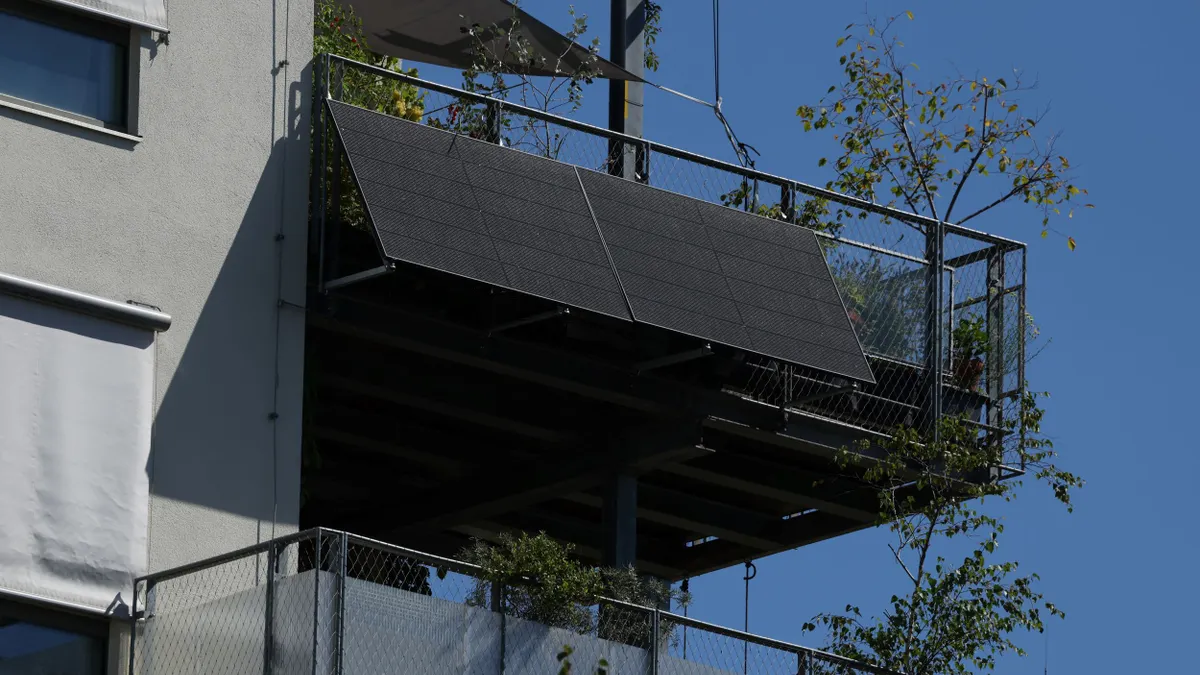
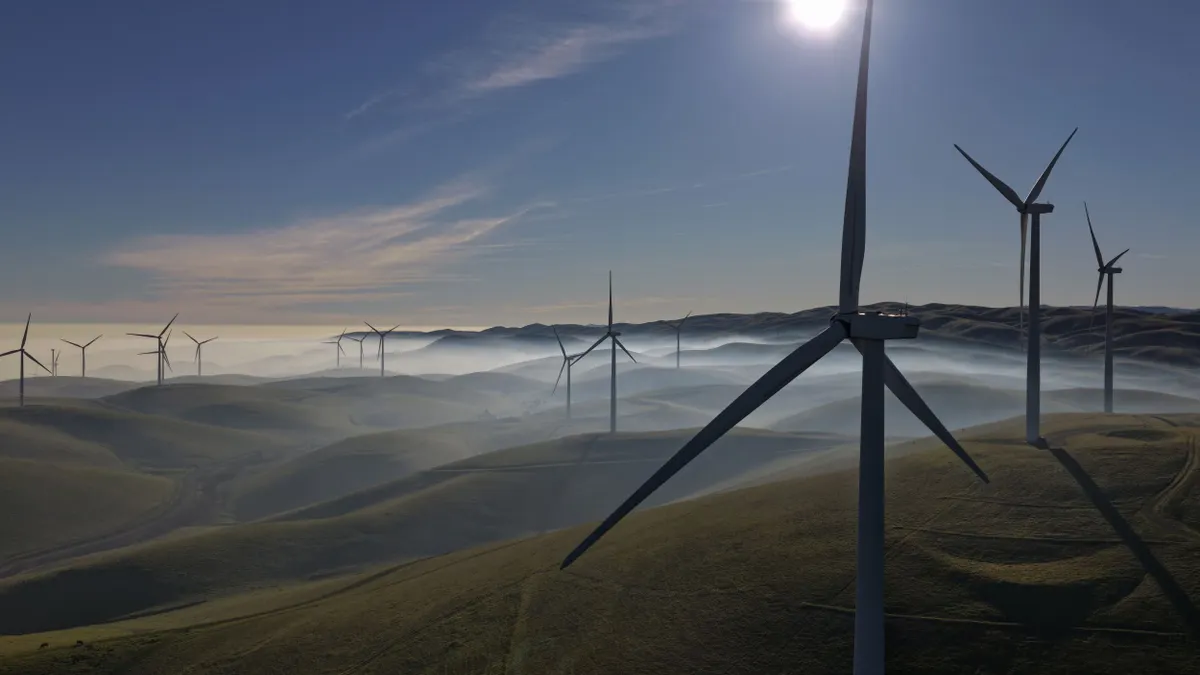
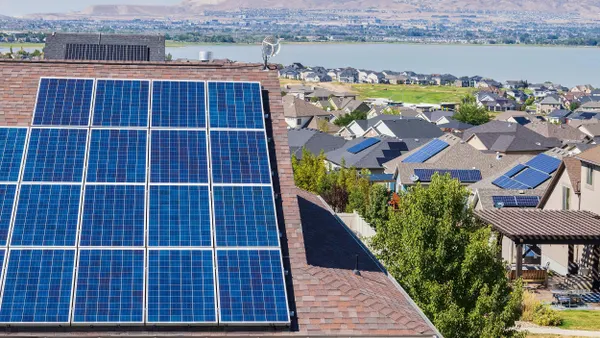
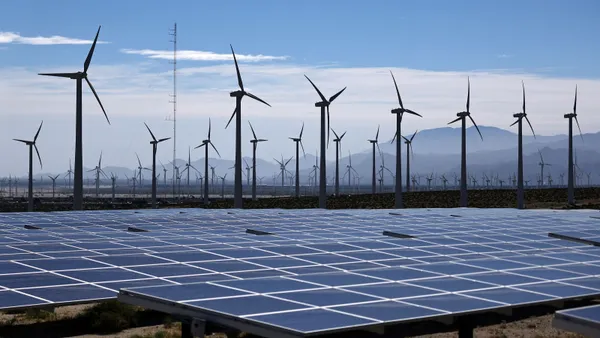
- An appropriations bill passed by both houses of Congress awards $3.1 billion in funding to the Department of Energy’s Office of Energy Efficiency and Renewable Energy instead of the White House’s requested $880 million, and provides funding for its solar and wind energy programs, which the administration had requested zero funding for.
- The bill constitutes an overall decrease from EERE’s 2025 funding level of $3.46 billion, but increases EERE’s budget for solar from $41.9 million to $220 million and wind from $29.8 million to $100 million. President Donald Trump is expected to sign the appropriations bill into law ahead of the Jan. 31 funding deadline, law firm Holland & Knight said in a Jan. 16 blog post.
- The congressional report on the bill also states that the agency can’t terminate a federal award, or require a renegotiation or rescoping of it, on the basis that the federal award “no longer effectuates program goals or agency priorities.”
Dive Insight:
DOE announced an updated organizational chart in November which removed the Energy Efficiency and Renewable Energy, consolidating it into the Office of Critical Minerals and Energy Innovation, but the budget doesn’t address this.
“Nearly every line item in the appropriations bill for DOE is higher than what was in the President's budget request,” said Brad Townsend, the Center for Climate and Energy Solutions’s vice president for U.S. policy and outreach. “EERE, which no longer even exists in the org chart, still got more than $3 billion in funding, which I think is an example of Congress working to assert its power over the purse.”
Congress drawing a line about the termination of federal awards also reflects this, Townsend said, but “it's going to depend on what that looks like in practice, and how DOE actually follows those guidelines.”
Some grant awardees who received funding from the Inflation Reduction Act and Infrastructure Investment and Jobs Act are still fighting those cancellations in court.
The bill reallocates around $5.1 billion in unobligated funds from Infrastructure Investment and Jobs Act provisions, including several carbon capture programs. About $3.1 billion of the reallocated funding will go to the Office of Nuclear Energy for its Advanced Reactor Deployment Program, and $375 million will flow to Grid Deployment for programming to enhance the domestic supply chain for grid components.
The reallocation toward the nuclear office “makes sense, because it's continued funding for safeguarding the U.S. nuclear fuel supply for the grid, continuing research in that particular realm,” said Max Pyziur, a research director with the Energy Policy Research Foundation. “And probably there's a veiled component meaning that it helps support the national labs, which overall is very important work and very useful work.”
In 2025, the Trump administration laid off workers at DOE’s national labs, including 114 National Renewable Energy Laboratory workers, and the budget cuts it proposed for DOE last July would have resulted in thousands more layoffs – a scenario this appropriations budget averts.
The layoffs were “a DOGE priority, and a lot of people were sounding alarms off about — one, you would lose the research, and the other thing is you would lose the employment and consequently the tax base,” Pyziur said.
Townsend said that despite the funding contained in this bill, a sense of instability could lead to brain drain for those labs. “Ultimately, [they’re] competing for talent with the private sector,” he said. “If I were a person finishing up a doctorate degree and thinking about where to work, I don't know that this appropriations bill would dissuade me from looking at private sector options.”
Pyziur noted that the bill meets White House’s proposed funding for geothermal technology programs and exceeds what it requested for water power programs. Geothermal received $487.9 million in 2025; the Trump administration requested $150 million this year and is set to receive exactly that. Water power received $300 million last year, while the Trump administration requested $90 million this year and is set to receive $220 million.
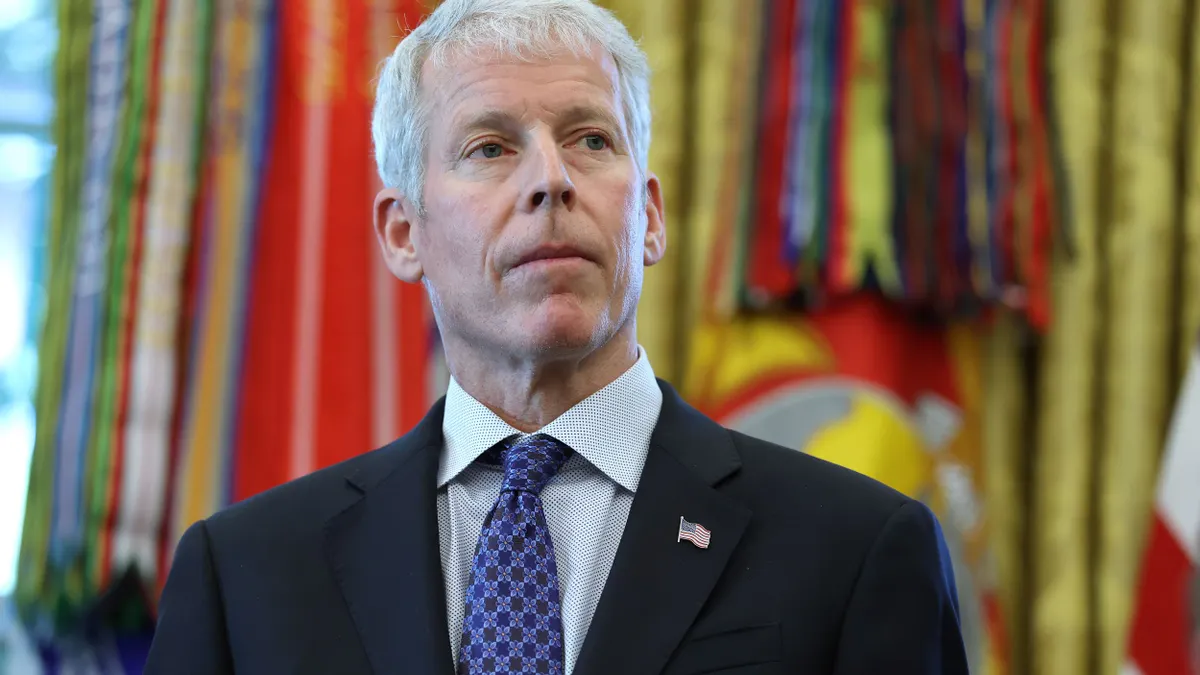
Both are dispatchable resources which support the energy policy articulated by Energy Secretary Chris Wright, he said, while funding solar and wind contradicts Wright’s stated goals.
Townsend said the bill is “refocusing a lot of [EERE] funding to better support baseload generation.”
“I would like to call it clean firm, although I think there are probably some non-clean technologies that might potentially benefit here,” he said. “But ultimately, I think it's good for EERE to be focused on clean, firm power.”
Correction: The headline has been updated to accurately report the programs receiving the spending increase and the size of the increase.