Overall, the U.S. Department of Energy’s “emergency” orders preventing power plants from retiring have helped the power system, a top official with the North American Electric Reliability Corp. said Thursday.
“It's a blunt instrument used as a last resort to keep necessary generation online, and has certainly helped, especially in this past winter, maintain reliability,” said John Moura, NERC’s director of reliability assessments and performance analysis.
However, the DOE’s orders range in benefit, according to Moura. “Some are helpful, some maybe not,” he said at the Federal Energy Regulatory Commission’s monthly meeting. “But in the aggregate, it's definitely been a help to keep units online.”
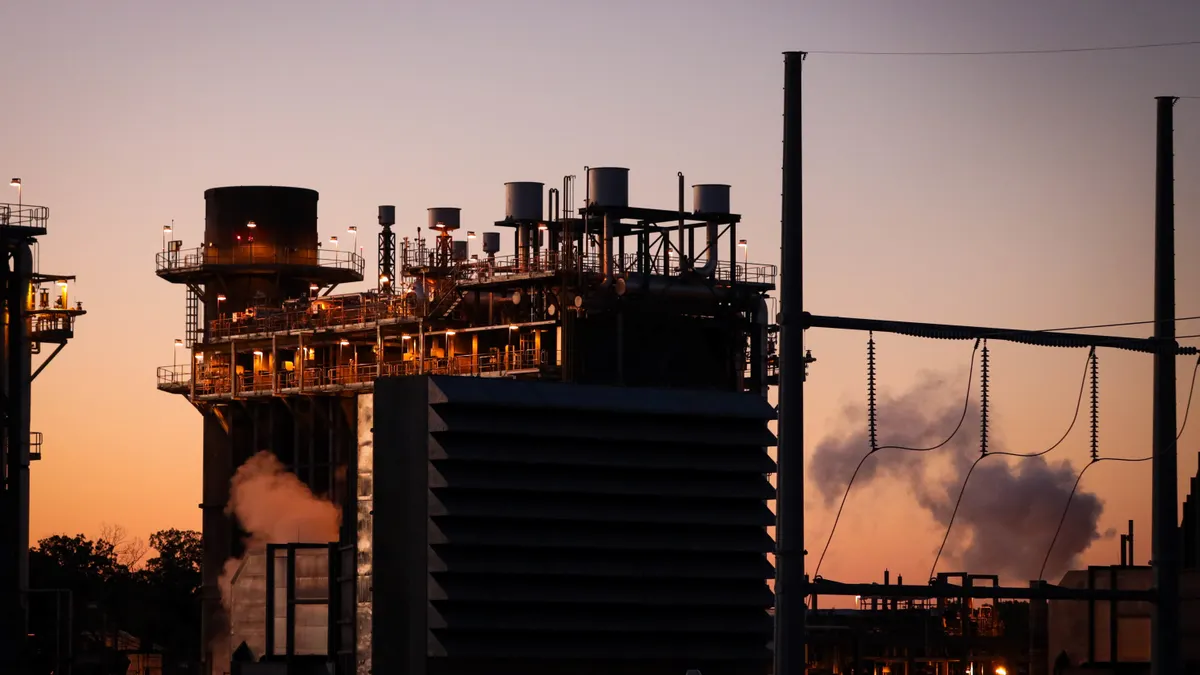
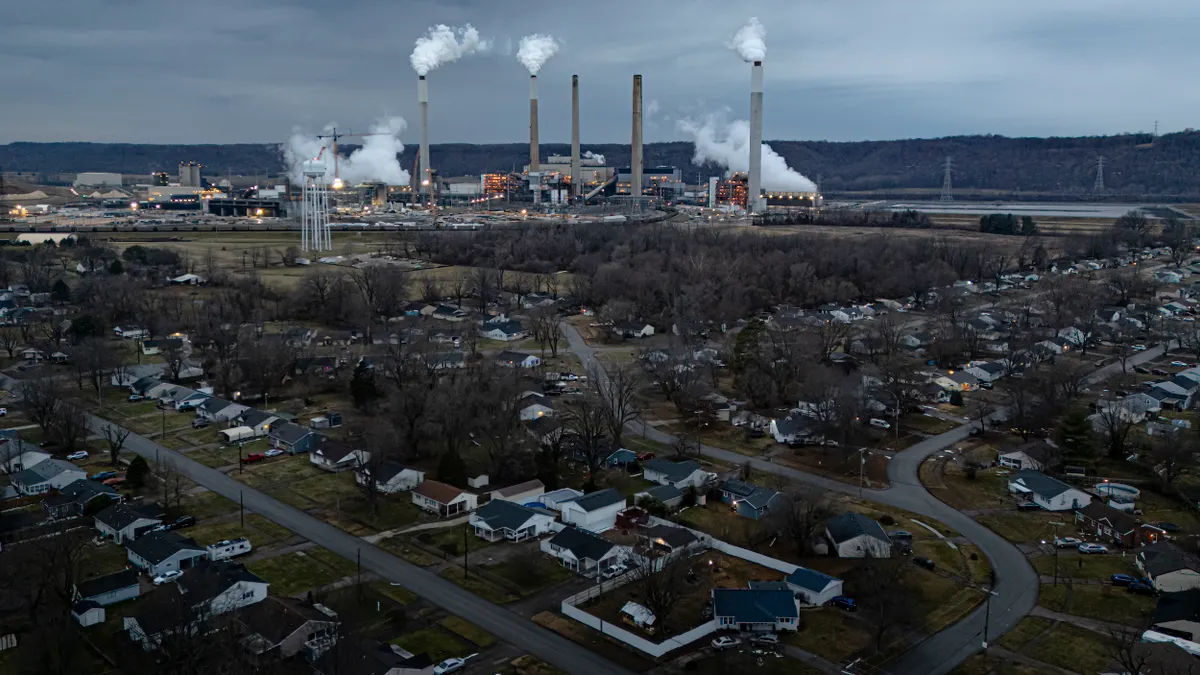
Using its authority under the Federal Power Act’s section 202(c), DOE last year prevented six power plants totaling about 4,300 MW from retiring as scheduled. Five of the power plants burn coal. They are in Colorado, Indiana, Michigan and Washington. DOE also ordered Constellation Energy to continue running two oil- and gas-fired units totaling 760 MW at its Eddystone plant in Pennsylvania. So far, DOE hasn’t let any of its 90-day orders for those power plants lapse.
Various parties have challenged the DOE orders in court. In their appeals to DOE and in court, they argue in part that the department has failed to show that its orders address a specific grid emergency.
Late last month, NERC issued its annual long-term reliability assessment, which found that most of North America is at high to elevated risk for power outages over the next five years. The analysis was based on conditions and forecasts as of last July.
NERC, for example, determined that the Midcontinent Independent System Operator was at high risk for outages starting in 2028 as denoted by a red swath across its 13-state footprint, which runs from Louisiana to North Dakota.
Will fast-track interconnection ease MISO risk?
It is too soon to say to what extent MISO’s fast-track interconnection process will reduce reliability risks in the grid operator’s footprint, Moura told FERC commissioners.
NERC hasn’t assessed how the projects in MISO’s Expedited Resource Addition Study process — a temporary interconnection review that aims to bring generation online quickly to alleviate resource adequacy risks — may affect reliability in the grid operator’s footprint, he said.
“We don't know whether or not the MISO area would have been ‘red’ if we were to count those resources in the ERAS projects,” Moura said.
In its assessment, NERC said, “Timely implementation of ERAS resources will eliminate reserve margin shortfall and improve expected unserved energy metrics.”
NERC’s characterization of MISO’s risk level has sparked pushback from utility regulators in the grid operator’s footprint, partly because it fails to recognize generating resources that are expected to come online through MISO’s fast-track interconnection review process before the 2028-29 winter.
“The ERAS process — developed collaboratively by state regulators, MISO, and stakeholders — is already well underway, and it is expected to address emerging capacity needs in the near to medium term,” Michael Carrigan, president of the Organization of MISO States and a commissioner on the Illinois Commerce Commission, said in a letter to Jim Robb, NERC president and CEO.
Also, the annual OMS–MISO Resource Adequacy Survey often shows potential shortfalls in the later years of the planning horizon, like those reflected in NERC’s assessment, according to OMS.
“Early in this process, OMS, MISO, and state regulators recognized that such out-year uncertainty is a structural feature of planning-based jurisdictions and is routinely managed through coordinated utility planning, regulatory oversight, and market and policy actions, well before reliability could be affected,” Carrigan said in the letter.
Under the MISO’s ERAS process, the grid operator is studying up to 68 projects before the program ends on Aug. 31, 2027. So far, projects totaling about 28 GW have entered into the fast-track review process, according to a summary of the projects. Besides gas-fired generation, those projects include about 4 GW of battery storage, 2.6 GW of solar and nearly 1 GW of wind.
While those projects must be certified to address resource adequacy needs, the gas-fired projects in the ERAS process may lack firm fuel supplies, which could limit their ability to deliver power on a frigid winter day when gas supplies are tight, according to Moura. Also, about 7 GW in the ERAS queue is in MISO’s southern region, which has limits on how much power it can export to the grid operators' northern and central regions, Moura noted.
NERC will consider those factors in its next long-term assessment, Moura said.
When developing its load growth forecasts, NERC relies on industry reports to determine how much data center and other large loads to include in its analysis, according to Moura. Uncertainty around those forecasts is one of the largest uncertainties facing grid planners, he said.
NERC doesn’t include speculative projects in its forecast, but the grid watchdog is tightening its analysis by placing potential large loads into tiers reflecting how likely they are to be built, Moura said. Those enhancements will be in place for NERC’s next long-term assessment, he said.
Also, NERC plans to shift its assessment so it looks at outage probabilities for every hour of the year instead of focusing on meeting reserve margin targets, according to Moura.