The Federal Energy Regulatory Commission on Thursday ordered the PJM Interconnection to develop rules for colocating data centers and other large loads at power plants.
The decision is a “major victory” for companies that own gas-fired and nuclear power plants in PJM, according to analysts with Capstone, a research firm. Some of those companies include Constellation Energy, Public Service Enterprise Group and Vistra.
“We view this order as a strong signal of FERC’s position on the data center vs. affordability narrative, with the commission, rather than impeding AI development, likely to focus on avenues for relief for rising electricity costs, such as changes to capacity accreditation, fast-tracking new, high-capacity resources, and transferring costs from load to renewable generators,” Josh Price, Capstone director, and Hannah Rogers, senior associate, said in a client note.
Trade groups for independent power producers and clean energy welcomed the order.
FERC’s order is a “first step in a process that will require quick action and durable consensus from many stakeholders and highlights the urgency in getting solutions onto the system,” Electric Power Supply Association President and CEO Todd Snitchler said in a statement.
The decision could lead to regulatory certainty for large load customers and safeguards to make sure that colocating loads won’t drive up electric rates for other ratepayers or hurt system reliability, according to Advanced Energy United, a clean energy trade group.
In its decision, FERC directed PJM to create three transmission services that reflect that transmission customers taking service on behalf of colocated loads can and will limit their energy withdrawals from the transmission system under certain conditions, FERC staff said in a presentation on the decision.
The new services are for interim, non-firm transmission; firm contract demand transmission; and non-firm contract demand transmission. FERC gave PJM 60 days to propose those services as part of a “paper hearing” process.
During that process, FERC will consider whether colocated load should be assessed a minimum charge to cover the costs of maintaining the transmission system.
FERC also said PJM must revise its behind-the-meter generation rules and develop a transition process for transitioning to new rules.
To address concerns about power supply in PJM, FERC gave the grid operator until Jan. 19 to file a report on the status of proposals PJM considered in its Critical Issue Fast Path stakeholder process on integrating large loads, including the status of the grid operator’s expedited interconnection process for shovel-ready generation projects.
“Beyond this proceeding, I am concerned about PJM’s ability to procure sufficient resources to reliably serve both new and existing load,” FERC Commissioner Judy Chang said in a concurring statement.
Chang emphasized the limits of FERC’s decision, noting that the colocation model the order envisions may not work in states where the local electric utility must serve retail loads.
“Therefore, the broader challenge of reliably, efficiently, and fairly interconnecting large loads and the generation needed to serve them remains before the commission, the states, and industry,” she said.
In its decision, FERC declined to address jurisdictional issues related to interconnecting retail loads served through colocation arrangements.
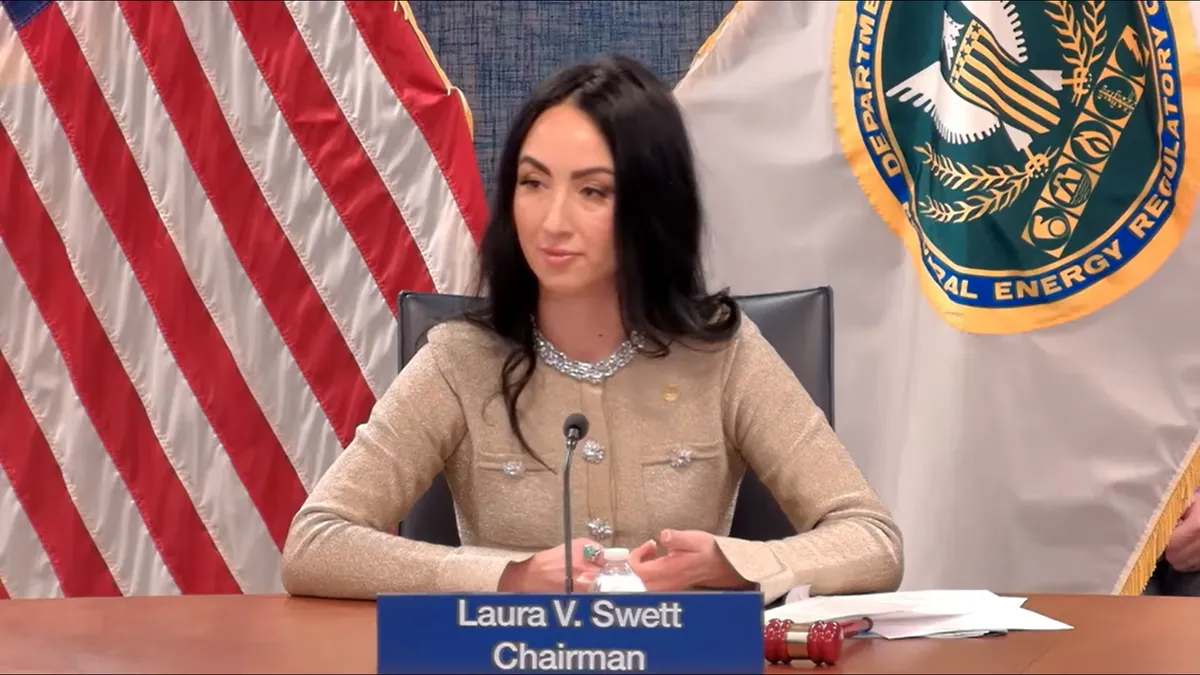
During FERC’s open meeting Thursday, Chairman Laura Swett addressed the “narrative” that data centers can increase bills for other ratepayers, describing her family’s stress over paying bills during her childhood.
“I don't want any American family to feel that anxiety because of anything that we do in this building,” she said, “and I pledge to do everything I can to ensure that our progress does not come at the expense of consumers.”
Recent data center-related arrangements FERC has approved included requirements that the data center developers pay for necessary system upgrades, and sometimes “a lot more than that,” Swett said.