Dive Brief:
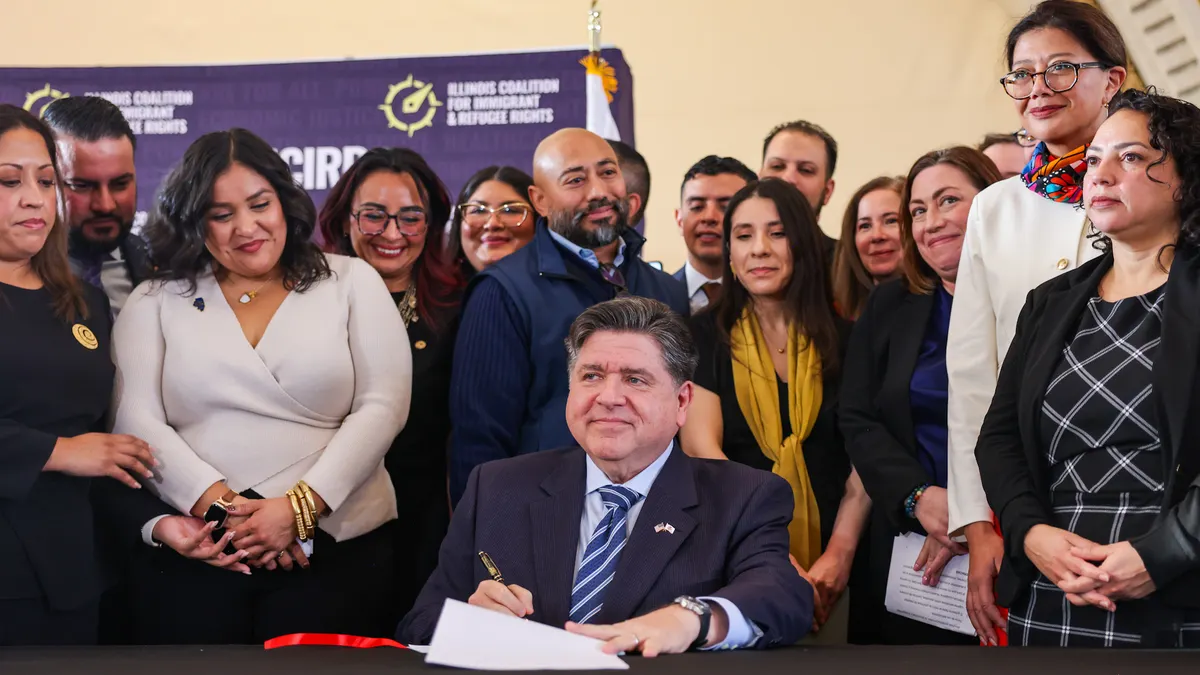
- Illinois Gov. JB Pritzker on Thursday signed the Clean and Reliable Grid Affordability Act, aiming to tackle rising electricity costs through the development of battery storage and virtual power plants, new planning processes, energy efficiency investments and other initiatives.
- The bill directs Illinois utilities to install 3 GW of grid-scale energy storage by 2030 and to develop programs that pay customers to harness the demand flexibility of resources such as batteries, smart thermostats and electric vehicle chargers.
- Clean energy advocates say the new law can be a model for states to deploy grid solutions that reduce prices and bolster reliability. The Illinois Power Agency estimated CRGA will save consumers in the state $13.4 billion over 20 years.
Dive Insight:
A report published by the U.S. Congress Joint Economic Committee Minority in November found Illinois electric bills were 15% higher than a year ago.
The state participates in the PJM Interconnection and Midcontinent Independent System Operator markets, both of which have seen capacity prices rise sharply. Pritzker’s office said the new law will lower costs by incentivizing new energy resources, supporting solar development and growing efficiency programs.
“Energy prices will come down without sacrificing our other priorities,” Lt. Gov. Juliana Stratton said in a statement.
The state has developed 6 GW of renewable energy since passing the Climate and Equitable Jobs Act in 2021, and has another 6 GW in development, officials said. The new law will grow storage resources and directs utilities to develop virtual power plants. It also lifts a moratorium on large nuclear reactor development in Illinois and creates an integrated resource planning process allowing for state agencies to suggest adjustments to energy programs and targets.
Utility efficiency programs will also get a boost.
The budget for Ameren efficiency programs will roughly double, and Commonwealth Edison will see a 25% increase, the Natural Resources Defense Council said. The minimum amount utilities spend on income-qualified programs will also triple, to 25% of total spending. That spending will be close to a $137 million annual investment for ComEd customers and almost $56 million a year for Ameren customers, according to NRDC’s analysis.
“This law shows what’s possible when clean energy is deployed strategically,” NRDC Midwest energy affordability advocate Kari Ross said in a statement.
Ameren Illinois Director of Clean Energy Transition Andy Parker said the utility expects virtual power plants, energy efficiency and demand response to “play key roles in our work to empower customers in the clean energy transition." The delivery-only utility doesn’t control power prices.
"Ameren Illinois supports a steady, measured transition to clean energy, and we have advocated for policies that keep energy affordable and maintain service reliability,” Parker said.
The new law will also double the allowed size of community solar projects to 10 MW. Solar Energy Industries Association President CEO Abigail Ross Hopper said the law “is a model for how states can secure their energy future and lower costs for families and small businesses.”
The bill also extends clean energy siting reforms to storage projects; allows the Illinois Commerce Commission to accelerate renewable energy projects before federal tax credits expire; establishes a solar bill of rights for consumers; and ties the state’s Renewable Portfolio Standard budget cap to inflation, in order to avoid disruption to clean energy procurement.
Illinois is among the top 10 states for installed clean energy capacity, according to the American Clean Power Association. The CRGA will help to reduce peak-hour costs in the near term without building new power plants, the group said.
The law “is advancing smart, timely solutions,” said ACP Senior Vice President of State Affairs Sarah Cottrell Propst. “With new investments in energy storage and virtual power plants, Illinois is positioning itself to keep energy costs low, improve reliability, and create clean-energy and manufacturing jobs.”
ComEd President and CEO Gil Quiniones said he is encouraged by Illinois’ new clean energy law, “but with demand for power surging and supply challenges ahead, there’s more work to do.”
“We will continue to partner with the state and all stakeholders to advocate for solutions that will address the surging demand and supply challenges while keeping customer reliability and affordability at the forefront,” Quiniones said in a statement.
Editor's note: This article has been updated to include comments from Commonwealth Edison President and CEO Gil Quiniones.