Jeff Cramer is CEO and president of the Coalition for Community Solar Access.
The Minnesota Public Utilities Commission will soon make a decision that could reshape the future of distributed energy far beyond the state’s borders.
Across the country, utilities and regulators are grappling with skyrocketing forecasted demand and pressures on affordability, all while traditional transmission-connected solutions aren’t penciling out on time or budget. Distributed energy resources, like front-of-the-meter solar and storage, continue to buck this trend with dramatically faster deployment and lower overall long-term costs. Just as important, new program designs are emerging that are built to capture and deploy the full value of these modular, local resources.
What’s unique about a proposal now before Minnesota regulators is two-fold: 1) the investor-owned utility itself is proposing a program — distributed capacity procurement, or DCP, through Capacity*Connect — that validates the premise that DERs are essential to cost-effective modern grid planning; and 2) the specific design of the proposed program would centralize ownership of these DERs solely within the existing utility rather than leveraging the broader competitive ecosystem in a more balanced approach.
At stake is whether distributed energy should continue to be built as an open, competitive model, supporting third-party and utility-owned systems — or absorbed entirely into utility ownership.
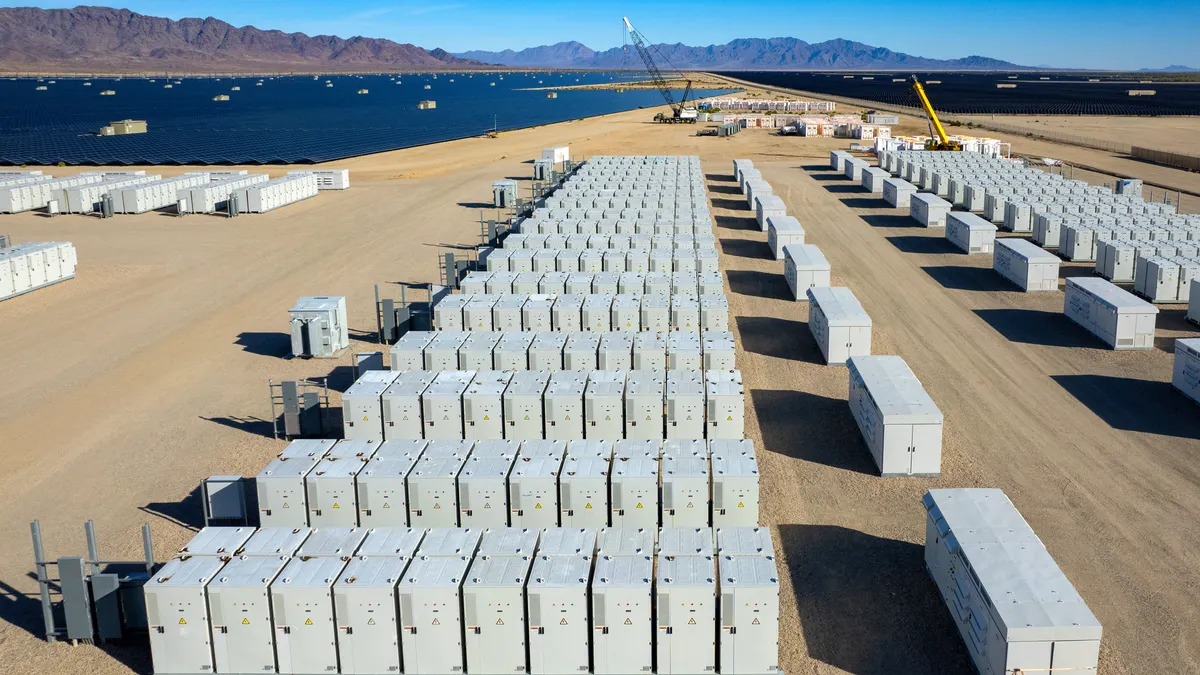
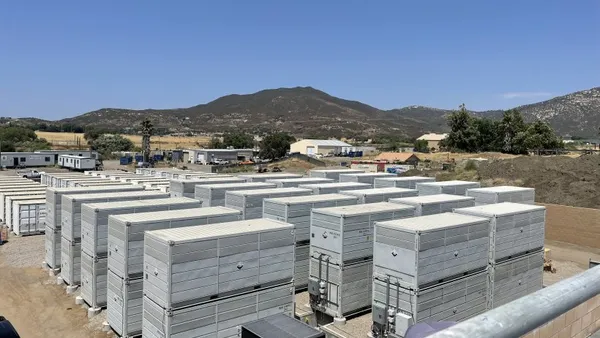
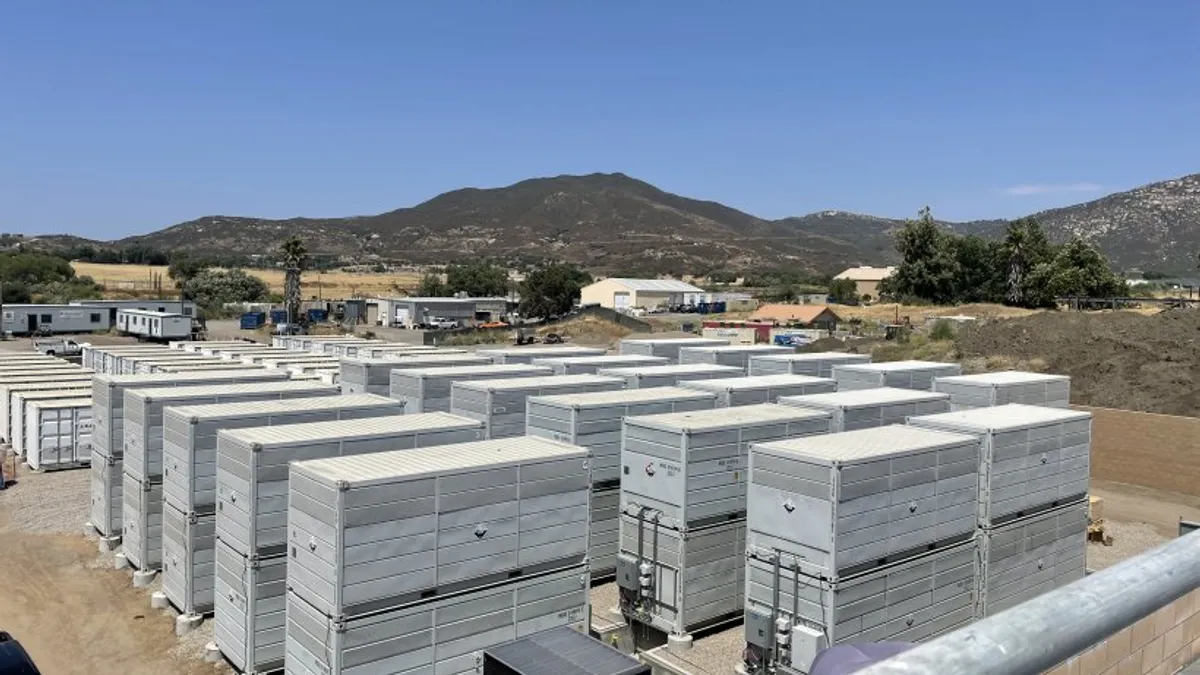
For context, in October, Xcel Energy proposed Capacity*Connect, a DCP program centered on utility-owned, front-of-the-meter battery storage connected to the distribution system. Xcel presents the program as a pragmatic, low-risk way to deploy distributed storage, gain operational experience and deliver system benefits to customers.
At first glance, Capacity*Connect responds to real and widely recognized challenges. Load is growing, transmission expansion is slow and costly, and flexible capacity that can be deployed quickly is increasingly valuable. On that core point, there is broad agreement across stakeholders: front-of-the-meter distributed storage has huge potential to meet system needs, support reliability and complement longer-term transmission and generation investments — an acknowledgment reflected in Xcel Energy’s proposal and one that deserves recognition.
The widespread pushback on Xcel’s proposal is not around the “what,” it is around the “how.”
In recent decades, distributed solar, storage and flexible load resources have evolved to attract private capital, drive innovation, accelerate deployment and introduce competition into a system historically dominated by centralized utility infrastructure. Minnesota has embraced that approach, with its community solar program — built on open participation and third-party development — delivering hundreds of megawatts of capacity, under a variety of ownership models, while supporting a robust state and national supply chain.
Capacity*Connect, however, moves in a different direction. As proposed, Phase 2 would allow Xcel, working with a single commercial partner, to develop and own up to 200 MW of front-of-the-meter battery storage, closing participation to third parties, limiting competition and shifting financial and performance risk from developers to customers through rate-based ownership.
In its reply comments, Xcel offers several arguments for exclusive utility ownership in the next phase of the DCP program, but each falls short. The company claims ownership is necessary for safety, reliability and cybersecurity, even though those outcomes are driven by standards and operating requirements — not ownership — and are already achieved every day by third-party-owned resources.
This is an unnecessary and risky program design choice that could redefine distributed energy as utility-owned infrastructure rather than an open market for delivering innovation and grid services.
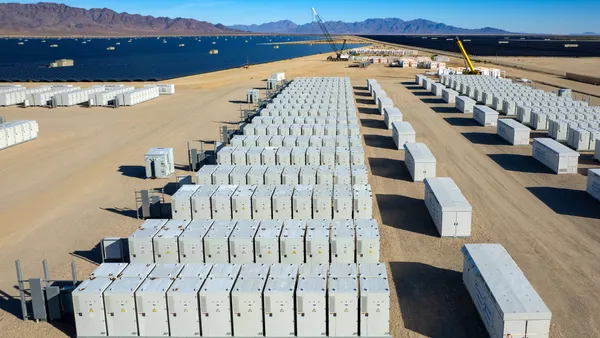
One of the most troubling implications of Capacity*Connect is the suggestion that utilities must lead because the market is not ready. The opposite is true. Nationwide, front-of-the-meter solar and storage developers have already built more than 9 GW of community-scale projects and have another 9 GW of projects under development. And battery storage is far from a new technology — there is nearly 83 GW of installed capacity in the United States, including nearly 500,000 distributed storage installations. These projects meet stringent interconnection, telemetry and performance standards, are financed with private capital, and can be delivered under competitive pressure that benefits customers.
Other supporters of utility ownership argue that programs like Capacity*Connect are needed to build utility confidence in DERs, particularly their ability to manage load on distribution substations. But experience in Minnesota and across the country shows that this confidence is already well established. Xcel has tested these capabilities through commission-approved projects, and large-scale demonstrations elsewhere reinforce the point — in response to record capacity shortfalls projected in its latest integrated resource plan, for example, Puget Sound Energy held an request for proposals to procure more than 300 MW of front-of-meter distributed solar and storage between 2026 and 2030.
The implications of Minnesota’s decision extend far beyond this docket. Utilities across the country are confronting rapid load growth driven by data centers, electrification and industrial demand, and many are looking to distribution-connected resources as an alternative to large, centralized infrastructure. If regulators endorse closed, utility-owned distributed energy models as the default, competitive markets will erode over time — increasing ratepayer risk, stifling innovation and ultimately increasing system costs.
The good news is that Minnesota still has time to course correct. Establishing a program that enables the rapid scaling of front-of-the-meter storage is both timely and necessary. The PUC can move forward with a DCP framework that supports open, competitive participation while allowing both utilities and third-party providers to demonstrate the value of their respective ownership models. By requiring a data-driven record — including clear evidence that utility ownership is the least-cost option before assets are placed in rate base — the commission can ensure this program delivers real benefits to customers and creates a durable foundation for future expansion.
Done right, this decision can serve as a national model to strengthen the grid and protect customers by delivering distributed capacity faster, in alignment with load growth, and at lower cost through an open competitive process.