Dive Brief:
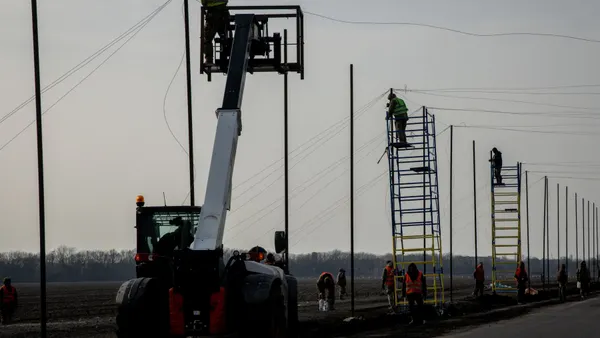
- The new paradigm of demand growth and the challenges it poses to the interdependent gas and electric sectors should be addressed with permitting reform and an associated infrastructure buildout, the National Petroleum Council said in a report released Wednesday.
- At a same-day meeting to discuss the report, TC Energy Vice President of External Relations and NPC councilmember Alex Oehler said the world has “changed dramatically” since the NPC’s last report on this topic in 2019, with an “incredibly different macro environment” due to demand growth, geopolitical challenges and opportunities for AI development.
- “But the permitting system has remained relatively static,” Oehler said. “So there is a disconnect there.”
Dive Insight:
The meeting featured remarks from Department of Energy Secretary Chris Wright, who has made permitting reform a priority, issuing a secretarial order two days after his confirmation stating the U.S. must “permit and build energy infrastructure and remove barriers to progress, including federal policies that make it too easy to stop projects and far too difficult to complete projects.”
On Wednesday, Wright reiterated his support for a liquefied natural gas pipeline through Alaska, saying, “The administration is committed, and I’m reasonably confident we will be successful” in building a pipeline and export terminal in the state.
Councilmember and TC Energy CEO François Poirier noted in his remarks that Congress continues to explore options for permitting reform legislation, saying there is “growing recognition … that permitting challenges cut across all types of energy infrastructure.”
“We felt it was important that our recommendations help inform the debate, not take a position on any specific legislation, but provide perspective on some of the issues under consideration right now,” Poirier said.
He noted that the council wanted to “offer recommendations that this administration could undertake without changes to existing laws,” but that this was challenging “because the administration is moving so quickly on many fronts.”
The NPC’s report recommended that Congress and the Trump administration “take immediate legislative and administrative action to reform permitting to unlock fit-for-purpose infrastructure investment,” and that the natural gas and electric industries “take urgent action” to construct that fit-for-purpose infrastructure.
The council’s report also focused on what councilmember Ken Yagelski, director of gas supply for Southern Company Gas, referred to during the meeting as the “growing interdependence between the gas and electric sectors.”
Despite “growing recognition” of that interdependence, Yagelski said, the two sectors’ market designs and regulatory practices “remain misaligned.”
“Both sectors are experiencing rapid demand growth, particularly in winter,” he said. “Infrastructure constraints are becoming more acute, and disruptions in one sector can cascade into the other, risking widespread catastrophic outages and higher costs for consumers.”
The report identified the issue of electricity market signals “[prioritizing] short-term economic efficiencies, while natural gas infrastructure depends on long-term, firm commitments. Inadequate compensation in electricity markets often leaves generators with little incentive to secure the gas and transportation services needed to support their increasingly variable operations and peak reliability needs.”
The council recommended that “the natural gas and electric industries, in coordination with policymakers, prioritize actions to enhance and expand existing energy infrastructure where feasible, to manage rapidly changing flow patterns and growing demand.”
To date, a lot of coordination between the gas and electric sectors “have centered on the few days each year when the system is pushed to its limits by extreme weather,” the report said. However, factors like load growth and rising winter peak demand “drive additional absolute demand, more variation in flow patterns, and sharper peaks that extend beyond rare stress events.”