Gas turbine manufacturers are boosting capacity in response to increasing demand and are “increasingly not the primary bottleneck” for large loads seeking power, investment bank Jefferies said in a research note last Tuesday.
Rapid new demand for 24/7 generation to serve large loads like data centers is driving investment into gas, and initially cautious equipment suppliers have begun to announce plans to increase production, Wood Mackenzie Vice Chair of Americas Ed Crooks said in a Friday analysis.
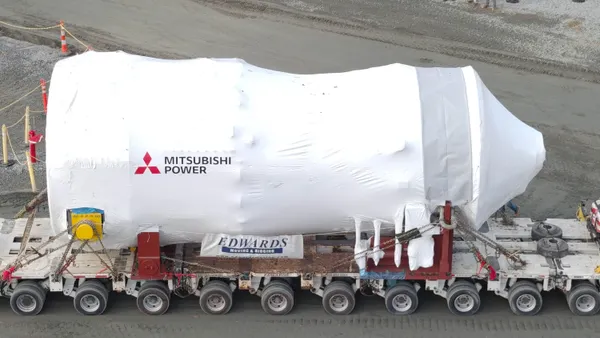
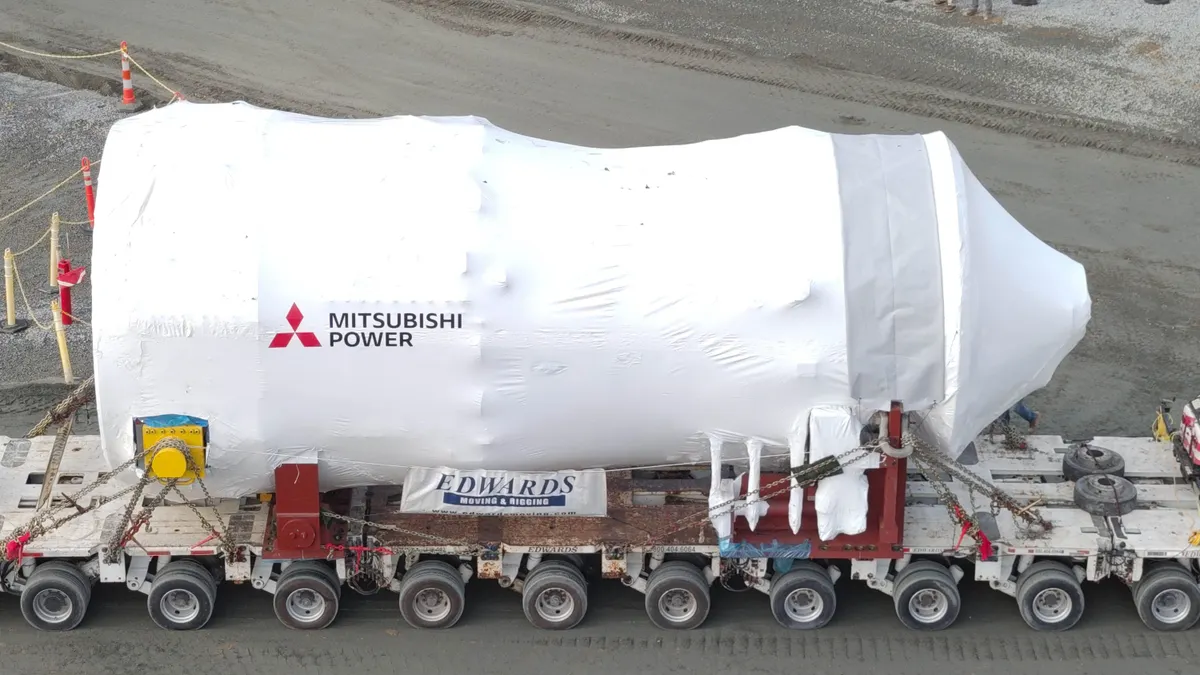
The three big original equipment manufacturers for gas — GE Vernova, Siemens and Mitsubishi Heavy Industries — “have all announced significant capacity expansions since the start of last year,” Crooks said.
“We expect at least 19 GW of total available equipment capacity by 2028, increasing to 49 [GW] and 76 GW by 2029 and 2030,” Jefferies said. The company still expects “the key large-frame turbine OEMs to be over 90% booked for 2028 and over 70% booked for 2029, while [behind-the-meter] OEMs are likely 65% and ~33% booked for the same timeframe.”
Jefferies added that “given the readily available [behind-the-meter] capacity, continue to expect hyperscalers to move in this direction — expect more orders for BTM” electricity-generating equipment while front-of-the-meter generation will see more deployment in the long term.
The bank called behind-the-meter generation the “near term winner,” as it “solves for ‘speed-to-market’ and affordability concerns.” It said it anticipates behind-the-meter capacity to grow by 25 GW by 2030.
Jefferies also said it views behind-the-meter generation as a “bridge solution,” but that bridge “might last up to ten years.”
“While we continue to argue that in the long-term, large loads will prioritize cheaper, reliable grid power (now 5-7 years away), we also acknowledge that it is possible to remain off-grid for longer,” the Jefferies analysis said. “A gas reciprocating engine, which can last 40-80k+ hours before first major maintenance, can support a data center for +11 years running at 80% capacity factor, longer with batteries.”
The reduced bottleneck won’t have an impact in the next few years, however, Crooks said. Wood Mackenzie’s Supply Chain team found that “as of last year, the average lead time for delivery of a gas turbine was almost five years after receipt of order ... Lead times may have edged up slightly since then,” Crooks said. “We are forecasting that those lead times should start to drop by 2027, as the additional manufacturing capacity ramps up. But that is not expected to have much impact on generation capacity additions until 2030 and beyond.”