Dive Brief:
- The New Jersey Board of Public Utilities on Wednesday directed four electric utilities to begin exploring how they might be able to use distributed energy resources to address grid congestion, improve reliability and cut costs. Responses to the request for information are due March 5.
- The RFI follows a pair of executive orders New Jersey Democratic Gov. Mikie Sherrill signed in January, which are aimed at reducing utility bills and developing virtual power plants. Electric rates are a key issue in the state after bills spiked as much as 20% last year.
- The BPU asked utilities to identify regulations that may be slowing resource additions and to identify constrained circuits in need of upgrades to support DER interconnection.
Dive Insight:
New Jersey historically has been a net importer of electricity, relying on neighboring states within the PJM Interconnection to meet demand. But another bill hike is expected to hit consumers this summer, and the newly elected governor has made arresting energy price increases a priority.
"Addressing interconnection challenges is critical to lowering costs and getting clean energy online faster," BPU President Christine Guhl-Sadovy said in a statement. The RFI “is the first step toward meeting the Sherrill Administration's goal of lowering energy bills and advancing grid modernization in New Jersey.”
Atlantic City Electric, Jersey Central Power & Light, Public Service Electric & Gas and Rockland Electric Co. will need to respond.
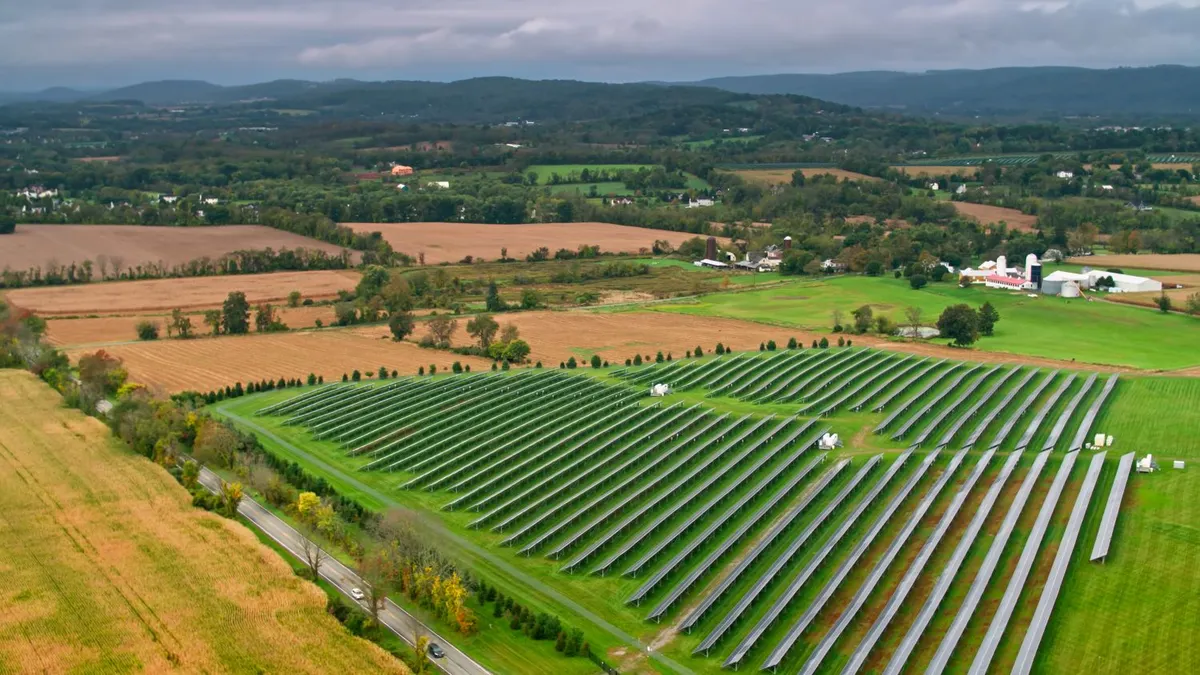
New Jersey has expanded the state’s solar deployment through the BPU’s Community Solar Energy Program and Competitive Solar Incentive program, but the board said progress “is hindered by an electric distribution grid with severe hosting capacity constraints on key circuits.”
The RFI asks utilities to:
- Identify opportunities to “modify or waive existing regulations” to accelerate new interconnections;
- Describe measures they are taking to ensure DERs are being processed according to existing regulations;
- Address how hosting capacity maps can be improved to ensure projects can more easily connect to 34.5-kV distribution lines; and
- Identify at least two circuits that receive high numbers of interconnection application requests that are “either closed or close to being closed due to voltage constraints” where hosting capacity could be improved by utilizing smart inverters.
Public comments can be filed with the BPU in docket QO24030199.
The BPU’s request for information responds to the second of Sherrill’s January orders.
The first order directed the BPU to issue residential universal bill credits by July 1 and to “consider pursuing a pause, abeyance, or modification of the schedule governing any proceedings in which electric distribution utilities seek approvals for rate increases or cost recoveries.”
According to the executive order, the residential bill credits will rely on the same or similar funding sources the BPU used to provide credits in August 2025.