Dive Brief:
- Large load customers have more power generation options than ever before, meaning utilities must shift their attention from technical innovation to customer service, according to speakers at a Wednesday panel discussion hosted by OurEnergyPolicy and the Earthshot Foundation.
- AI hyperscalers in particular expect access to power in 12 to 18 months, according to Yasser Bahbaz, senior director of market development for the Southwest Power Pool.
- Financial incentives for the utility sector should shift toward performance and customer service, said Lynne Kiesling, a nonresident senior fellow at the American Enterprise Institute.
Dive Insight:
Bahbaz, an engineer by training, believes electric utilities already have the technical tools they need to keep pace with today's unprecedented demand from data centers and other large load customers. But first, he said Wednesday, the industry needs to reconsider how it sets rates.
“It's been a while since we had a nice thorough think about what our rates should be,” he said.
While the scale of projected energy demand is unprecedented, what really sets hyperscale customers apart is their need for rapid deployment, Bahbaz said, adding that these customers “refer to it as a race, the race to win the AI war.”
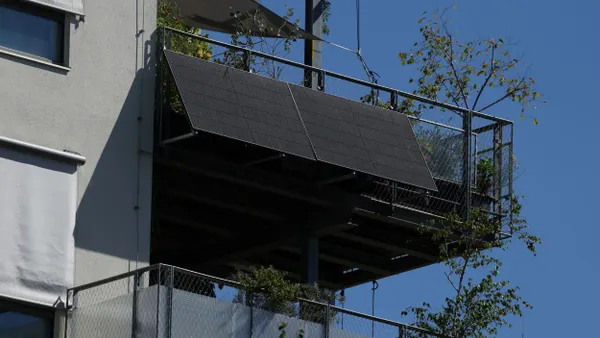
At the same time, customers at all scales enjoy a growing variety of options for procuring energy, Kiesling said. Beyond increasingly affordable behind-the-meter solar and storage, new digital tools have made it easier to buy from independent power producers and virtual power plants on open energy markets.
“End use consumers have more choice and control, without it being a nuisance for them,” Kiesling said.
Michael Webber, the Sid Richardson Chair in Public Affairs at the University of Texas at Austin, agreed that the U.S. will likely see “two grids” emerge as electric users' needs continue to bifurcate. When the U.S. built the modern grid and developed the regulated utility model, a unified power grid made electric service cheaper for everyone.
Now, he said, it's less clear that this is the case. Rank-and-file customers face an affordability crisis, while large electric users tell utilities they're willing to pay top dollar for faster power access.
“That's not usually the case,” Webber said. “The new consumer class of data center owners is very rich, which is not the ethic of the power industry which...has been centered on affordability.”
But most “off-grid” data centers in SPP are not truly isolated from the grid, Bahbaz said — most maintain grid synchronicity to buy and sell power and take advantage of other grid services. This means they are using an interconnection system that is built and paid for by existing customers, and creating modeling challenges for grid operators, he said.
“The more generation that does not show up — that essentially makes load disappear — the less transparency we have,” Bahbaz said. “And we know it's not just about MW and electrons — there are other attributes that are key to operating the system. So transparency on these assets is the number one requirement, and we have to make sure there are incentives to participate and make all assets visible.”
Fixed monthly charges have been the default solution to such situations in the past, Webber said — and they might be the right solution here if higher fixed costs for large load customers would allow utilities to cut rates for other consumers.
But Kiesling said electric utilities may want to consider financial tools used in other industries, such as the insurance sector. “Participating in the grid is a form of insurance,” she said, pointing out that when data centers connect to the grid but bring their own generation, they are essentially “contracting for backup.”
“So much of this is about uncertainty and ... there are ways of thinking about that,” she said. “Futures contracts and call options, in particular — I think there is a lot of opportunity for us to incorporate that kind of thinking that we haven't taken advantage of yet.”
Any financial innovation in the utility sector should also focus on creating performance-based incentives for electric companies, Kiesling added. This would both modernize the utility sector's financial models, and help build trust with consumers frustrated with rising utility bills.
“To the extent that people view the incentives of the utility as being aligned with customer incentives, then it's a lot easier to build trust,” she said.