Dive Brief:
-
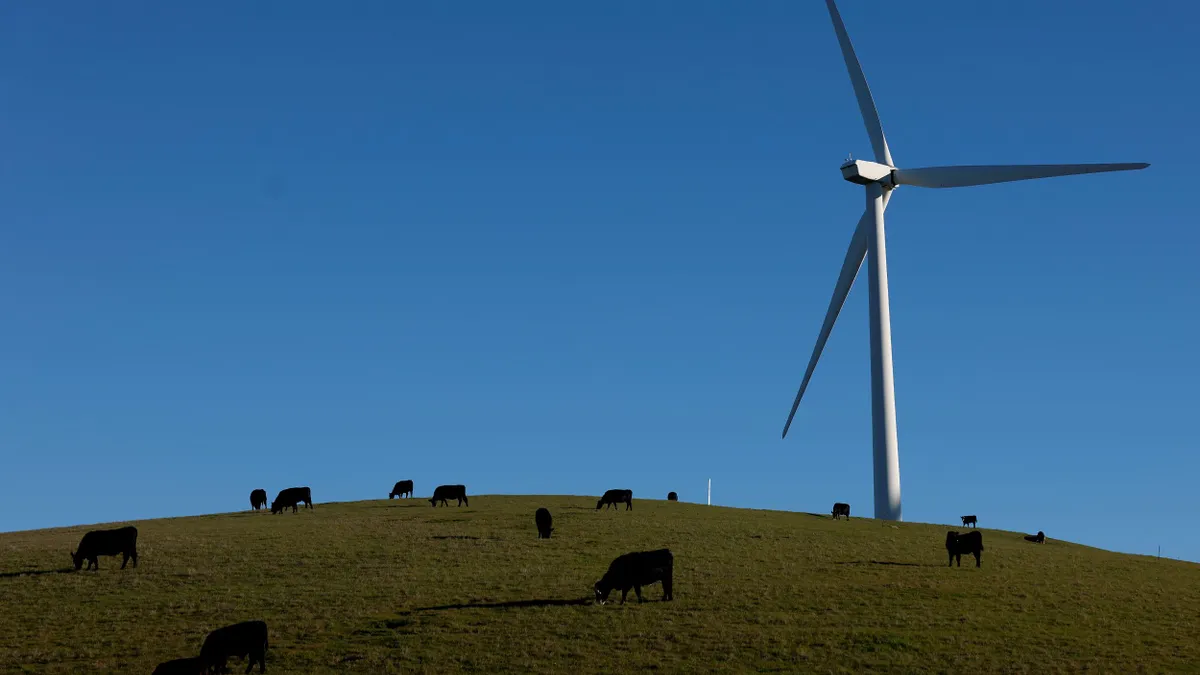
Prices for wind and solar power purchase agreements in North America each rose nearly 9% in 2025 over the previous year, according to data from LevelTen Energy's marketplace released in January.
-
The data covers six U.S. and one Canadian independent system operator. Some markets have seen prices increase much faster than others. Wind PPAs in ERCOT territory rose 19% year-over-year, while MISO and SPP saw wind prices decline during the fourth quarter of 2025, according to LevelTen.
-
The report said the second half of 2025 was “a season of intense development” as US firms reacted to the passage of the One Big Beautiful Bill Act that cut most renewable energy incentives. However, LevelTen found the results of a November survey of developers with project pipelines totaling more than 230 GW “encouraging”: of projects expected to achieve operation before 2029, more than three-quarters were expected to retain access to tax credits, it said.
Dive Insight:
The report cautioned, however, that uncertainties related to tariffs, supply chain rules and new federal-level permitting procedures have stalled “substantial amounts of development” and added to costs.
Still, analysts said growing demand for power will continue to drive up renewable PPA prices.
Geoffrey Lehv, senior vice president and head of business development at kWh Analytics, said this is especially true in markets where significant data center development is making it difficult for energy supply to keep up with demand. He saw little reason to expect prices to decrease, regardless of federal policies on wind and solar incentives.
“We won't be able to build the generation fast enough,” he said of rising demand from data centers and other sources. “We won't be able to build the transmission and distribution fast enough, and the system is clearly going to be stressed with all this demand.”
Solar PPA prices rose 3.2% during the final months of 2025, according to LevelTen Energy. Meanwhile, wind PPA prices were down 1% on average for the fourth quarter but still higher for the year overall.
With lower and relatively flatter long-term energy price forecasts in markets like MISO and SPP, wind PPAs have become less price competitive in these regions, Rob Collier, senior vice president of marketplaces at LevelTen Energy, said in an email to Utility Dive.
The majority of wind energy buyers are looking for projects hosted in the ERCOT territory, which is skewing the overall average higher, Collier added.
While some hyperscalers are turning to natural gas and nuclear resources to meet their energy needs, renewable resources remain in demand among large energy buyers thanks to their relatively short development timelines, Collier said.
“We haven't seen buyers hit their price ceiling yet, and expect the need for rapid AI data center build-out to continue driving a strong appetite for clean energy procurement,” he said.
Lehv, of kWh Analytics, said he does not see evidence of an AI bubble affecting energy prices, but that even if data center projections fall short of reality, energy demand from electrification and industry would continue to drive PPA price increases.
He projected overall electricity prices could rise another 2-3% nationwide, with hikes as high as 14% in some regions like PJM that face demand growth and supply constraints.
But the fastest-growing energy resource in 2025 wasn't wind, solar or even natural gas, according to Lehv — it was battery storage.
LevelTen’s data appears to support that. Energy storage agreements, or ESAs, have emerged as a new product category for energy buyers looking to contract off-site storage facilities, Collier said.
“Data center developers are concerned not only about securing power for their facilities, but also with keeping development timelines short and meeting utilities' growing need for accredited capacity,” Collier said. “[Battery energy storage] assets can provide this accredited capacity, as well as relatively quick deployment timelines and advantageous interconnection queue positions, all of which align with hyperscalers' needs.”
The pricing structure of these ESAs differs from PPAs in that the offtaker pays for the right to dictate how the project owner charges and discharges the battery, Collier said. Contracting norms and pricing may continue to evolve, but median prices for contracts on four-hour batteries seem to be settling around $13/kW-month, according to LevelTen Energy data.
But these ESAs may be subject to greater regulatory and price uncertainty going into 2026, Collier said.
Battery supply chains are more heavily dependent on China, leaving energy storage projects vulnerable to supply shocks and price hikes related to new Foreign Entity of Concern rules.
The Treasury Department issued proposed guidance on FEOC rules earlier this month. Further guidance through the formal rule-making process is expected to provide details.