The Tennessee Valley Authority saw demand growth of around 1% to 2% in the last three months of 2025, and it anticipates “more robust” growth of around 2% per year for the next five years, according to the federal utility’s investor presentation on Tuesday.
“Growing energy demand on our system requires TVA to invest in new generation,” said TVA President and CEO Don Moul. “We have about 6,200 MW of new generation planned, with more than 3,700 MW of that actively under construction.”
Like the federal government, TVA operates on a fiscal year that begins Oct. 1 and ends Sept. 30. The latest financial report covers the first quarter of FY26, but executives also discussed more recent developments such as Winter Storm Fern, which struck in January.
Moul said that new demand is being driven by data center growth alongside population growth and economic development activities across TVA’s service territory, “which in fiscal year 2025 reached more than $6.6 billion in announced projected capital investments.”
Data center demand “climbed to 18% of our industrial load in 2025, and we are projecting data center growth to double in our region by 2030,” Moul said. This is making it a priority for TVA to “ensure that serving new data centers does not create rate pressure on other electric customers and consumers.”
The need to meet that demand is helping drive the planned deployment of 6.2 GW of new generation, which Moul called the largest capital program in TVA’s history.
The roughly 3.7 GW under construction includes a new 1.5-GW gas generator at the Cumberland Fossil Plant in Cumberland City, Tennessee, the largest generating asset in TVA’s coal fleet, ahead of the retirement of those coal assets in 2026 and 2028. Moul said he expects the gas plant to come online later this year.
Another new gas plant, the 1.5-GW Kingston Energy Complex near Kingston, Tennessee, is slated to begin operating in 2027. This plant will also replace a retiring coal plant.
“We are also evaluating other new gas generation projects, and a new pumped hydro storage facility in north Alabama,” Moul said.
In addition to its investments in gas, TVA is making significant investments in nuclear resources.
In December, the utility got permission from the Nuclear Regulatory Commission to extend its 4-GW Browns Ferry Nuclear Plant license through the mid 2050s. The plant is near Athens, Alabama. In the same month, it received a $400 million Department of Energy grant to accelerate the deployment of small modular reactors at the Clinch River Nuclear site in Oak Ridge, Tennessee.
“TVA is aligned with the Trump administration in expanding the U.S. energy supply,” Moul said. “We're also working with the administration to innovate our nation's energy supply.”
TVA CFO Tom Rice said the utility reported $3 billion in total operating revenues on 40 billion kWh of electricity sales for the last three months of 2025.
“We delivered higher sales volume year over year, driven primarily by weather conditions that were closer to normal compared to the same period last year, as well as growth across the system,” Rice said of the utility’s 4% increase in electricity sales. “As you would expect, this increase in sales translated into higher operating revenue and higher net income compared to the prior year.”
The utility’s depreciation and amortization expense was $14 million higher than the same period last year, “primarily due to an increase in depreciation expense related to net completed plant additions,” TVA said in a news release according to a release from TVA.
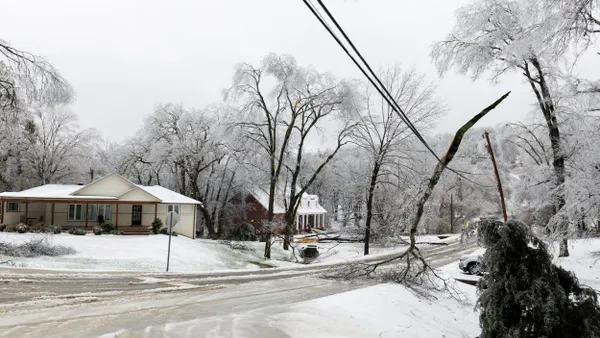
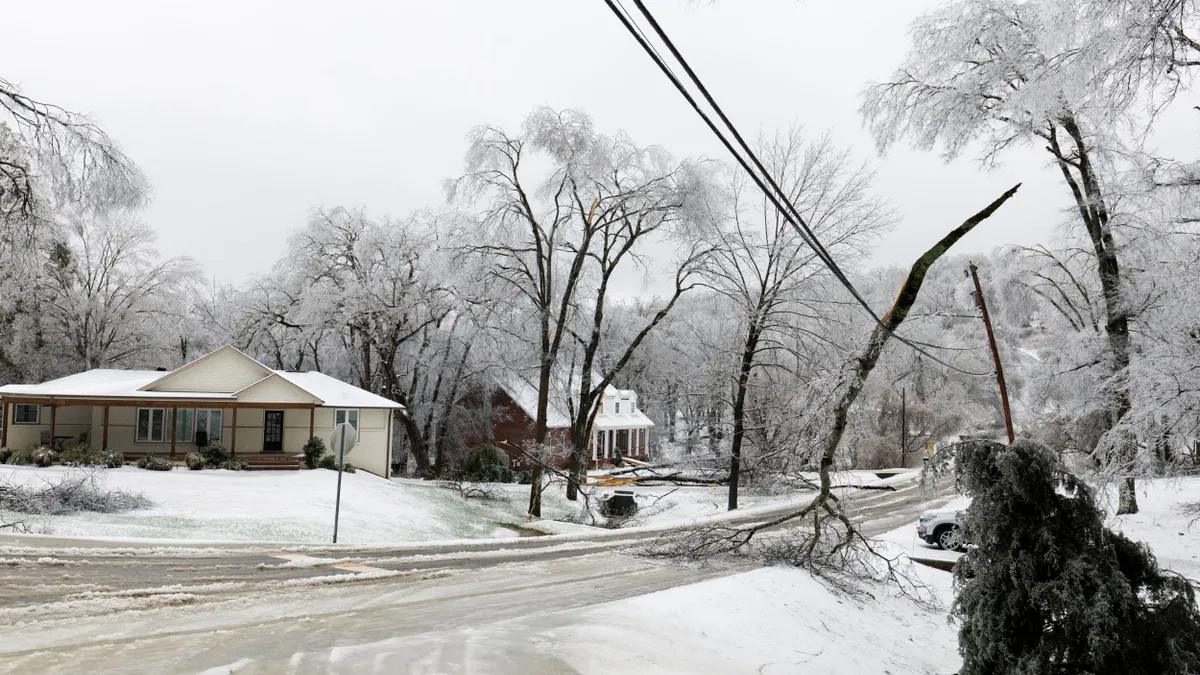
Moul said that so far this winter, TVA’s performance and reliability have been “solid,” despite widespread outages in Tennessee during Winter Storm Fern last month. Much of the storm’s damage was to the distribution network that local utilities maintain, but TVA’s transmission system also took a hit.
The utility has “once again met multiple peaks above 30,000 MW when temperatures dipped — with [Winter Storm Fern] pushing demand up to 32,909 MW” and resulting in power line damage across TVA’s service territory, Moul said.