Dive Brief:
- Electric utilities are preparing for a major infrastructure buildout to meet growing demand while the cost for key transmission and distribution equipment is rising, sparking cost-recovery concerns, according to a brief released Wednesday by Morningstar DBRS.
- AI data centers are driving demand growth forecasts, but are also leading to inflation in the cost of the metals and grid-critical materials that are used in data centers, analysts with the credit ratings agency said in the brief, Beyond Power Demand: How AI-Driven Metals Inflation Is Testing Utility Regulation.
- “For regulated utilities, this dynamic represents a shift from a pure demand-growth narrative toward a system-cost stress test, where rising capital intensity, regulatory recovery mechanisms, and customer affordability increasingly intersect,” the Morningstar analysts said.
Dive Insight:
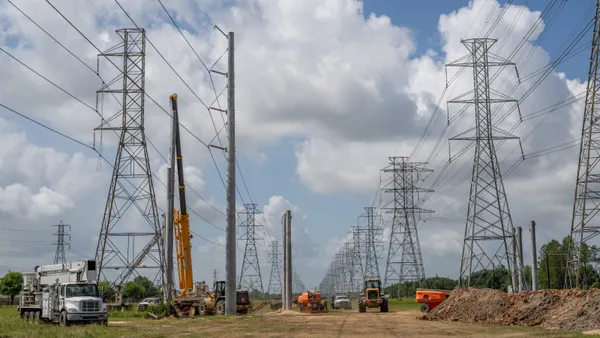
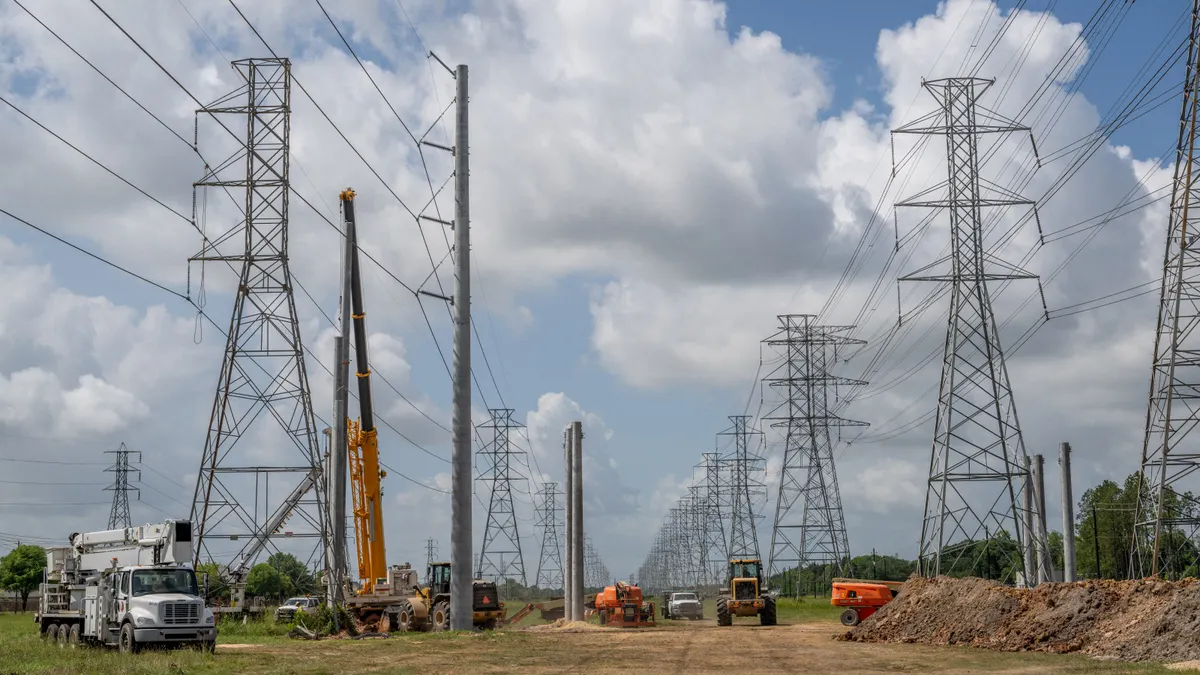
The Morningstar report comes amid a growing focus on how utility regulators can keep electric costs as low as possible during a capital investment “super-cycle” that could total $1.4 trillion from 2025 to 2030, double the spending of the previous 10 years.
Transmission lines, distribution feeders, substations, transformers and switchgear are some of the most “metal-intensive” parts of the power system, the Morningstar analysts noted in their brief.
Given an inability to significantly expand metals mining, utilities face a “sustained” increase in the baseline cost of grid infrastructure, according to the brief.
“Structural metal inflation alters the benchmark against which prudence and reasonableness are assessed,” the Morningstar analysts said. “Capital plans anchored in historical unit costs may increasingly underestimate future investment needs, raising the risk of regulatory friction as actual project costs diverge from legacy assumptions.”
Besides rising costs, utilities face ongoing supply chain bottlenecks and increased execution risk caused by price volatility and procurement constraints, the Morningstar analysts said.
“These factors complicate both the timing and certainty of recovery, particularly when capital outlays are rising at a faster cadence than rate cases,” the analysts said.
Regulatory and political constraints could affect the pace and scope of cost recovery for utilities, according to the brief. Those issues include regulatory lag, heightened scrutiny of utility spending, affordability constraints and cost-allocation debates, the Morningstar analysts said.
To protect residential and other ratepayers, there is a push — including from the Trump administration and states — for data centers to pay for the costs they cause, the analysts noted.
“To the extent that grid assets are funded directly by large customers and excluded from regulated rate base, utilities may forgo the opportunity to earn a long-term regulated return on those investments,” the analysts said. “While near-term cash-flow risk may be reduced, rate-base growth — a core driver of long-term earnings visibility — may also be constrained.”
Rates steady for most of US
Meanwhile, for most of the U.S., electric rates have been stable, with overall residential rates climbing at the inflation rate in the last decade, according to a report prepared for the Edison Electric Institute, a trade group for investor-owned utilities.
Rate hikes in California and the Northeast are the main cause for recent increases in average national residential rates, analysts with Charles River Associates said in the report released on Monday.
In the last five years, residential rates in California increased by 11.8 cents/kWh, the most of any state, according to the CRA report. Those increases were mainly driven by wildfire costs.
Rising wholesale power costs were behind bill increases in New York and New England in the same period, the CRA analysts said. In Maine, for example, residential rates increased by 10.3 cents/kWh in the last five years, the second most among all states.
However, in 34 states, residential rates increased less than the national average of 4 cents/kWh in the last five years, according to the report. In Iowa, the state with the smallest increase, residential rates rose by 1.2 cents/kWh in the last five years.
“Prevailing narratives that there is a broad national trend of rapidly rising electricity rates are inaccurate or incomplete,” the CRA analysts said. “In most of the country, rates have been stable, which indicates that efforts to contain utility costs have generally been effective.”