Dive Brief:
- Vehicle-to-grid integration could deliver five to 15 times more value per electric vehicle in many electricity markets than one-way managed charging, according to a new study commissioned by General Motors.
- The nationwide potential value of vehicle-to-grid integration will reach approximately $7 billion by 2030, the energy modeling consultancy E3 said in the study.
- Despite a drop in new EV sales this year and limited utility adoption of full-scale V2G charging programs, GM says “bidirectional-capable” EVs that can both charge from and discharge into the electric grid are set to become more common in the years ahead.
Dive Insight:
GM released an open letter last month urging utilities to do more to boost V2G program enrollment, modernize tariffs and rate structures to sharpen participation incentives, and streamline procurement and permitting of bidirectional EV chargers.
Both V2G and one-way managed charging, known as V1G, deliver significant value for the grid, E3 found. V2G’s enhanced value is due in large part to its ability to shape load during high-value grid hours and to support reliability needs more broadly, E3 said.
But “regulatory and program design barriers” such as pilot rules and retail export structures limit how much of that potential V2G value can be captured by utilities and ratepayers, E3 said. The group’s analysis indicated V1G delivers more consistent, if lower, value across utilities while “V2G economics vary by utility.”
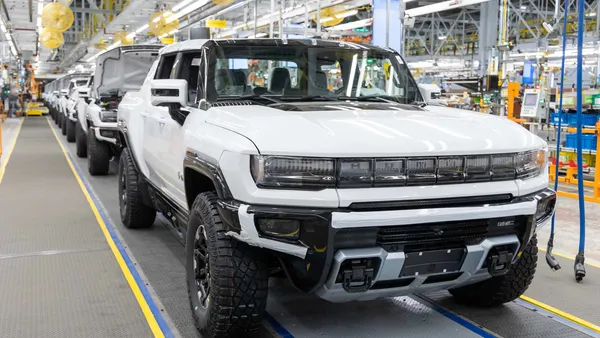
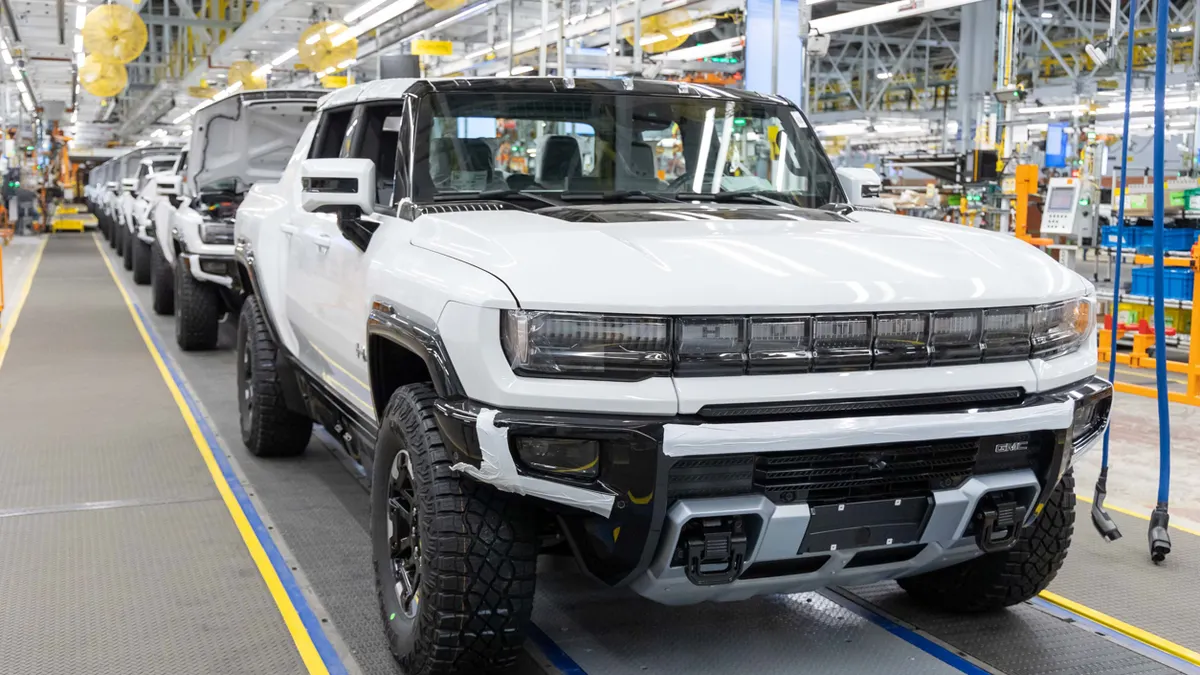
Only some EVs sold in the U.S. today are bidirectional-capable, but the list includes popular models like the Kia EV9, Hyundai Ioniq 5 and redesigned Nissan Leaf. GM alone has 250,000 bidirectional-capable vehicles on the road already and has “committed to the technology for all planned EVs going forward,” it said last month.
Of the load zones examined by E3, cumulative V2G value across energy, capacity and transmission-and-distribution is particularly high in California, downstate New York, the Pacific Northwest and Rocky Mountain regions of the Western Electricity Coordinating Council and the entirety of the Electric Reliability Council of Texas and Midcontinent Independent System Operator territories.
GM is working to capture the value of V2G in what E3 calls “constrained” regions like these. For example, the automaker says it aims to put about 52,000 of those vehicles to work balancing Pacific Gas & Electric’s northern California grid by 2030, representing around 40% of its fleet in the utility’s territory.
PG&E owns and operates transmission and distribution infrastructure across much of the California Independent System Operator’s NP15 load zone. E3 identifies NP15 as one of several regions overseen by constrained ISOs, along with CAISO’s SP15 load zone, the New York Independent System Operator’s downstate load zones, the PJM Interconnection’s eastern load zone and all of the Electric Reliability Council of Texas and Midcontinent Independent System Operator footprints.
The average annual per-vehicle value of V2G programs in most of those regions could range from $2,200 to $2,750, E3 said. V2G value is likely to be more volatile in ERCOT’s energy-only market but could still reach $2,270 per vehicle, per year, it said.
Annual per-vehicle V2G value could range from $1,700 to $2,200 in the WECC’s Pacific Northwest, Rocky Mountain and Southwest load zones, where utilities often pursue bilateral capacity contracts, E3 said. The study found lower and “program-dependent” annual per-vehicle value — about $700, on average — in the vertically-integrated markets of the southeastern United States. Even that comparatively low return is significantly higher than the country’s most lucrative regions for V1G, E3 said.
Annual per-vehicle V1G value ranges from around $100 in the Southeast and upstate New York to upwards of $400 in MISO, New England, ERCOT and the Pacific Northwest, according to E3’s analysis.
In most markets, capacity value delivers the largest share of overall value for both V2G and V1G programs, though E3 found avoided transmission and distribution investment is a major driver of value in solar-rich and/or congestion-prone regions like downstate New York and southern California.