Olivia Vasquez is a data analyst at Ava Community Energy.
Artificial intelligence data centers are arriving faster than the grid was built to handle, and utilities are under pressure to meet their growing energy needs.
At the same time, the U.S. is facing an affordability crisis, with electricity prices rising on average more than 30% since 2020.
While meeting the energy demands of AI is important, now is not the time to cut corners on the public’s well-being or our energy infrastructure. Instead, we should leverage a crisis for good. If AI is going to bring the economic prosperity it promises to deliver, it must invest in solutions that prioritize people. The most pragmatic answer isn’t a new technology — it’s the large load tariff.
Large load utility tariffs define the electricity price for high-energy consumers, like data centers, cryptocurrency companies and other hyperscalers. They also determine key contractual terms, like how long the utility must serve them, if their generation source is renewable and who pays for grid studies and upgrades.
Utility tariffs have existed since 1978 to provide different electricity rates depending on the customer, but large load tariffs have recently taken off given AI’s energy demand, with 66 approved or pending in the United States as of November 2025.
Large load tariffs are an expansive policy solution to enable growth without burdening ratepayers. If designed well and innovatively, tariffs can have an impact beyond affordability. Three design choices matter most and demonstrate how tariffs can be used to deliver community benefits, lock in clean, reliable power and strengthen energy resilience.
Utilize household energy
Community benefits have the potential to accelerate access to power for data centers. A study by Rewiring America shows hyperscalers could meet 100% of their capacity needs in the U.S. if they paid for household heat pumps and rooftop solar plus storage. These upgrades would bring down electricity bills and lower greenhouse gas emissions for residents — a true win-win solution. A creative tariff could guarantee faster access to power if hyperscalers invested in residential energy upgrades.
While utilities don’t usually support out-of-the-box solutions, tariffs like these could help them supply power to hyperscalers faster than if they built new power plants. Innovative community benefits should be incentivized during this time of constraint, and partnerships with hyperscalers, load-serving entities and organizations like Rewiring America can help share the financial risk and scale these upgrades.
Invest in emerging clean technology
Data centers desire firm power and many have their eyes set on gas, behind-the-meter nuclear or even restarting coal plants to generate energy around the clock. Regressing on clean energy is not the way forward, especially when many clean technologies are cost-competitive.
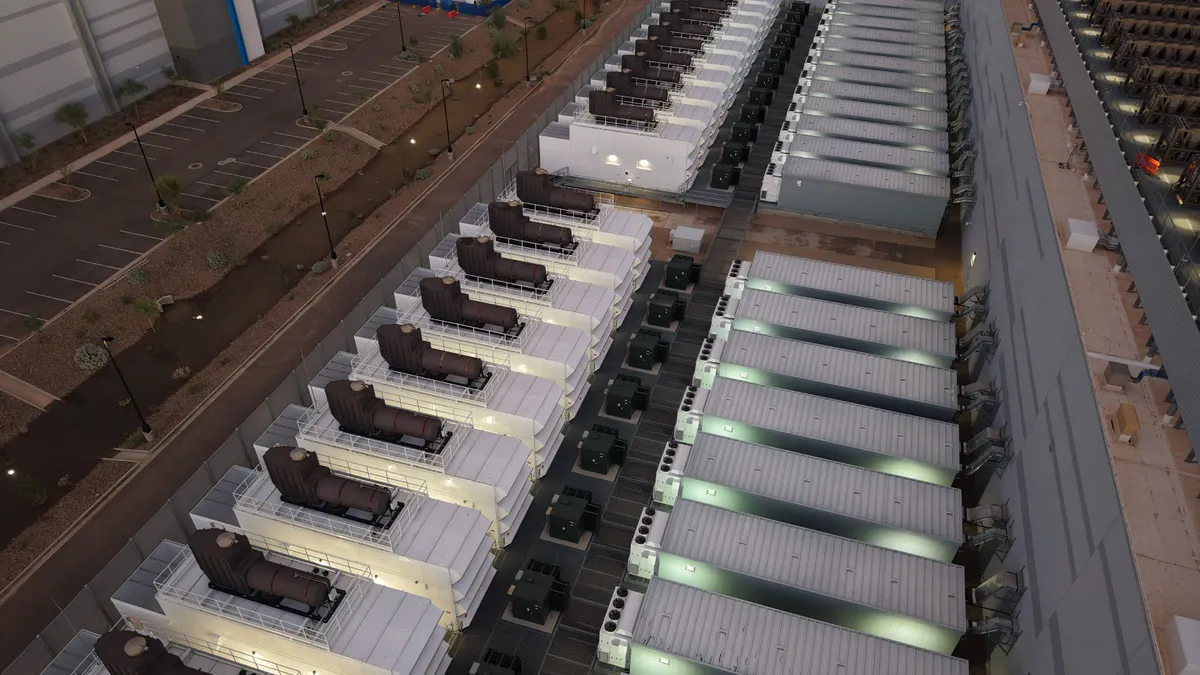
An investigation of Elon Musk’s xAI data center in Boxtown, a predominantly Black neighborhood in Tennessee, found 35 unpermitted temporary gas turbines as its energy source. The nitrogen dioxide emissions from these gas units exacerbate the health and environmental issues for the people living nearby who have already experienced decades of pollution.
Providing firm power shouldn’t be at the expense of community health, especially when there’s a precedent of AI companies investing in firm, clean tech. In November 2024, NV Energy partnered with Google and Fervo Energy to create a “clean transition tariff.” The tariff secures 115 MW of geothermal power for Google’s Nevada data centers, as a part of their 2030 goal to be 100% carbon-free. The real kicker: Google invests in this emerging technology so the costs will not be passed on to ratepayers.
Require demand flexibility
Demand flexibility is an emerging trend within U.S. large load tariffs, where 20% (14 of the 66 approved and pending) incentivize or require it. Demand flexibility means data centers can shift or shed load through demand response programs or curtail through interruptible service.
Outages are often caused by strains on the grid, so participation in these programs contributes to the grid’s resilience. Additionally, several studies have found demand flexibility could prevent immediate costly grid upgrades and ultimately drive down consumer costs. Pairing demand flexibility with prioritized interconnection in a tariff could be a win-win solution for serving data center load and prioritizing affordability for ratepayers.
Mutually beneficial solutions
The urgency of AI needs to be met with the urgency to find mutually beneficial solutions for AI and people. What was once speculation is now becoming evident that data center demand can increase electricity bills.
A Bloomberg study of wholesale electricity prices found that in areas near significant data center activity, electricity costs as much as 267% more for a single month than it did five years ago.
This is not a problem of the future — it’s happening today. Backlash against data centers is already emerging globally and if AI wants to prevent opposition, they need to partner with load-serving entities and communities on win-win solutions. Whether it’s providing community benefits, investing in clean tech or requiring demand flexibility via tariffs, we have the opportunity to define our energy future. A future that centers both AI and people, not at the expense of each other.