Almost midnight, Star Bar, downtown San Diego: A man in an Itron branded shirt sings “Sittin’ On The Dock of the Bay” to a mixed crowd of locals in t-shirts and energy professionals rocking business casual. The bar's red ceiling and floor lend a David Lynch vibe to the scene.
You can’t throw a stick in this part of town without seeing Itron’s name. The company makes smart meters and other grid modernization tools, and as the primary sponsor for DistribuTECH, its name seems to be everywhere. Roughly 20,000 participants are here this week to talk power technology and the evolution of the electric grid — in between tacos and networking and karaoke.
Tuesday morning kicked off with a keynote by GE Vernova executives.
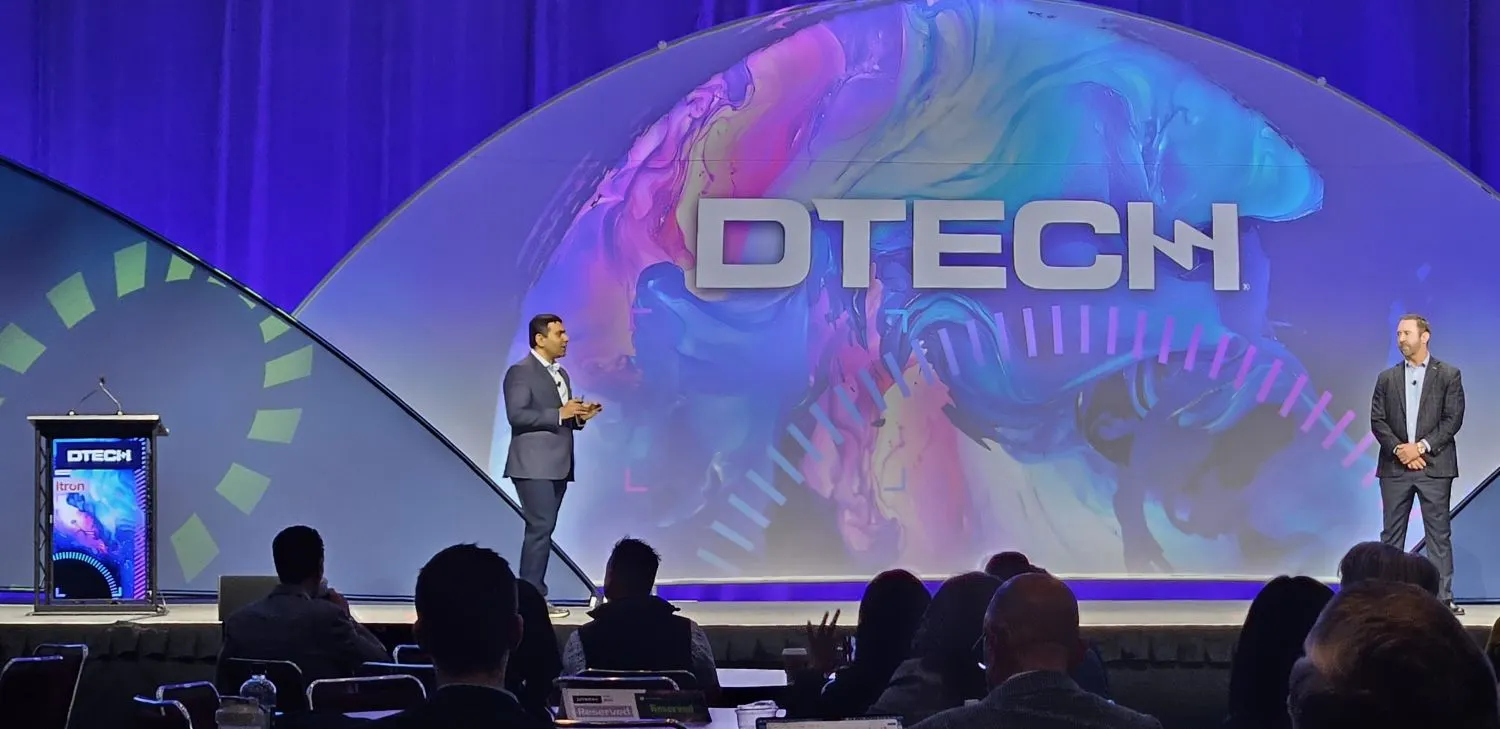
U.S. energy demand will grow 50% over the next 20 years, leaving utilities and other power sector stakeholders with a “daunting task,” said Del Misenheimer, the company’s vice president and CEO of grid automation and software.
“As an industry, we’ve gone from ‘Keep the lights on and stay out of the news,’ to now being the lead story for energy independence, national security and AI development,” Misenheimer said, speaking from an iridescent blue stage. “The grid is turning into a platform for which AI, economic development and the energy transition will either succeed or stall.”
Staying out of the news is not so easy these days, even if utilities do keep the lights on.
An hour later, Louie Dabdoub, vice president of power delivery services for Entergy, was talking AI and vegetation management in a smaller meeting rooom when a ruckus erupted outside the door.
A few dozen protesters marched back and forth across the conference center hall, calling on California utilities to cut ties with Palantir. In particular, they pointed to Pacific Gas & Electric and Southern California Edison’s use of Palantir’s Foundry product, which uses AI to recognize fire and other risks on the utility’s system.
Palantir supplies data analytics software and AI capabilities to the U.S. Immigration and Customs Enforcement, which has been detaining and deporting tens of thousands of immigrants.
“PG&E, you can’t hide, we can see your greedy side!” protesters chanted, along with “SoCal shame!”
DistribuTECH staff told conference security not to touch protectors, and followed them through the hallways, removing the flyers they left behind. Conference participants, some reclining in Itron-branded bean bags, watched the protests without apparent consternation.
“Shut the hell up,” one man said as protesters marched by.
“What are they protesting?” another asked.
PG&E emailed a statement following the incident, saying Palantir technologies provide “capabilities to bring together and organize data for work across grid planning, operations, maintenance, asset management and risk mitigation. This data is critical to informing how we keep our customers and communities safe from wildfire.”
Southern California Edison did not immediately comment.
DistribuTECH issued a statement saying “we are working closely with building management and the San Diego Police Department to prevent this from happening going forward.”
By noon, the situation had calmed and DistribuTECH attendees, green conference lanyards hanging around their necks, flowed into tacquerias around the convention center for al pastor, carnitas, carne asada and birria.
After lunch, discussions focused on integrating AI into utility operations, and what limitations must first be addressed. Data quality and the siloed manner in which utilities operate their systems are major issues, speakers said.
“Poor data quality kills AI,” according to panelist Rashmi Dani, director of product management, electric IT and digital for National Grid. “Unless we fix the data quality, we are not going to be able to scale AI.”
Addressing utilities’ data gaps will require an “end-to-end transformation” Dani said, where data is shared and standardized across planning and operations. That will also help address siloed operations that limit the positive networking impacts of AI tools for utilities, she said.
But AI tools must also be consistently refreshed — both their goals and the data driving them, said Gillian Wright, senior vice president and chief systems and technology officer at Southern California Gas, the sister utility to San Diego Gas & Electric.
SDG&E has used AI-driven image analysis to help with system inspections “but keeping that tool fresh is an ongoing challenge to make sure it continues to deliver good results,” Wright said. Providing it with up-to-date information is key, she said.
“One of the most pressing challenges in bringing AI into things like resiliency, reliability and infrastructure operations ... is the fragmentation and quality of the data,” Wright said. “We see the value of investing in data.”