The nonprofit recipients of $14 billion in climate grants frozen by the Environmental Protection Agency can have their case reheard, the U.S. Court of Appeals for the District of Columbia Circuit said in a Wednesday ruling.
A three-judge panel had ruled 2-1 on Sept. 2 to uphold the freeze on funding from the Greenhouse Gas Reduction Fund, which was created by the Inflation Reduction Act of 2022. On Sept. 10, the plaintiffs requested a rehearing en banc, meaning all judges of that particular court would have to hear the case.
The court agreed to that rehearing, and the en banc court will hear further oral arguments in the case on Feb. 24. However, the court left in place the partial administrative stay issued in April, meaning the GGRF grant funding will remain frozen for now.
The majority opinion upholding the funding freeze was filed by two judges appointed by President Donald Trump — Judge Neomi Rao and Judge Gregory Katsas. The panel’s dissenting judge, Nina Pillard, was appointed by President Barack Obama.
“The month before President Trump’s inauguration, EPA modified the grant agreements — with no apparent consideration from the grantees — to make it more difficult for the government to terminate the grants” Rao and Katsas wrote, adding that “nothing in the Inflation Reduction Act prevented EPA from taking care that the grant programs be faithfully executed.”
The GGRF provided “nearly $27 billion in competitive grants to mobilize financing and leverage private capital for clean energy and climate projects that reduce pollution – with an emphasis on projects that benefit low-income and disadvantaged communities,” according to a fact sheet produced by the Biden EPA.
Grant recipients included “green bank” nonprofits such as the Climate United coalition, which received almost $7 billion to finance clean energy projects in rural, tribal and low-income communities, and the Coalition for Green Capital, which received $5 billion and was working to design, create and implement other green bank programs.
An amicus curiae brief filed Sept. 17 by Democratic members of Congress said, “After President Trump took office, the new EPA Administrator and other officials began to make outrageous attacks on grantees – including attempts to fabricate criminal fraud allegations.”
They argued that the administration’s attempts to claw back the funding “[ignored] Congressional spending power” and amounted to a “constitutional power grab.”
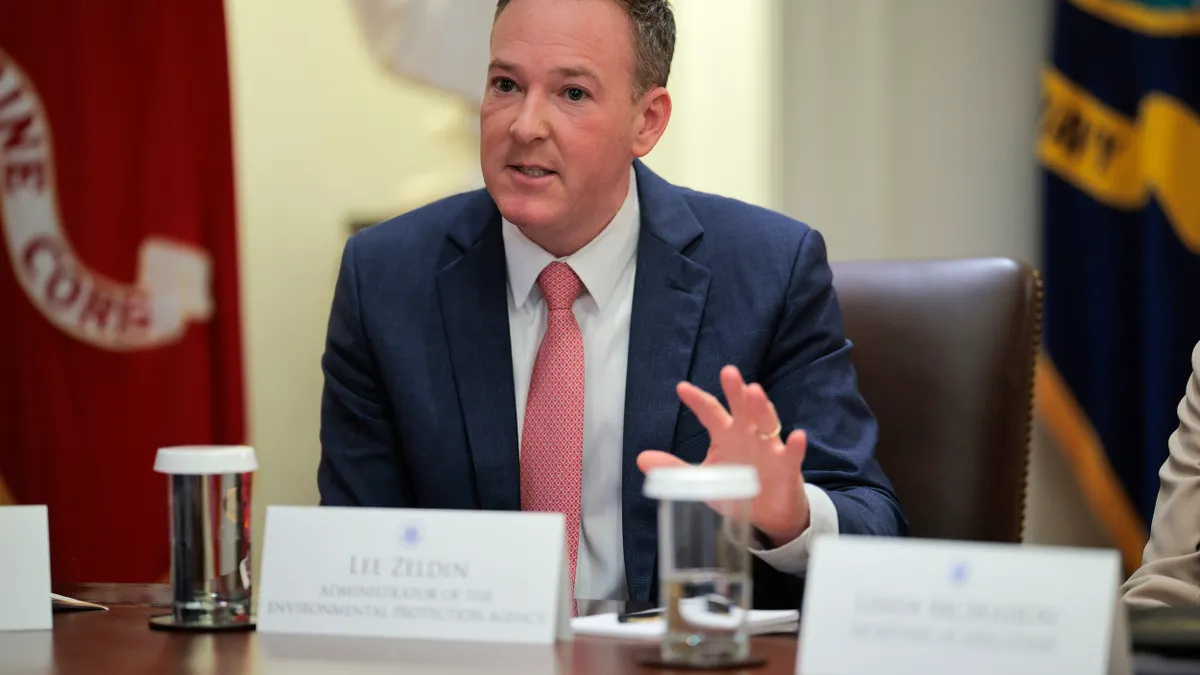
EPA Administrator Lee Zeldin made fraud allegations in March, saying the Biden administration’s rush to award grants before the Trump administration took over was tantamount to “throwing gold bars off the Titanic” and alleged “instances of self-dealing and conflicts of interest, unqualified recipients, and intentionally reduced agency oversight” within the GGRF program.
Of the full court’s 15 judges, four are Obama appointees, three are Biden appointees, three are Trump appointees, one is an appointee of President George H.W. Bush, and four judges have senior status and would not vote on an en banc petition.
The Power Forward Communities coalition, which received a $2 billion grant from the GGRF to deploy capital for residential decarbonization, said in a Wednesday release that the group remains “confident that both the law and the facts” are on its side.
“[W]e are hopeful that we will soon be able to resume PFC’s work in communities across America,” it said. “There is no lawful basis on which the EPA can revoke already obligated grant funds appropriated by Congress.”