Dive Brief:
- In a groundbreaking move, the Southwest Power Pool will combine its generation interconnection and transmission planning into a single process under a plan approved Friday by the Federal Energy Regulatory Commission.
- SPP plans to open its first Consolidated Planning Process, or CPP, window in April and in the fall publish the first Generalized Rate for Interconnection Development-Contribution (GRID-C), a standardized rate to cover system upgrade costs that gives project developers greater upfront cost certainty before they commit to the interconnection process, SPP said Monday.
- “SPP and its stakeholders have risen to the occasion with one of the most innovative, common-sense proposals presented to the Commission since the inception of open access transmission service,” FERC Commissioner David Rosner said in a concurring statement released with the agency’s decision. “This proposal will get transmission built smarter and connect new generation faster, helping to make energy more reliable and affordable in the SPP region.”
Dive Insight:
The biggest bottleneck to getting new generation online needed to serve load growth is the interconnection process, according to FERC Commissioner Judy Chang.
“The Commission and many of the nation’s transmission providers have been working to improve that process but it will take actions like the one that SPP has taken here to redesign how the transmission system is planned and paid for to truly accommodate the needed new generation to serve load,” Chang said in a concurring statement.
SPP’s region has been slow to add power supplies, partly because of a lack of certainty about how much a generator will have to pay for network upgrades needed to connect to the grid, as well as the prevalence of speculative projects that lead to withdrawals from the interconnection queue, restudies and delays, the grid operator said in its proposal filed Nov. 3 at FERC.
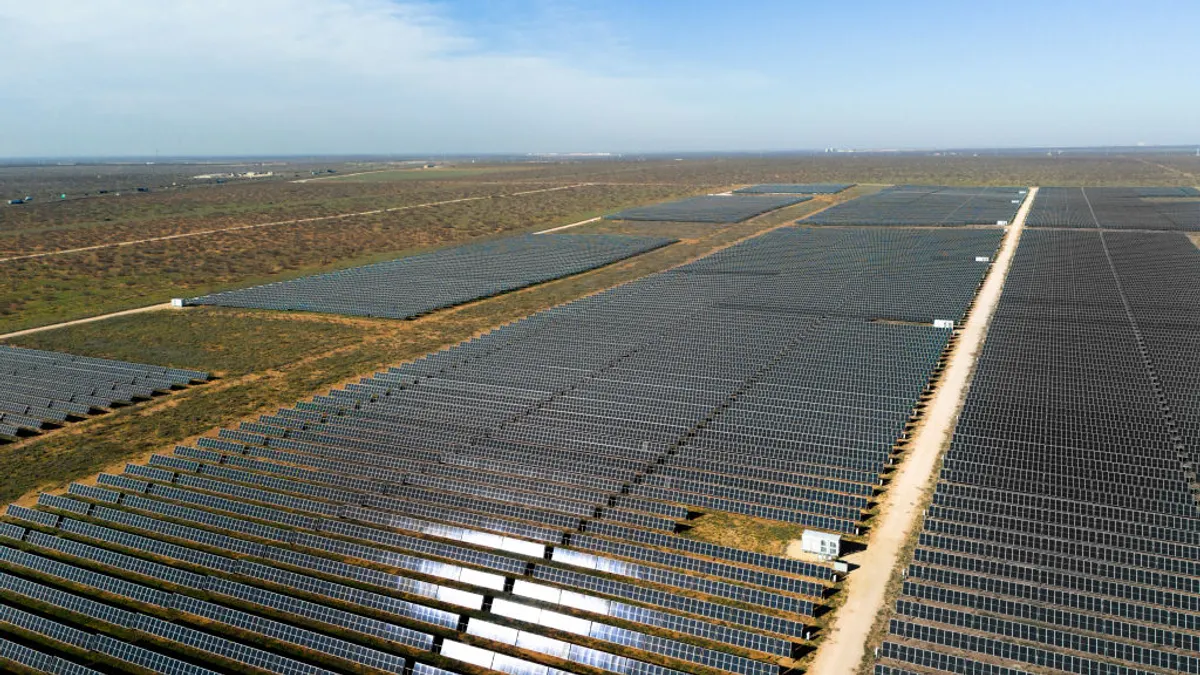
SPP has about 105 GW in its generation interconnection queue, including about 32 GW of thermal generation, 22 GW of battery storage and 21 GW of solar, according to the grid operator, which runs the electric system and wholesale power markets in 14 states from New Mexico to North Dakota.
SPP’s new consolidated planning and interconnection process will include 10- and 20-year transmission plans.
The 20-year CPP, to be conducted on a three-year cycle, will determine GRID-C rates and Planned Interconnection Locations, or PILs — locations that have enough existing or planned transmission capacity to serve long-term generator interconnection needs.
The annual 10-year CPP will allow generators to secure spots if they want to interconnect to a PIL. They would then pay the upfront GRID-C charge to cover their share of system network upgrade costs, the grid operator said in its application.
Rosner praised SPP’s approach, calling it a “revolution” in system planning.
“For the first time, SPP’s interconnection customers can know what they will pay to connect to the grid before entering the interconnection queue, turning the page on never-ending studies, restudies, and cost uncertainty that ultimately lead to generators withdrawing,” Rosner said.
The new approach was welcomed by environmental advocates, too.
Under SPP’s legacy interconnection process, 60% of proposed power generation projects were canceled due to “a cumbersome, time-consuming, and expensive process,” according to the Sierra Club and the Sustainable FERC Project at the Natural Resources Defense Council.
“By breaking down siloed processes, CPP will cut years of wait time to get clean energy on to the power grid and ensure transmission planning drives optimal, long-term, high-value transmission projects,” Annie Minondo, a Sustainable FERC Project advocate said in a press release.