Power grid equipment continued to make up the vast majority of Hitachi, Ltd.’s Energy segment revenues in the most recent quarter, but its nuclear division saw a 48% year-over-year increase as the company prepares to deliver the first of four small modular reactors to Ontario Power Generation in 2030.
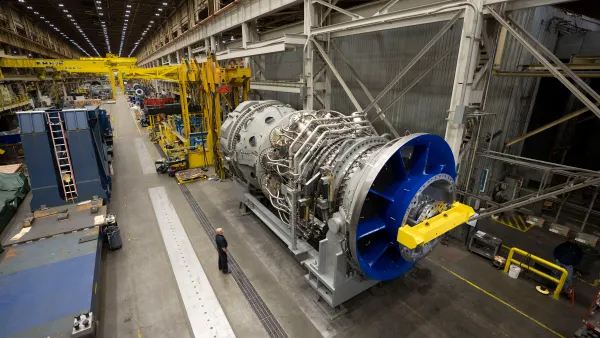
The 300-MW BWRX-300 small modular reactors are being developed in partnership with GE Vernova.
In the United States, the Tennessee Valley Authority has tapped the joint venture to build at least one BWRX-300 in its territory, with delivery set for 2032.
“With the start of the construction of the first [SMR] in Canada as a foothold, we will advance the deployment of the SMR business in North America, Poland and other parts of Europe,” Hitachi said in its 2025 annual report.
However, it also spoke generally about the potential risks the company faces as it takes on ambitious projects around the world, without mentioning its nuclear investment specifically.
“High-risk projects, such as long-term projects or projects involving new technologies … may result in significant changes to the assumptions underlying the estimates related to those contracts … or their termination,” the company said.
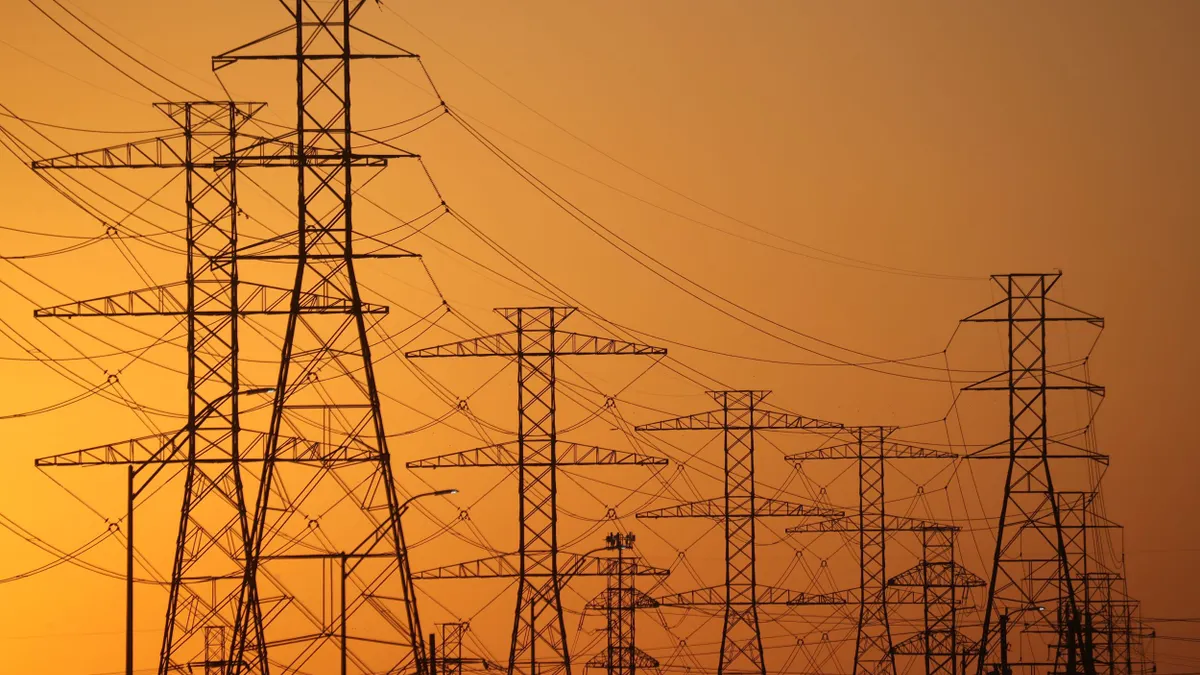
The Japanese conglomerate’s Energy segment is divided into Nuclear Energy and Power Grids, which manufactures and markets high-voltage components, power conversion products, energy storage systems and other electrical equipment for commercial, industrial and utility customers.
Its Power Grid division saw revenues of ¥893.7 billion, or about $5.7 billion, in the most recent quarter — a 27% increase over the same period last year, the company said this week. Nuclear Energy took in ¥65.3 billion, or about $415 million, over the same period.
In total, Hitachi’s Energy segment saw a 28% increase in revenue and a nearly 50% increase in orders, the company said. Significant drivers included large-scale power infrastructure projects and demand from data center customers, with “notable strength” in North America.
Continued AI tailwinds
Tomomi Kato, Hitachi’s chief financial officer, told investors and stock analysts on Wednesday that the company has seen broad-based order growth thanks to the data center boom. Those orders will be reflected in company revenues beginning next year, he said.
The Energy segment reported second-quarter orders of ¥1,566.2 billion, or nearly $10 billion, with particular strength from transmission and data center customers.
Speaking in Japanese, Tomomi said the conglomerate has seen no signs of a pullback in AI-related investment.
“So far, we are not seeing any delays or any payment issues,” he said through a translator.
Some of the company’s other segments are also increasing their focus on the energy sector.
Anand Birje, CEO of Hitachi’s newly consolidated, California-based digital services business, said the conglomerate was using its proprietary technology platform to improve performance and productivity for its energy customers.
The company says HMAX Energy, its energy-oriented digital solution, can help its customers reduce revenue loss from equipment downtime by up to 60%.
“There’s massive transformation happening [in] everything from transmission to distribution to pricing to load management using data, cloud and AI, along with our ecosystem partners,” Birje said in English.
One of those partners is chipmaking giant NVIDIA. Last October, Hitachi said it would provide “grid-to-rack architecture” to the 800-volt data center architecture NVIDIA and its customers expect to become the industry standard for high-performance computing facilities.
Supply chain and long-lead order risk
With its order backlog swelling thanks to AI and general electrification demand, Tomomi said Hitachi was doing its best to meet delivery timelines — and manage cost pressures in an inflationary environment.
On long-lead contracts, “we use indexing” to ensure Hitachi can pass along cost increases during production and fulfillment, he said.
“Otherwise, we cannot accept a long-term contract …. I think we are doing a good job managing the process,” Tomomi said.