Dive Brief:
- The U.S. Court of Appeals for the 5th Circuit said Texas has a “free lane” to enforce restrictions on foreign-owned companies’ access to the state’s electric grid in an Oct. 16 decision affirming a lower court’s dismissal of a complaint brought by a Chinese-linked solar developer.
- The developer, GH America Energy, a Texas LLC and subsidiary of a Chinese company, argued unsuccessfully that Texas state law was preempted by federal law designating the Committee on Foreign Investment in the United States as the federal interagency task force responsible for reviewing foreign-linked financial transactions.
- But the court ruled that CFIUS “wields limited authority — and that limited authority does not reflect a Congressional desire to exclusively control all foreign-investment screening. [...] If states can impose their own environmental standards or health and safety standards without triggering field preemption in any area of economic regulation, it follows that they can protect their energy grids from data theft and computer viruses.”
Dive Insight:
Daniel Skees, a partner at the law firm Morgan Lewis who works on energy and infrastructure, told Utility Dive in an interview that even though the particular law at the center of the ruling is unique to Texas, the decision has implications for other markets and could be appealed to the U.S. Supreme Court.
“I think it’s a big deal because we’re seeing a lot more action at the state level dealing with issues related to foreign ownership in critical infrastructure sectors, and I think there had been a feeling for a while that ultimately this stuff might be preempted by CFIUS review,” Skees said. “This is really a nice, clear opinion that goes through really just a basic CFIUS preemption analysis and says, ‘no, this is aimed at something different.’”
The ruling will likely give states that are considering similar foreign-entity restrictions assurance that such laws could survive legal challenge, he added.
Skees coauthored an analysis published this week that noted the ruling coincides with emerging federal restrictions on foreign-made grid equipment, making early coordination on energy regulatory and foreign-investment diligence particularly important for developers, utilities, investors and other stakeholders.
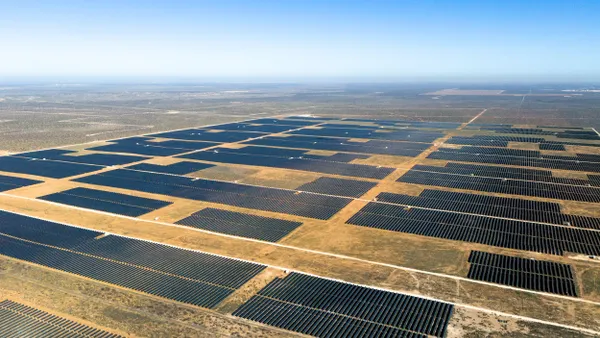
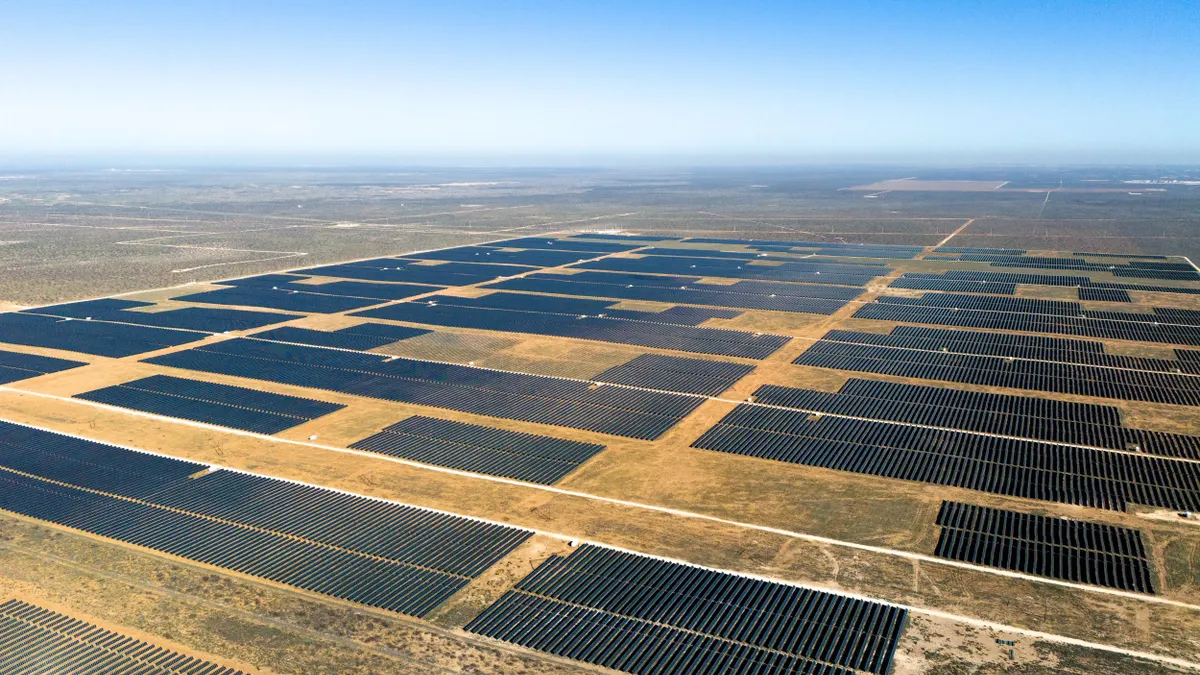
GH America Energy first filed its lawsuit in 2024 against Electric Reliability Council of Texas officials after being notified that a pending interconnection application for its Blue Star Solar Project in Val Verde County was being cancelled due to lack of compliance with the Texas Lone Star Infrastructure Protection Act of 2021. The company was in the midst of pursuing a number of renewable energy projects in the state when the law came into effect, and it claimed that that denial caused it to sell two other projects at a substantial loss.
GH America Energy could not be reached for comment.
Mark Stover, executive director of the Texas Solar+Storage Association, said his organization shares the goal of the Texas Legislature to protect the grid from foreign interference and remains engaged with policymakers regarding LSIPA and other measures.
“Protecting infrastructure, information technology, and operational technology is critical,” he wrote in an email. “LSIPA is an important grid security tool and it is the responsibility of industry to follow the law. Our members are actively engaged in compliance and we support open communications among industry, the State of Texas, and the federal government regarding approaches to grid security.”