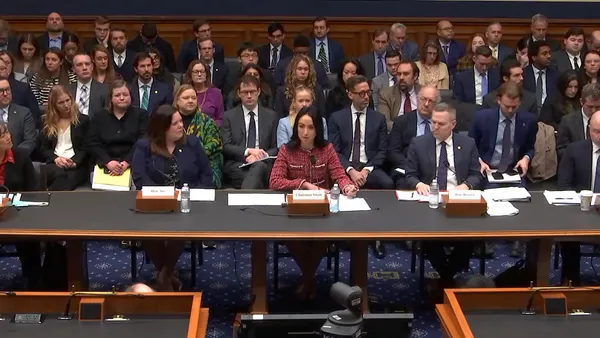
House lawmakers on Tuesday grilled members of the Federal Energy Regulatory Commission about electric affordability, grid reliability and the agency’s reviews of natural gas pipelines and liquefied natural gas projects.
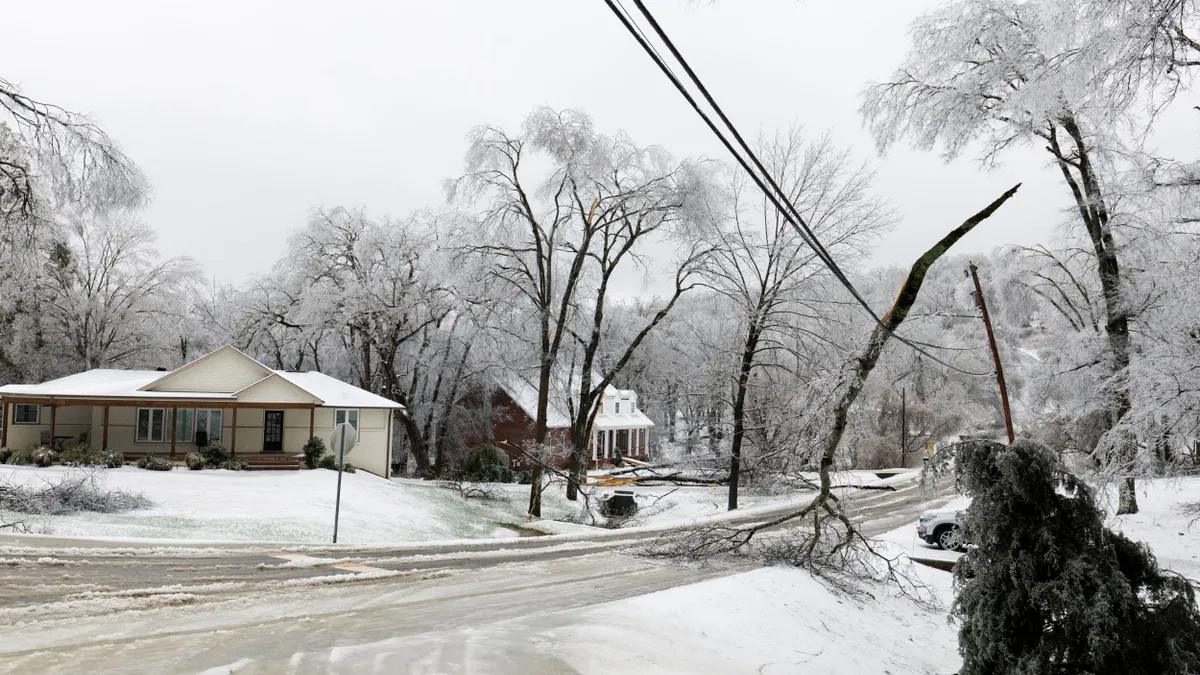
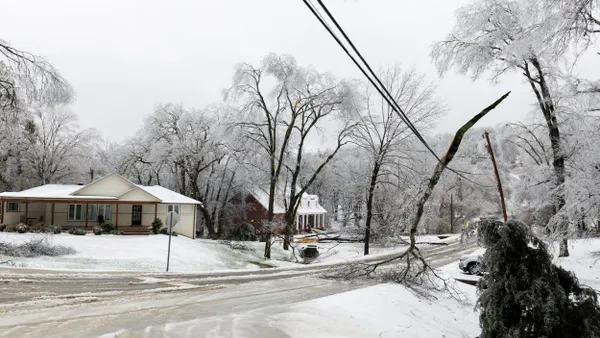
The House Energy and Commerce Committee’s energy subcommittee hearing was held while about 40,000 customers in Mississippi and Tennessee remain without power following Winter Storm Fern, which started sweeping across the United States on Jan. 23.
Also, the North American Electric Reliability Corp. on Jan. 29 warned that Midcontinent Independent System Operator, PJM Interconnection, Electric Reliability Council of Texas and parts of the Pacific Northwest face a high risk of not having enough power supplies to meet resource adequacy targets later this decade. Other parts of the U.S. also face an elevated risk of electricity shortfalls, partly driven by data center development, according to the grid watchdog organization.
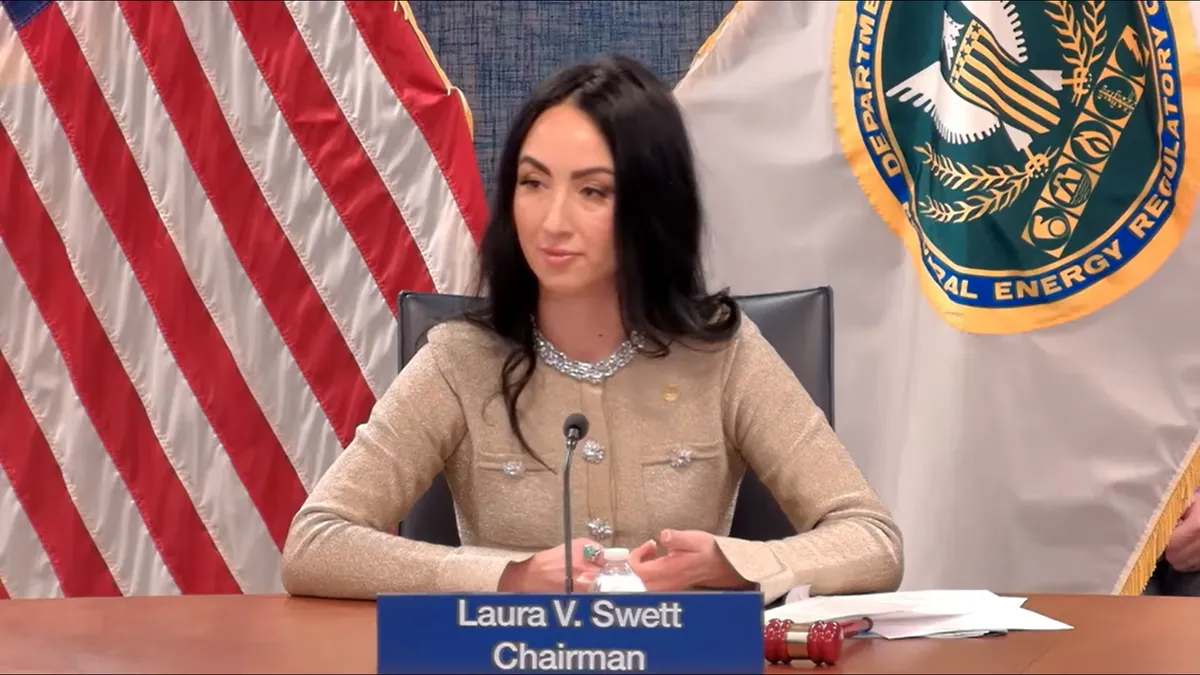
“I am committed to guiding FERC through the monumental growth opportunity before us,” FERC Chairman Laura Swett told the House panel. “We’re already working to streamline FERC processes, cut down connection times, and ensure efficient, durable infrastructure development and maintenance.”
FERC, which has jurisdiction over interstate infrastructure and markets, is under pressure over rising energy costs and grid reliability amid a data center boom. The Trump administration has asked the commission to consider fast-tracking data centers that bring their own generation, a proposal that has drawn pushback from grid operators and others concerned about federal versus state authority. FERC must also oversee compliance with fast-approaching deadlines for new rules on transmission planning and cost allocation.
Not enough transmission to meet the need?
One of the key challenges facing FERC is making sure the U.S. has a transmission system that is up to the task of supporting new loads and generation sources, according to commissioners.
This year, FERC will begin reviewing plans explaining how transmission providers intend to comply with FERC Order 1920, which was issued in 2024 and requires grid planners to develop transmission plans that look ahead at least 20 years and gives states a more robust role in the cost allocation process.
“If the transmission system is not ready, or if it's inadequate for interconnecting the generation and the load, that becomes the bottleneck,” FERC Commissioner Judy Chang said. “It's time for the industry to turn its attention to make sure that we have a system that's ready for connecting both the large loads and the generators.”
FERC Commissioner David Rosner echoed Chang’s concerns.
“Let's make sure we're planning for the right transmission system so you can connect new generation to the grid,” he said.
Highlighting the problem, Rosner said there was a gas-fired power project in PJM’s fast-track interconnection process for bringing power plants online to meet its resource adequacy needs that would require $1 billion in grid upgrade costs.
“What that cost was really all about was a lack of transmission,” Rosner said. The project needs about 100 miles of 345-kV transmission lines to come online, he said.
Batteries and other dispatchable resources that PJM studied in its fast-track review also need grid upgrades to come online — “many” requiring more than $100 million in upgrades, according to Rosner.
“What that says to me is the grid is really congested,” he said. “We need to invest in the grid.”
Seeking regulatory certainty
Swett said FERC is working to provide regulatory certainty to the industries it affects.
She called for ending the “flipflopping of FERC’s regulatory paradigm and the uncertainty that's created by increasing regulation that has built up over the years that far exceeds what FERC's mission is under the law.”
FERC is also issuing bipartisan decisions that provide fewer legal “toeholds” for court appeals, according to Rosner.
Additionally, FERC is working to speed up its reviews for gas pipeline, LNG and hydroelectric projects, according to commissioners.
FERC now issues environmental assessments in a year and more complex environmental impact statements in two years — and sometimes more quickly, according to Rosner.
“In many instances we are moving from NEPA review to final permit more than 30% faster than was typical during the last decade,” he said. “And this is without compromising quality — FERC’s permits have been routinely upheld in court in recent years, and we continue to weigh the views of all parties in our orders.”
New England power supplies
Pointing to high power prices and the use of fuel oil during Winter Storm Fern, Swett told lawmakers she was concerned that New England lacked adequate gas supplies.
“That’s simply because we don’t have enough gas infrastructure to bring gas to New England,” Swett said. “That’s why we are looking to, wholesale across the board, take a hard look at our permitting actions. And when it comes to pipelines in particular, we are trying to streamline our NEPA process.”
The high price of gas in the Northeast “is unacceptable,” Swett said. “That is not a just and reasonable rate for Americans.”
Rep. Jake Auchincloss, D-Mass., said offshore wind could have provided New England with significant amounts of electricity during Winter Storm Fern, but the Trump administration has been canceling offshore wind permits.
On Monday, a federal judge issued an injunction on a “stop work” order issued by the Department of the Interior in December for Sunrise Wind, a 924-MW offshore project Ørsted is building near New York. With the decision, courts have issued injunctions on all five of the Trump administration stop work orders.
“What I would say to Massachusetts — and any state — is we need electrons,” Rosner said. “If you can get us more electrons, that would be great. From every type of fuel.”
Auchincloss pressed FERC Commissioner Lindsay See on her statement that it was important for FERC to send “legally durable signals that get steel in the ground.”
See said FERC lacks authority over generation, but that legally durable signals were important.
“My focus is on the areas within FERC jurisdiction, and I do believe in the importance of legally durable signals for ground and water, for infrastructure and for the energy to deliver reliable and affordable power to all,” See said.