Dive Brief:
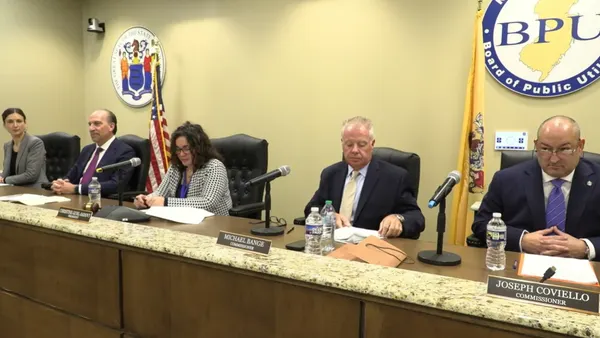
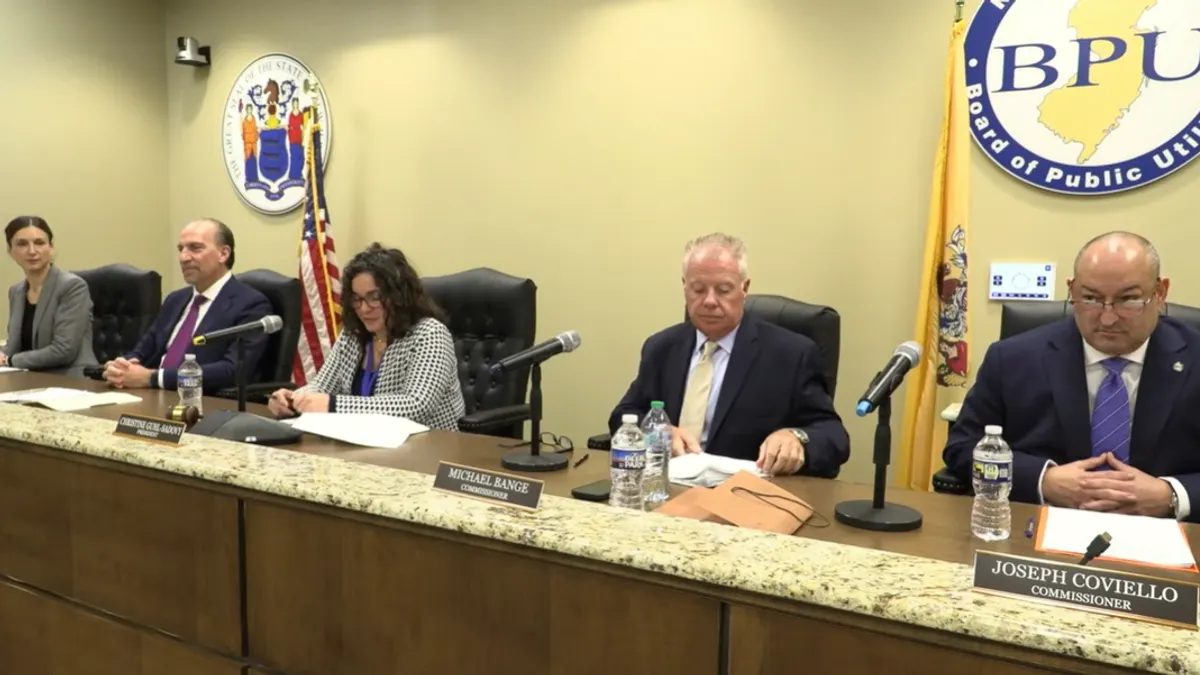
- The New Jersey Board of Public Utilities on Wednesday approved hiring a consultant to assist in a potential overhaul of the state’s utility business model aimed at reducing energy bills. The state faces an “electricity affordability crisis,” the BPU said in a statement.
- The consultant will evaluate “a range of potential regulatory reforms,” including performance-based ratemaking, multi-year rate plans, least-cost resource testing, securitization tools and reductions to utility returns, the BPU said.
- The business model review — along with a push for New Jersey utilities to begin to develop virtual power plants — comes at the direction of Gov. Mikie Sherrill, D, who was sworn in last month and made energy affordability a key platform of her campaign last year.
Dive Insight:
Electric bills in New Jersey spiked as much as 20% last year, and more increases may be on the way in some utility service territories this summer.
“We know that every working class family that gets a utility bill next month that they can’t afford will be in their own state of emergency,” Commissioner Emma Rebhorn said at Wednesday’s meeting.
Most of the higher prices are tied to increasing capacity costs in the PJM Interconnection market. Those increases have recently been arrested by temporary measures, but Gov. Sherrill is seeking more lasting reforms by ordering regulators to study how to “modernize” the traditional electric utility business model, including by making utility profits “less dependent on capital spending.”
In the meantime, regulators indicated they would continue to support interim measures, such as a temporary price cap in PJM’s capacity auction that BPU President Christine Guhl-Sadovy said helped keep supply rates “relatively flat” in the state’s most recent annual electricity auction for basic generation service starting June 1, 2026.
The price cap arose from settlement discussions with Pennsylvania Gov. Josh Shapiro, D, and other governors.
“We will continue to advocate for those kinds of protections for ratepayers,” Guhl-Sadovy said.
During the Wednesday open meeting, the BPU determined it will procure a consultant to examine alternative utility business models, as directed by Sherrill in January. In a pair of executive orders, the governor sought to freeze electricity cost increases, issue ratepayer relief in the form of bill credits and increase distributed energy resources. The first order covered affordability and the second order called for utilities to develop virtual power plants.
The consultant hired by the BPU will help to identify which combination of changes to the New Jersey utility business model will offer both long-term ratepayer savings and industry certainty, while also encouraging grid investments, the board said.
“This study will result in a concrete plan to address how the utility business model can better serve customers throughout the state,” Guhl-Sadovy said.
Public Service Electric and Gas Co., the largest utility in the state, declined to comment on the business model review.
Separately, PSE&G, along with Atlantic City Electric, Jersey Central Power & Light and Rockland Electric Co., have until March 5 to respond to the BPU regarding how distributed energy resources can be better utilized and how new interconnections can be accelerated. The DER request for information to utilities is the BPU’s initial response to Gov. Sherrill’s second executive order.