Kasparas Spokas is the electricity program director and John Carlson is the senior Northeast regional policy manager at the Clean Air Task Force.
The New York State Energy Planning Board on Tuesday approved the latest State Energy Plan, a critical update to the roadmap guiding New York toward its nation-leading climate goals. Within the modeling undergirding it is an important finding. For the first time, New York explicitly evaluated nuclear power in its power system modeling and found that adding new nuclear energy would make it easier and less expensive for the state to meet its 2040 clean energy target.
This conclusion comes at a pivotal moment. The same modeling, conducted by the New York State Energy Research and Development Authority, acknowledges that New York is likely to miss its ambitious 2030 emissions reduction targets. While disappointing, the outcome reflects the scale of the challenge rather than a lack of effort. The state has reduced power-sector emissions by 43% from 1990 levels and launched crucial efforts including a Clean Energy Standard, siting and transmission reforms, the Coordinated Grid Planning Process, major offshore wind projects and the Build Public Renewables Act. The question now is whether the state will apply lessons from its own analysis as it looks ahead to 2040.
NYSERDA’s modeling makes a compelling case that nuclear power can deliver meaningful system-wide benefits. Across five scenarios and multiple variants that model different amounts of new nuclear that could be built by 2040 — anywhere from 2.2 GW to 4.4 GW — the cost-minimizing model consistently chose to max out new nuclear capacity built in New York. Even at the lower end, adding 2.2 GW of new nuclear power decreases the total costs of achieving the 2040 targets by an estimated $26 billion. That’s $26 billion saved from the pockets of ratepayers and taxpayers. It also significantly reduces the amount of infrastructure the state would need to build to achieve its targets, lowering the total required generation and storage capacity by about 11 GW by 2040 and 23 GW by 2050, which is equivalent to one-third and two-thirds of the peak demand in the state today, respectively.
These results may surprise some, as the technology’s levelized cost of electricity is higher compared to onshore wind or utility-scale solar. But NYSERDA’s assumptions about nuclear costs are relatively balanced, ranging from $11,600/kW to $12,400/kW up to 2035 with declining costs after. These assumptions are more conservative than a recent study by MIT that estimated lower new nuclear build costs. But what the levelized cost of energy metric does not capture is the value nuclear resources provide the electricity grid beyond the electricity they generate.
Nuclear energy’s large impact lies in its ability to provide zero-carbon, firm and dispatchable power. In a power system reliant mostly on intermittent renewable sources, nuclear's ability to operate 24/7 can offset an outsized amount of other capacity. By building nuclear plants for baseload energy, we can forego building the most expensive, marginal intermittent resources for peak demand and focus on the fastest, least expensive renewables to pair with that nuclear baseload.
While new nuclear capacity reduces the total amount of capacity the state needs to build to achieve targets, the modeling in the state’s plans still underscores the need for renewables, storage and transmission to scale at warp speed. With or without nuclear energy, the plan makes clear that there cannot be any excuses or delays in accelerating clean energy and storage deployment. An effort to scale nuclear energy serves as a complement — not a substitute — for ambitious reforms that address near-term deployment barriers directly.
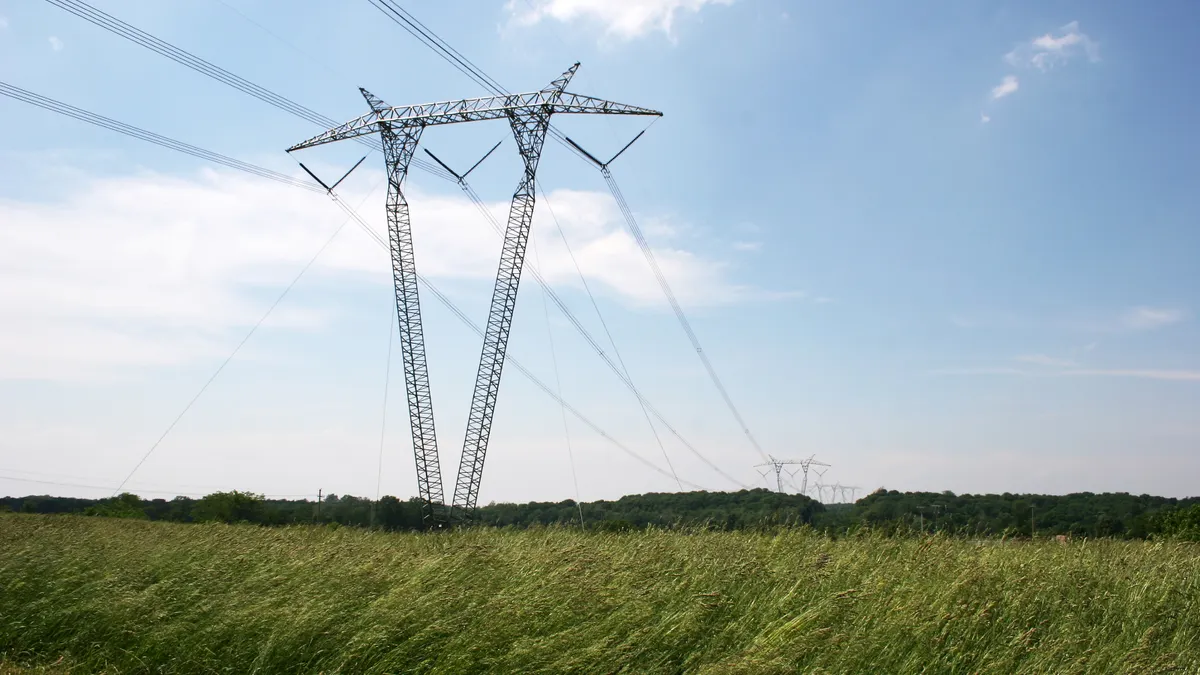
In fact, nuclear energy’s potential benefits are dependent on new transmission. In one scenario that developed 3.3 GW of new nuclear, 1 GW of additional transmission was needed from upstate to deliver the nuclear electrons to downstate load. This further underscores that transmission bottlenecks between upstate and downstate constrain New York under any mix of generating resources. Building this transmission capacity is critical for every viable decarbonization scenario.
Of course, running a power system model is relatively easy compared to scaling a new nuclear supply chain and overcoming nuclear financing challenges. While New York’s recent 1 GW goal and the development of a nuclear roadmap are a good start, more will be needed for the state to realize its vision. The state must quickly establish an energy program that will procure new nuclear — establishing mechanisms to manage project development risks, public financing mechanisms to lower the financial hurdles and interest costs, and leveraging its co-leadership in organizations like the National Association of State Energy Officials’ Advanced Nuclear First Movers Initiative for new nuclear development.
Ultimately, New York’s new energy plan sends an important signal: Deep decarbonization requires not just ambition, but technological inclusion. NYSERDA’s analysis clearly shows that nuclear energy can play a valuable role in the solution, and now state leaders must show the resolve to act on this and other lessons from the Energy Plan.