During this week’s frigid temperatures, the PJM Interconnection could tap backup generators at data centers and other large loads through transmission owners across its 13-state footprint, the grid operator said in a notice issued Thursday.
PJM, however, doesn't anticipate calling on those backup generators. “We expect that we will be able to continue operating the bulk electric system reliably through these recent challenging weather conditions without having to implement this new back-up generation procedure, but we also want to have every tool at our disposal to avoid power outages if conditions get significantly worse,” PJM said.
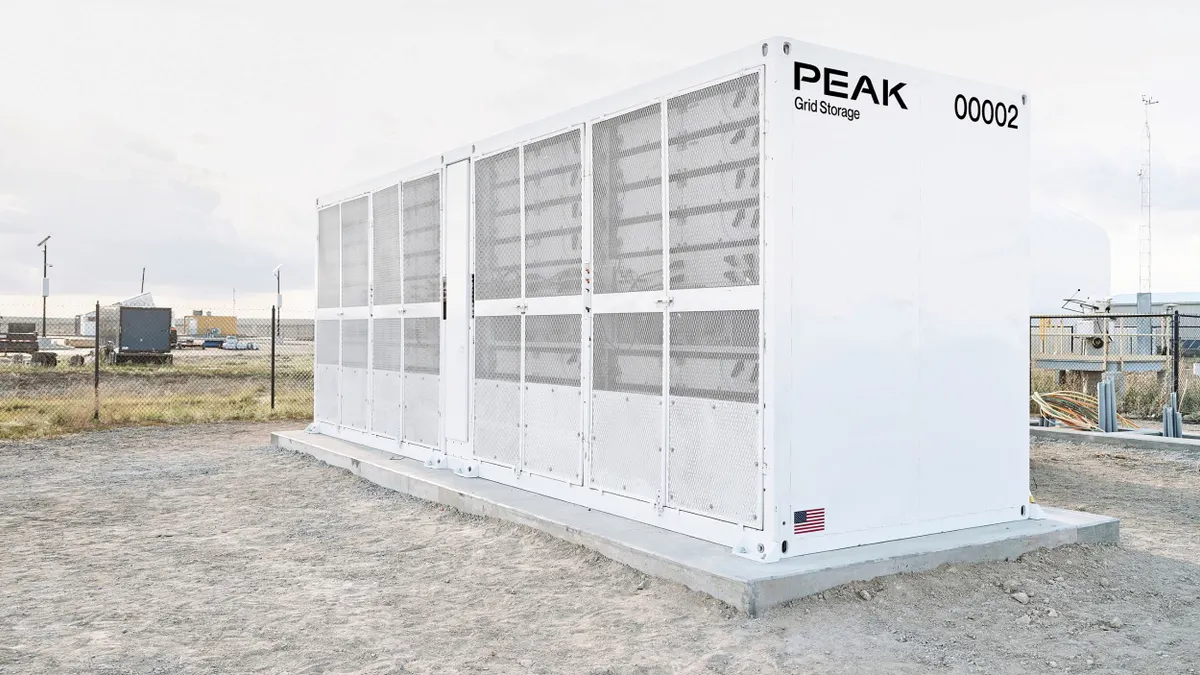
The U.S. Department of Energy Secretary Chris Wright on Jan. 22 said he would grant temporary authority for grid operators to tap backup generation serving data centers and other large industrial and commercial loads as a last resort to avoid blackouts during Winter Storm Fern.
Four days later, DOE gave PJM that emergency authority under a Federal Power Act section 202(c) order that expires at midnight on Jan. 31. DOE issued similar orders to Duke Energy Carolinas and Duke Energy Progress, and the Electric Reliability Council of Texas.
Transmission owners, with support from PJM, will implement the DOE order, according to the grid operator’s notice. Transmission owners must partner with utilities and other load-serving entities, in coordination with retail customers, PJM said.
PJM would only call on the backup generation after it has issued an Energy Emergency Alert 2 and all generating resources and emergency demand response have been tapped, the grid operator said.
It is unclear exactly how much backup generation could be available to PJM, according to Jeffery Shields, a spokesman for the grid operator.
“We are still working out who has backup generation, how fast they can ramp onto it and how they are connected,” he said Thursday in an email.
Wright said more than 35 GW of backup generation could be available across the United States.
However, citing U.S. Energy Information Administration data, it appears only 9 GW of backup generation could be available, including assets owned by utilities and independent power producers, Capstone analysts said Wednesday. Further, some of that capacity already participates in demand response programs, they said.
The DOE orders to PJM and other grid operators will likely have little short-term effect, given the small size of the backup fleet and grid operators’ lack of ability to directly mandate that they run, according to the Capstone analysts.
“There is no dispatch mechanism for operators to do this, nor is there a revenue stream to incentivize participation aside from those already registered as existing DR,” the analysts with the research firm said. “We believe this is a political tactic to appear more prepared than during previous reliability emergencies, such as Winter Storms Elliott and Uri, rather than to meaningfully relieve tight system conditions or to enforce backup generation dispatch.”
Electricity use in PJM on Friday could come close to hitting its peak demand record of 143,700 MW set a year ago, the grid operator said Thursday. PJM expected to hit a peak of 141,900 MW on Friday and 134,800 MW on Saturday.