Dive Brief:
- The levelized cost of electricity is on the rise for all types of generation, including renewables, but unsubsidized renewable energy “remains the most cost-competitive form of new-build generation,” according to Lazard’s 2026 Levelized Cost of Energy+ report, released Monday.
- The forces driving a rise in LCOE for all types of generation include “higher capital costs, sustained interest rates, tariff pass-through and supply chain repricing,” Lazard said.
- The report’s analysis shows a widening in LCOE range for onshore wind and utility-scale solar, “with high-end costs rising faster than low-end costs — likely reflecting that some project developers have been better able to mitigate broader cost pressures across supply chain and project-level economics than others,” it said.
Dive Insight:
However, wind and solar LCOEs remain below conventional new-build alternatives, Lazard said. This is in spite of the One Big Beautiful Bill Act creating an earlier phaseout deadline for wind and solar projects to qualify for the 48E investment tax credit and 45Y production tax credit.
LCOE is an estimate of the cost of energy from a generating resource over the life of the facility based on factors such as capital costs, fuel costs, and debt and equity costs.
On a per-MWh basis, the report found that utility-scale solar’s LCOE ranges between $40 and $98, while onshore wind ranges between $37 and $99, and offshore wind is between $105 and $167, according to the report. Lazard estimated that the production tax credit could bring the low end of the LCOE range for utility-scale solar to as low as $16/MWh, and offshore wind’s low end to $77/MWh.
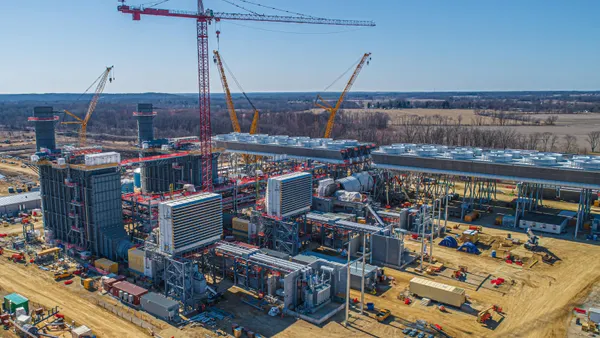
Peaking gas-fired generation has an LCOE between $144/MWh and $276/MWh, while combined cycle gas is between $51/MWh and $129/MWh, and nuclear ranges between $175/MWh and $255/MWh.
However, “continuous upward revisions to demand projections have driven a sharp increase in announced new-build gas generation despite a 15-year high LCOE and historically long development lead times,” the report said.
Lazard noted that the cost structure is different across generation types, with renewable energy being predominantly capital cost-driven “while conventional technologies carry higher fuel and variable cost components — a dynamic that drives technology-specific economics across use cases and reinforces the need for a diverse generation fleet.”
On top of other factors, the LCOE for natural gas generation is rising due to the technology’s sensitivity to fuel prices, which have increased year-over-year, as well as high demand driving down supply and driving up prices for gas turbines, the cost of which is projected to rise to $600/kW by the end of 2027, a 195% increase since 2019, according to Wood Mackenzie.
Generally, new build generation has a higher LCOE than existing generation, Lazard said. “The marginal cost of existing renewable generation is near-zero; this gap between marginal cost and new-build LCOE underscores the near-term economic case for optimizing existing generation while new-build costs across all technologies face sustained pressure,” the report said.
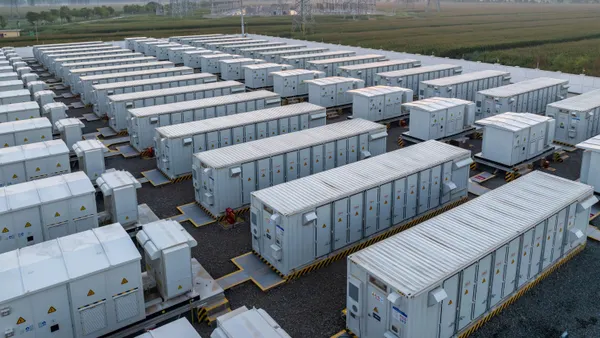
Lazard found the levelized cost of storage, or LCOS, showed an increase in cost for utility-scale standalone storage, “reversing last year’s declines,” and noted that “the materialization of tariffs on lithium-ion battery imports has curtailed access to the low-cost Chinese cell supply that previously helped drive costs lower.”
“While the One Big Beautiful Bill Act preserved the storage ITC through 2033, new Foreign Entity of Concern restrictions have accelerated supply chain diversification toward Southeast Asian manufacturing capacity and domestic suppliers,” the report said.