Dive Brief:
- The Indiana Utility Regulatory Commission on Wednesday launched investigations into the return on equity utilities earn and their use of “trackers” that allow them to immediately recoup certain expenses.
- The investigations grew out of the IURC’s recent examination of energy affordability issues, which resulted in a report released Wednesday that includes various recommendations, such as the ROE and tracker investigations, as well as doubling ratepayer assistance programs and expanded energy efficiency efforts.
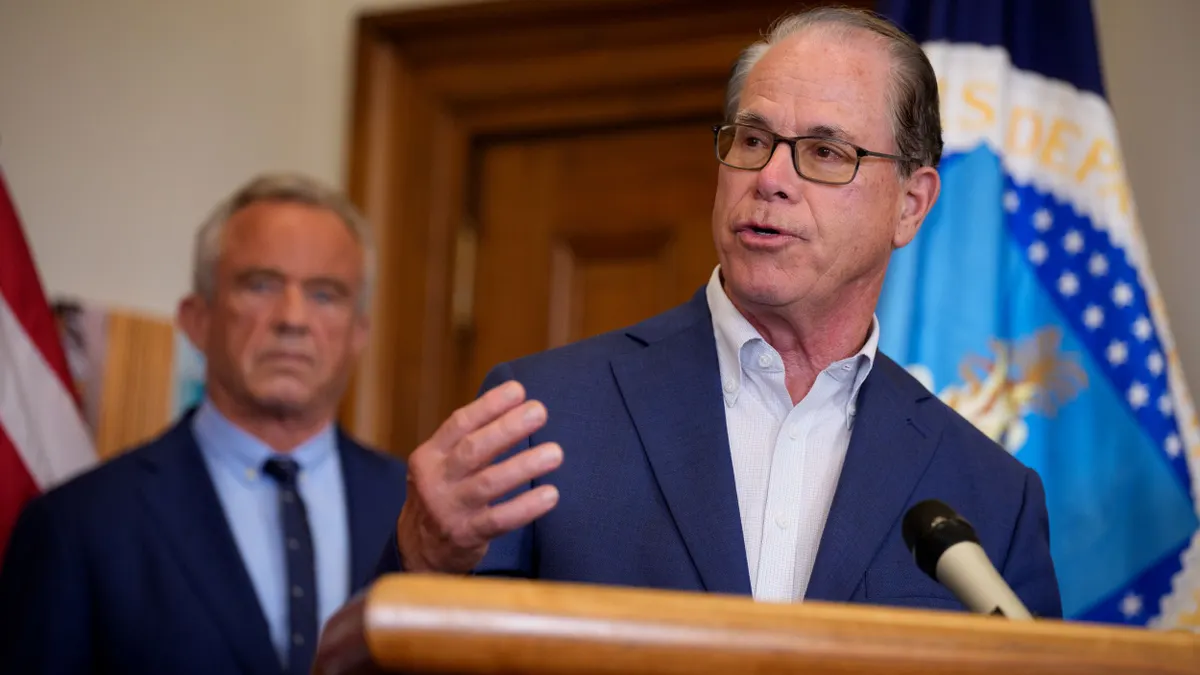
- Given recent actions by Indiana Gov. Mike Braun, R, such as replacing the IURC’s chairman and calling for a rehearing of the commission’s approval of an AES rate hike, Indiana’s utilities may face increased scrutiny of their profits, according to Paul Patterson, a Glenrock Associates equity analyst. “It suggests that the risk of a more consumer-oriented utility commission policy may be coming about in Indiana,” he told Utility Dive in an interview.
Dive Insight:
The action in Indiana reflects a focus by utility regulators and others across the United States on energy affordability issues, which has become a potent political issue. New Jersey regulators, for example, on Wednesday issued an initial report on potentially revamping the utility business model in the state.
Since September, Gov. Braun has been pressing for rate relief from investor-owned companies with utilities in the state, including AES, American Electric Power, CenterPoint Energy, Duke Energy and NiSource.
In light of a new law that is shifting utilities to multi-year rate plans, the state’s utilities may face reduced risks and therefore require lower ROEs and a change in their tracker mechanisms, according to the affordability report.
“The increased stability and cadence of filings and multi-year planning lend themselves to a new approach to return on equity (ROE) and trackers,” the IUCR said in the report.
American Electric Power’s Indiana Michigan Power subsidiary, for example, has an authorized ROE in Indiana of 9.85%, according to AEP’s most recent annual report filed with the U.S. Securities and Exchange Commission. However, the utility had a 12.6% ROE over the 12 months ending March 31, according to AEP. It was the highest ROE over that period among AEP’s seven utility subsidiaries.
The IUCR plans to consider additional changes to utility regulation, including performance-based incentives and refined benefits and cost justification guidelines for Transmission, Distribution, and Storage System Improvement Charge plans. Most of Indiana’s IOUs have used TDSIC plans and trackers to recover their costs for ongoing infrastructure projects, the commission noted.
Jefferies equity analysts on Thursday said the tracker review “could tighten rider recovery” and the TDSIC guidance likely “raises the bar on benefits/cost justification for infrastructure plans.”
On ROE’s, the IURC recently said that 9.1% to 9.9% is a “reasonable range” for equity returns, likely setting 9.1% as a base for any future changes to ROE levels for Indiana’s utilities, the analysts said.
The IURC report urges utilities to explain to their customers how data centers can help reduce electric rates.
However, data centers are widely disliked and telling people they will make their bills increase more slowly is unlikely to resonate, according to Patterson.
“You're in pain, but don't worry, the pain's only going to increase mildly” is probably not a winning message, he said. “It just doesn't help.”
In addition, the IURC urged the Indiana General Assembly to consider ending a 7% sales tax on utility bills and giving the commission the authority to review utility mergers and acquisitions.
The commission also said state lawmakers should require utilities to participate in a regional transmission organization, which would make them ineligible for an extra 0.5% ROE the Federal Energy Regulatory Commission gives them on their transmission assets for voluntary RTO participation.
The Citizens Action Coalition of Indiana supported the IURC’s “deep dive into issues that we believe are key drivers that led to the affordability crisis facing Hoosier ratepayers,” according to Kerwin Olson, the advocacy group’s executive director.
Tracking mechanisms allow utilities to increase bills outside of rate cases and they reduce regulators’ discretion and flexibility, Olson said in an email to Utility Dive.
Also, the ROEs Indiana utilities earn are “unjustly high and disproportionate to the risk that investors face,” he said. “We are hopeful that these investigations will lead to meaningful policy movement at the legislature and more affordable bills for consumers.”