
Dive Brief:
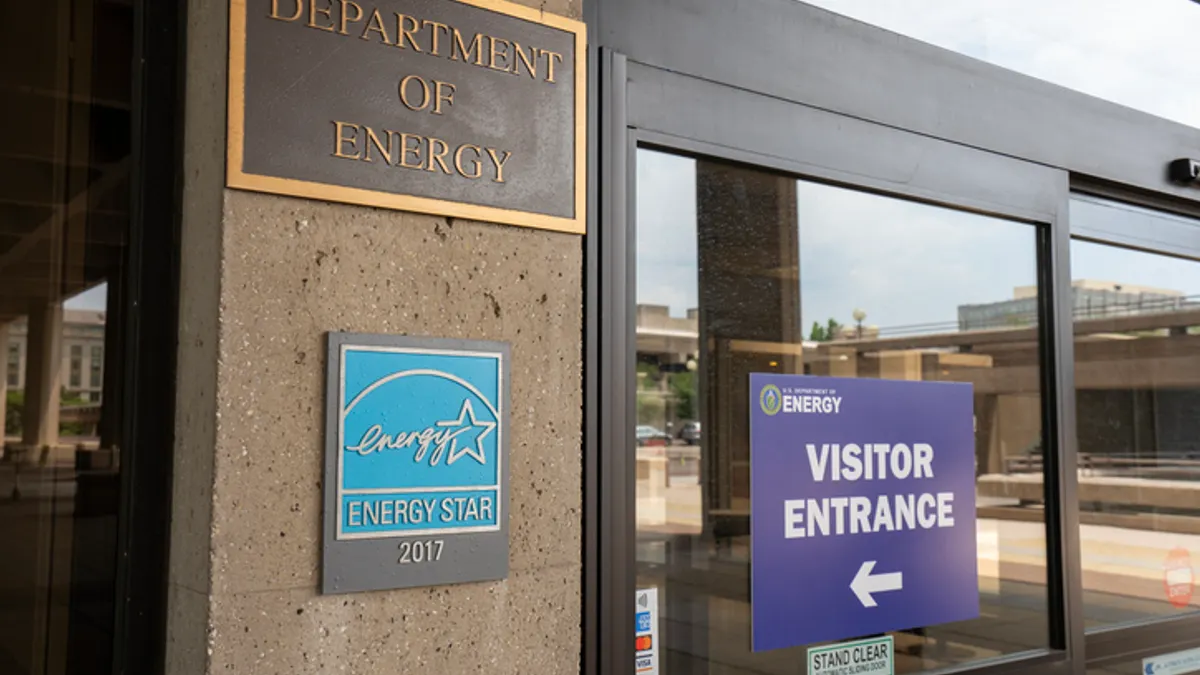
- The U.S. Department of Energy and the U.S. Environmental Protection Agency on August 28 finalized a plan to make DOE the lead agency on the federal government’s Energy Star program by this time next year. “The co-leads will meet bi-weekly for the next three months and monthly as needed until 12 months after the finalization of this plan,” the document says.
- The plan organizes the transition into three workstreams: knowledge transfer, legal transfer and then data and systems transfer.
- In what industry groups say is an encouraging sign, the document emphasizes the agencies’ commitment to ensuring the program has adequate funding and staffing, a concern since the Trump administration has tried cutting the program in its budget requests. “Both EPA and DOE are committed to a successful transition and efficient continuity of operations for the program,” the plan says.
Dive Insight:
EPA has been the lead agency for the program since it was created in the early 1990s. After the Trump administration floated elimination of the program in fiscal year 2026 by zero-funding EPA’s Atmospheric Protection office, which includes Energy Star, Congress funded the program at $33 million and included a stipulation that the administration spend the money.
The administration announced it was moving the program to DOE two months later.
In the plan, the agencies acknowledge the need for fiscal stability. “The long-term success of the program depends on adequate funding,” it says.
EPA is estimating how much of the fiscal 2026 funding remains unspent and will send those funds to DOE through what the agencies call a reimbursable authority process, or interagency agreement, according to the document.
Should Congress appropriate the next fiscal year’s funding to EPA, rather than DOE, the document says, the agencies will use the same process to transfer the money to DOE. “Future agreements will be established if Congress appropriates additional funds to EPA for ENERGY STAR,” the document says.
Ensuring the appropriations process goes smoothly through the transition is one of the talking points members of the National Electrical Manufacturers Association plan to raise in meetings with members of Congress later this month, Todd Sims, senior director of regulatory and industry affairs for the built environment at NEMA, told Facilities Dive in an interview.
“We just want to be sure that Congress agrees with their understanding of that transfer authority, that there won’t be any hiccups in this interim period,” Sims said.
NEMA members include commercial HVAC manufacturers like Trane and energy management companies like Schneider Electric. “They’re very much on the record supporting the program as an overall benefit to the American taxpayer,” Sims said.
In their meetings with lawmakers, the organization’s members will emphasize how much they want Congress to continue appropriating money to the program at authorized levels — “just support long-term funding once it’s squarely in DOE,” he said.
The nonprofit Green Building Initiative, which certifies building performance, has the smooth transfer of money on its mind as well. “We hope that the Department and Congress will be able to work together to smoothly transition ENERGY STAR appropriations to DOE to avoid program disruptions,” Jenna Hamilton, the organization’s vice president of national affairs, said in a statement.
DOE is well positioned to run the program, Sims said. It’s demonstrated that it knows how to run an effective public-private partnership through the success it’s had with the Better Buildings Initiative, launched in 2011. Commercial building owners that voluntarily participate in the program commit to meeting energy efficiency standards and sharing what they’ve learned with others. DOE provides technical and other support.
The program over its lifetime has reduced energy consumption by almost 4 quadrillion British thermal units, water use by 25 billion gallons and building owners’ energy spend by more than $24 billion, according to DOE.
“DOE has really good synergy with their Better Buildings program,” Sims said. “It’s built great relationships within the industry. I see that as very complementary to the Energy Star mission.”
One part of Energy Star that EPA has done particularly well is outreach, Sims said. The Energy Star label is widely recognized and the program embraced by building owners, manufacturers and municipalities, among other stakeholders.
“The open question is whether or not DOE has the type of ability to directly reach out and market to [stakeholders] the same way that EPA had built up,” he said.
Sims credited EPA’s success in part to its regional office system, which he said gives the agency the “ability to get into communities and push the program and build relationships.”
The plan goes some way to addressing concerns over program staffing by making recruitment part of the first workstream. “DOE will begin recruitment actions to staff the essential functions,” the document says.
“It included recognition that there’s going to be the appropriate level of staffing,” Sims said. That “is necessary for the long-term success of the program, and it called out specifically DOE in recruiting. So, there’s a lot to be pleased about.”