Dive Brief:
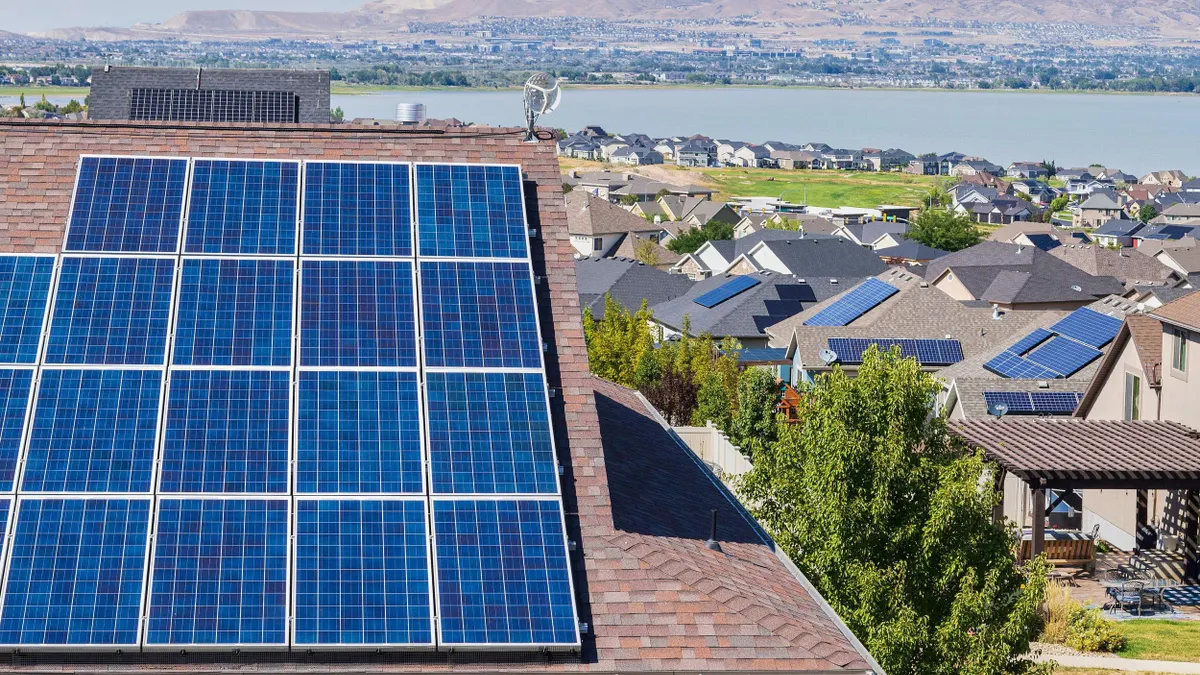
- A distributed energy resource aggregator that manages more than 8 million residential smart thermostats is launching a “whole-home” virtual power plant that will tap HVAC systems, electric vehicles, stationary batteries and solar systems.
- The company formerly known as Renew Home said Tuesday it has changed its name to Everyday Electric and has acquired the connected-vehicle platform Smartcar. The acquisition will help it better integrate EVs into its Everyday VPP offering, CEO Ben Brown told Utility Dive in an interview.
- The announcements come as utilities and hyperscalers scour local grids for fast-scaling distributed energy capacity. In June, the company said it would partner with residential energy storage giants Tesla and Sunrun to make nearly 17 GW of distributed capacity available nationwide.
Dive Insight:
Though aggregated residential DER capacity has grown significantly this decade, energy system experts say most of the potential remains untapped.
Credible U.S. capacity estimates vary widely based on how “virtual power plant” is defined. In 2023, the U.S. Department of Energy said the country had 30 GW to 60 GW of broadly defined VPP capacity and could scale to 80 GW to 160 GW by 2030, potentially meeting 20% of peak demand.
More recently, a widely cited study by the electrification nonprofit Rewiring America found that hyperscalers could unlock more than 100 GW of U.S. grid capacity by 2029 — and offset all AI loads expected to come online by then — by subsidizing the rapid deployment of heat pumps and solar-plus-storage systems.
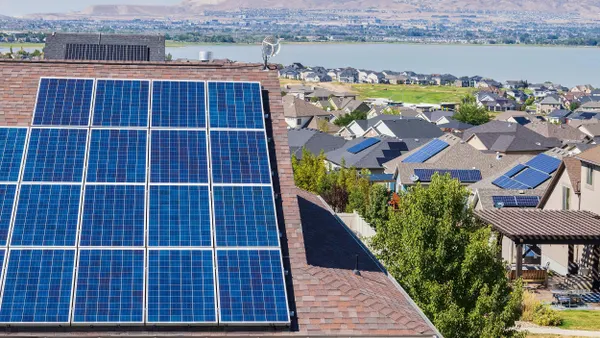
Millions of Americans have installed solar-plus storage systems already. The latest data from the American Clean Power Association shows that in the second quarter of 2026, about 46% of new residential solar systems had stationary energy storage attached, up from 41% in the second quarter of 2025.
At the same time, utilities and independent power producers plan to bring more than 60 GW of grid-connected gas-fired generation online by 2030, the environmental nonprofits Environment America and the Frontier Group said this month.
“It’s a pretty unique moment in time,” Brown said. “Do we lock ourselves into a high-carbon, high-cost future, or do we find resources to bring down costs for everyone?”
Scaling aggregated DER capacity can keep utility bills in check for all ratepayers, not just DER owners and hosts, Brown said. Everyday Electric aims to save customers $5 billion over the next five years, he said.
Smart thermostats remain important to the company’s newfound “whole-home” electrification push, given how widespread they are already, Brown said. Parks Associates, a market research firm, said last year it expects annual smart thermostat sales of 8.1 million by 2030.
In a late 2024 interview, Brown said data collected by his company indicates smart thermostat owners are more than three times more likely to buy an EV than members of the general public, and they are significantly more likely to consider heat pumps and home solar or storage.
“We want to be able to support people in the next step in their journey — that is a key part of how our platform is evolving,” Brown told Utility Dive this month.
Everyday Electric says its Everyday VPP will integrate directly with customers’ distributed energy resources, making it easier for customers to opt into money-saving programs, track energy performance and get personalized recommendations. For utilities, the platform offers “hyper-local dispatch, AMI-based [measurement and verification], real-time forecasting, and load shaping,” bundled into a pay-for-performance model that eschews platform or marketing fees, the company says.
Brown said the approach improves on the compliance-based mindset that for years defined single-purpose “programmatic” offerings, such as discrete EV charging or thermostat-based demand-response programs. It also reflects a growing recognition among both utilities and grid operators that modern VPPs represent high-quality wholesale and distribution-level capacity without the centralized generators’ “single point of failure” risk, he added.
“These are power plants we’re building,” Brown said.