
The recent events in the Middle East have been widely framed as a familiar story: another spike in energy prices, another shock hitting global markets. That interpretation is not wrong—but it is dangerously incomplete. Beneath the visible surge in electricity costs, a deeper and more systemic crisis is unfolding across the electricity sector’s supply chain, where already fragile structures are now pushed to the brink. This is not simply a disruption in energy flows; it is a stress test of the infrastructure that sustains them—and one the system appears ill-prepared to pass.
A system already stretched beyond safety margins
Long before this disruption, the global electricity value chain was operating with vanishing buffers. The aftershocks of the COVID and 2022–2023 crises had driven transformer lead times beyond two years, while forcing manufacturers to run at or near full capacity. Inventories were thin, expansion slow and supply chains tightly wound.
The recent events in the Middle East acted as a force multiplier—sudden, concentrated and layered onto an already overstressed system. The result is a network with virtually no slack left, where even minor disturbances cascade into major delays.
Public debate has focused narrowly on LNG shortages and spiking electricity prices. Yet the real disruption is far broader, cutting across interconnected dimensions.
Fuel remains the most immediate pressure point, as constrained LNG flows hit gas-dependent power systems. But upstream vulnerabilities quickly follow. Critical materials—copper, grain-oriented electrical steel, insulation polymers, transformer oils—are all exposed, not necessarily through direct shortages but through escalating costs and fractured logistics.
At the same time, manufacturing and transport are buckling. Longer shipping routes, rising insurance premiums and mounting congestion are extending delivery timelines across the board. The Middle East, paradoxically both a supplier and a major destination for grid investments, has seen projects stall or collapse. Meanwhile, the crisis accelerates electrification trends, pushing demand for grid infrastructure even higher at the worst possible moment.
What emerges is not a temporary imbalance but a systemic squeeze, one that threatens to outlast the geopolitical trigger itself.
The silent deterioration of quality
Perhaps the most insidious risk lies not in delays or cost overruns, but in the gradual erosion of quality. Supply shortages tend to follow a predictable pattern: as lead times lengthen, buyers broaden supplier lists, procurement accelerates and qualification standards quietly weaken.
The damage is rarely immediate. It surfaces years later—in failing transformers, degraded cable systems, malfunctioning switchgear. These are not marginal defects; they are failures that can destabilize entire grids.
Evidence from independent testing bodies such as KEMA Labs, CESI’s Business Unit for testing, inspection and certification activities, paints an uneasy picture. A notable share of equipment fails to pass initial certification tests, highlighting the persistent gap between nominal compliance and proven performance. In a constrained market, that gap is widening.
Testing as a last line of defense
In stable times, testing is often treated as a procedural checkpoint. Under current conditions, it becomes a critical safeguard. Independent verification—through rigorous type testing—offers one of the few mechanisms capable of anchoring quality amid mounting pressure.
The logic is straightforward. The cost of thorough testing is negligible compared to the consequences of failure: outages, prolonged repairs and significant financial losses. Yet the temptation to shortcut these processes is growing as procurement timelines tighten.
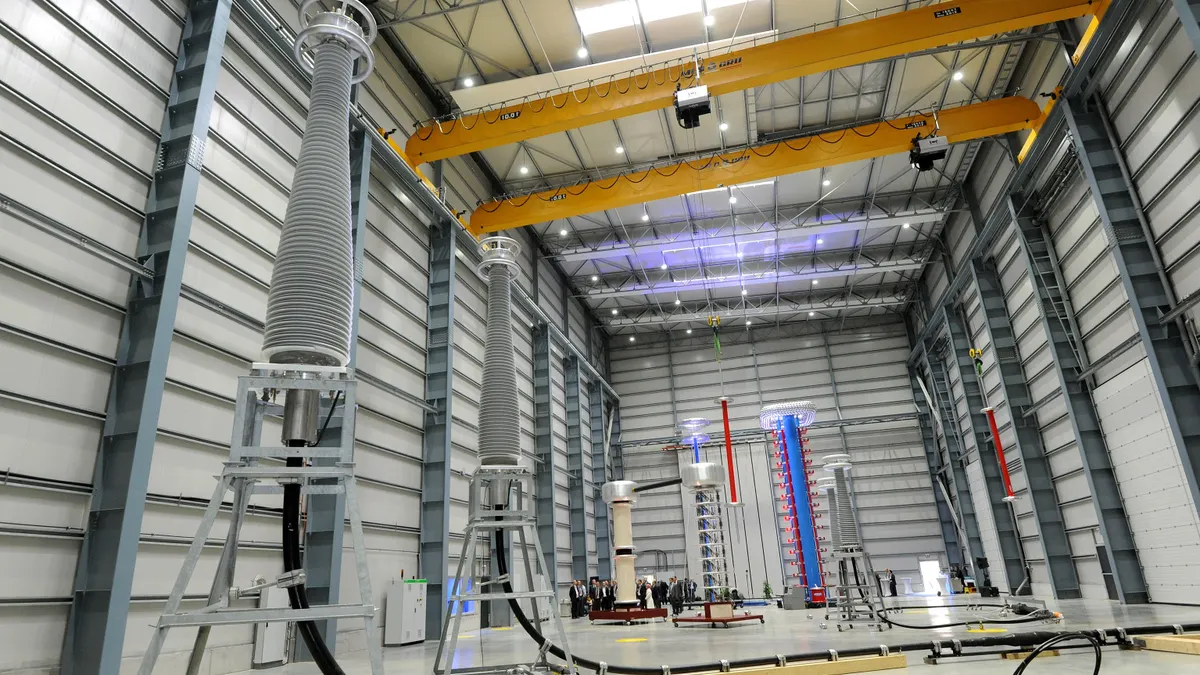
KEMA Labs, with its global testing infrastructure across high-power and high-voltage systems, serves as a technical counterweight to these pressures. Its certification framework provides an objective reference point in a market increasingly driven by urgency rather than discipline.
A crisis that will not simply pass
In this increasingly constrained landscape, the role of independent verification bodies such as KEMA Labs becomes harder to ignore: not as a guarantee of safety, but as a mechanism capable of exposing the growing gap between stated compliance and actual performance.
The lesson is uncomfortable but clear. Resilience in the electricity sector does not depend solely on capacity or investment. It hinges on the ability to maintain quality under stress—a challenge that, at present, the industry is only partially equipped to meet and one that even rigorous testing frameworks can only partially mitigate if broader market discipline continues to erode.