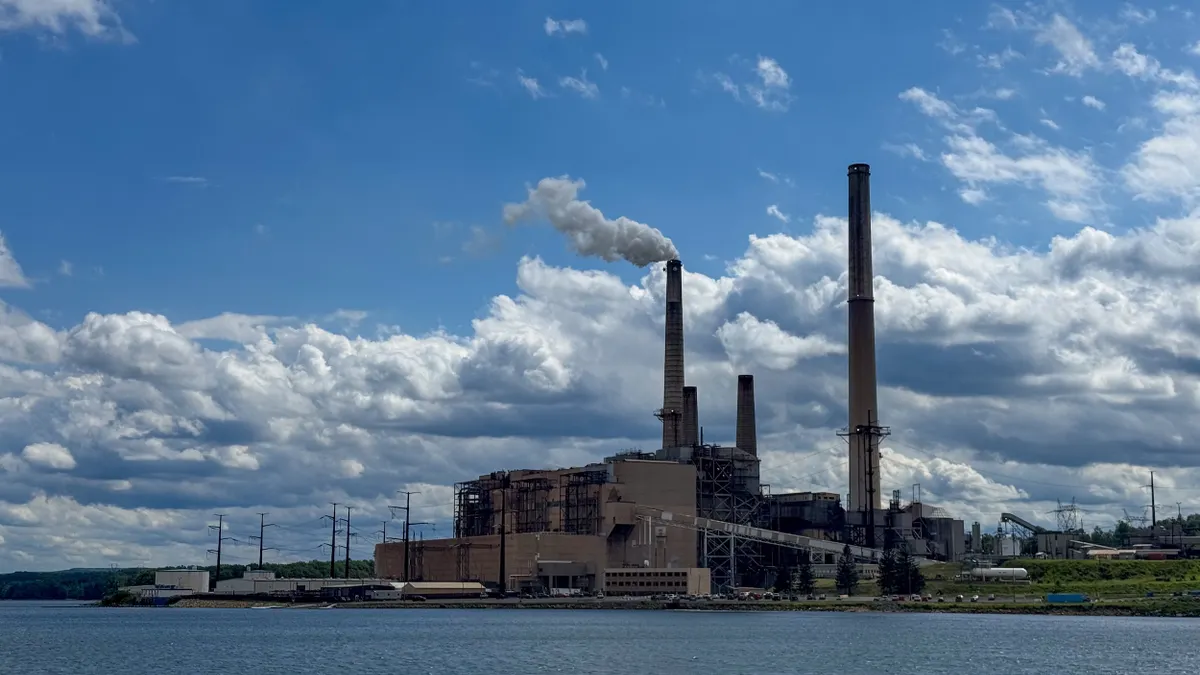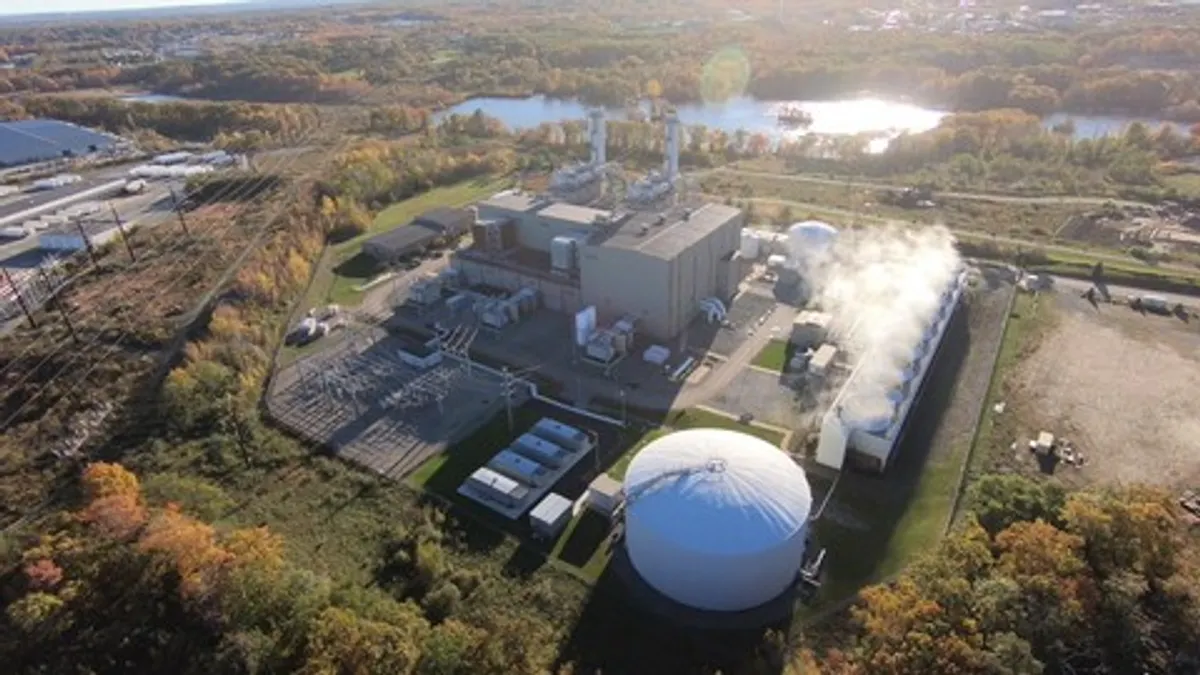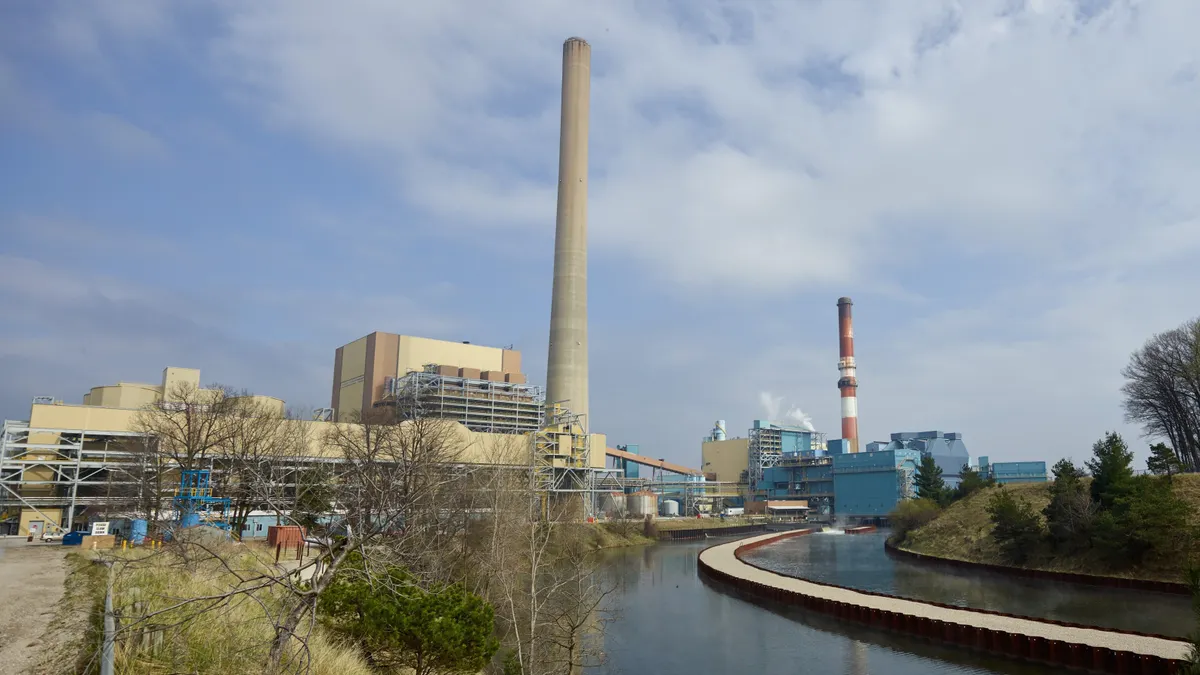
This is the second story in a two-part series on the U.S. Department of Energy’s orders preventing fossil-fueled power plants from retiring. In the first story, Utility Dive found that the power plants under the department’s orders are producing significantly less electricity than they had before, in part because some of the units aren’t operating.
In 2025, the U.S. Department of Energy began issuing a series of “emergency” orders to keep generating units at seven power plants from retiring as planned.
In issuing the orders under the Federal Power Act’s section 202(c), DOE said the areas where the power plants are located face potential power supply shortfalls, in some cases years in the future. It has also cited potential growing demand, most notably data center development, as a reason to keep the plants operating.
In other cases, DOE pointed to how several of the power plants under the emergency orders supplied power in late January, during Winter Storm Fern, when bitterly cold temperatures covered large sections of the United States. During that period, two units subject to one the department’s orders at the R.M. Schahfer generating station operated at over 285 MW each day, DOE said June 18, when it issued the most recent 202(c) order for the units, which Northern Indiana Public Service Co. owns.
DOE pointed to Winter Storm Fern as a sign that Florida faces “emergency conditions” when it ordered the Orlando Utilities Commission, a municipal utility, in early June to continue running its nearly 465-MW, coal-fired Stanton Unit 1 instead of placing it in “cold shutdown.”
In its order, DOE noted that the North American Electric Reliability Corp.’s most recent long-term reliability assessment deemed Florida to be at “normal risk” for long-term energy adequacy. However, the NERC report notes that projections for resource and transmission growth in Florida lag what is needed to support new data centers and other large loads, DOE said.
DOE makes its 202(c) decisions based on the facts and circumstances in each case, Associate Deputy Secretary of Energy Alex Fitzsimmons told Utility Dive earlier this month.
“What we know from what NERC has told us is that resource adequacy is worsening all across the country, and had been for several years due to the premature retirement of reliable dispatchable generation at the same time that energy demand is rising,” Fitzsimmons said. “We need to make sure that we have dispatchable generation to meet peak demand.”
Need for emergency orders in question
The DOE is using the need for reliability in the face of growing demand to justify the emergency orders, but it’s unclear to what extent the 202(c) orders are supporting grid reliability. Currently, four of the 11 units that DOE ordered to stay online aren’t operating.
There is no indication that the regions the DOE’s orders affect face near-term reliability risks, according to Nikhil Kumar, a program director at GridLab, a nonprofit technical consulting organization focused on the electric grid.
“You put more capacity on the grid, of course it helps with reliability,” he said. But NERC’s recent summer and winter assessments indicate that in the more immediate term, there is minimal risk, he said.
“There is no emergency,” Kumar said.
NERC, for example, found in its summer assessment, released in May, that the Midcontinent Independent System Operator, with a footprint that includes the Schahfer plant and Culley Unit 2 in Indiana, faces “normal” reliability risks.
When CenterPoint urged DOE to allow the retirement of its Culley Unit 2 on Dec. 31 as planned, Michael Roeder, CenterPoint Energy’s Indiana region president, said the unit isn’t needed to support grid reliability, citing NERC assessments and reports from MISO and state utility regulators.
In part, the DOE said the Campbell power plant in Michigan, and the Schahfer and Culley units, need to stay online because recent capacity auctions in MISO indicated tight supply conditions. However, the grid operator’s last auction, held this spring, cleared with a reserve margin 3.5 percentage points above MISO’s 7.9% reliability reserve target.
Looking ahead, anticipated capacity additions in MISO over the next five years will outpace rising electricity demand, according to the results of an annual survey released June 3. In other words, the grid operator expects to have more than enough power to meet demand in that period.
Grid operators and state utility regulators generally review power plant owners' decisions to retire their generating units to ensure the units can be taken offline without causing reliability issues, Kumar noted.
Further, the 202(c) orders create uncertainty for power plant owners and grid planners, according to Erin Melly, a vice president at research firm Capstone. The DOE orders cite long-term resource adequacy concerns as a reason for keeping the power plants online, but the orders run for only 90 days at a time, Melly said.
“From a planning perspective, this timeline doesn't necessarily align with how a grid operator plans years in advance,” she said. With additional gigawatts and coal units set to retire before 2028, Capstone expects the DOE will issue additional 90-day 202(c) orders delaying their retirement as well, Melly said.
According to NERC, the 202(c) orders in the aggregate have helped reliability.
“It’s a blunt instrument used as a last resort to keep necessary generation online and has certainly helped, especially in this past winter, maintain reliability,” John Moura, NERC’s director of reliability assessments and performance analysis, said at a FERC meeting in February.
But, the DOE’s orders range in benefit, according to Moura. “Some are helpful, some maybe not,” he said. “But in the aggregate, it’s definitely been a help to keep units online.”
The emergency orders’ costs
Preventing the units from retiring may bolster short-term reliability, but that comes at a cost to ratepayers. Industry observers say it’s not clear if ordering the plants to stay open was the most efficient way to improve grid reliability. Further, they point out, the power plants may be displacing cheaper power supplies and adding to air pollution, which has its own costs.
Keeping the seven plants online costs about $1.5 million a day in net expenses, or about $548.8 million a year, according to data from a report the Sierra Club released on June 8.
The Institute for Energy Economics and Financial Analysis pegs the cost at more than $30 million a month, or more than $300 million through mid-May. The costs could increase if the power plants under the orders need repairs, according to the nonprofit group, which supports moving away from fossil fuels.
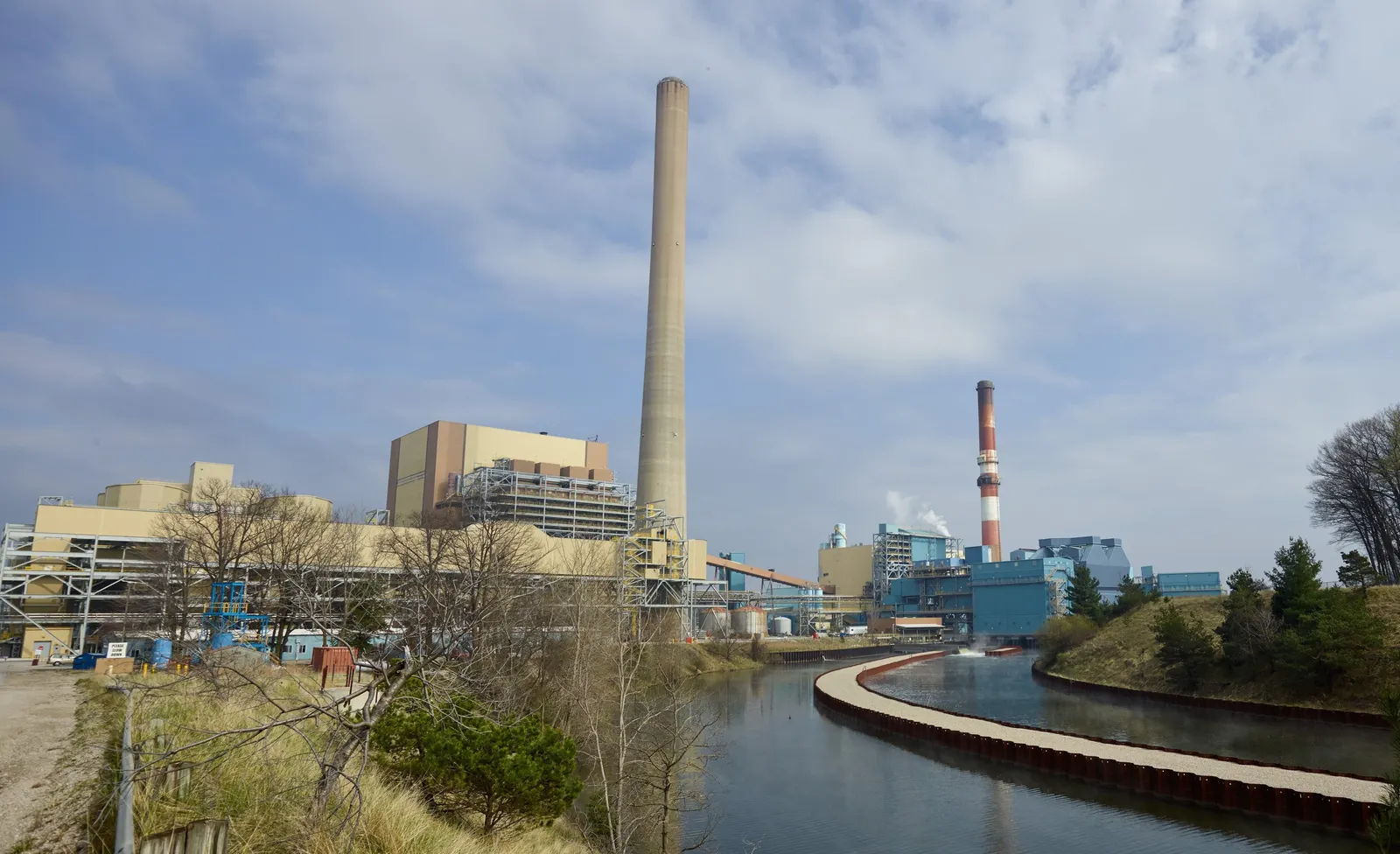
Consumers Energy, the majority owner of the Campbell power plant, spent $401 million keeping it online through March 31, the company said in an April 28 filing with the U.S. Securities and Exchange Commission. It recovered $221 million through power sales in the Midcontinent Independent System Operator market, but it will seek $180 million in cost recovery from ratepayers in MISO northern and central regions. DOE on May 18 issued its latest 90-day order for the Campbell plant, which will keep it online until Aug. 16.
TransAlta is seeking to recover $19.9 million from ratepayers to cover its costs for keeping its Centralia power plant from retiring, according to an April 30 filing with the Federal Energy Regulatory Commission.
TransAlta is preparing to convert the coal-fired power plant to run on gas in a deal with Puget Sound Energy. An independent power producer based in Calgary, Canada, TransAlta estimates it would need to spend an additional $23 million to repair the plant if DOE issues additional emergency orders.
“While the unit is currently offline and preparing for conversion, employees remain on standby to support operations if needed,” the TransAlta spokesperson said.
Constellation Energy spent about $4.8 million operating the Eddystone units under its first DOE order, according to Mark Rodgers, a company spokesman. PJM Interconnection ratepayers will pay those costs minus any revenue from electric sales from the units.
CenterPoint has filed for cost-recovery pathways with FERC and the Indiana Utility Regulatory Commission, but it hasn’t asked to recoup any 202(c)-related costs yet, according to a company spokesperson.
Who pays, and how much?
The costs of keeping the units in Indiana and Michigan operating will be shared by ratepayers across MISO’s northern and central regions.
As a result, utilities not subject to the orders in states including North Dakota, Minnesota and Iowa will bear some of the costs.
“They'll pass on the cost, but it will potentially provide less headroom for other spending when they go through their rate cases,” Melly said.
With state utility regulators increasingly concerned about energy affordability, they may look at utility proposals with increased scrutiny, she explained. As a result, the 202(c) costs could effectively squeeze out other potential utility investments.
PJM Interconnection ratepayers will pay the costs to keep Constellation Energy’s Eddystone units near Philadelphia online. It is unclear who will pay for the costs related to Craig Unit 1 in Colorado and Centralia, a merchant power plant in Washington state without a customer base. Last month the California Independent System Operator urged FERC to reject TransAlta's petition that CAISO pay for some of its emergency order costs related to the Centralia power plant. The Bonneville Power Administration, Southwest Power Pool and GridForce Energy Management also objected to being required to absorb some of the 202(c) costs.
FERC “should deny the application for lack of jurisdiction until TransAlta Centralia provides a jurisdictional service to a willing customer and the legal validity of the TransAlta emergency orders is settled,” Washington and the Washington Utilities and Transportation Commission told the commission.
Air pollution impacts
In addition to the direct costs of the 202(c) orders, there are indirect costs, such as air pollution.
According to the latest EPA data, the Campbell power plant, for example, has produced about 5.7 million short tons of carbon dioxide while operating under the DOE orders — the equivalent of 1.2 million gas-fueled cars driven for a year.
It has also produced about 3,020 short tons of sulfur dioxide and 2,140 short tons of nitrogen oxides, according to the EPA data. “Short-term exposures to SO2 can harm the human respiratory system and make breathing difficult,” per the EPA. It can also help form particulate matter pollution, which can be harmful.
NOx contributes to asthma, bronchitis, respiratory infections and premature mortality by reacting with other volatile organic compounds to form ozone and fine particulate matter, according to the EPA.
The other generating units that are operating under the DOE’s emergency orders are also producing air emissions that would have been avoided if they had been allowed to retire as planned.